
Chicken tortellini soup lands in the bowl with the kind of comfort that feels bigger than the amount of effort it takes. The broth stays light and savory, the tortellini turn tender without falling apart, and the shredded chicken gives every spoonful enough substance to count as dinner. It’s the sort of soup that tastes like it simmered longer than it did, which is exactly why it ends up on repeat.
What makes this version work is timing. The vegetables get a short sauté first so the onion mellows and the carrots soften just enough to fit the quick cook time. The tortellini go in near the end so they stay plump instead of turning gummy, and the spinach is added after the chicken so it wilts into the broth without losing its color. Parmesan and fresh basil at the end are not decoration here; they sharpen the whole pot and keep the soup from tasting flat.
Below, I’ve laid out the little details that matter most: when to add the tortellini, how to keep them from overcooking, and the easiest swaps if you need to work with what you’ve got in the fridge.
The tortellini stayed perfectly tender and the broth had so much flavor for such a short cook time. I added extra basil at the end and my kids asked for seconds, which never happens with soup.
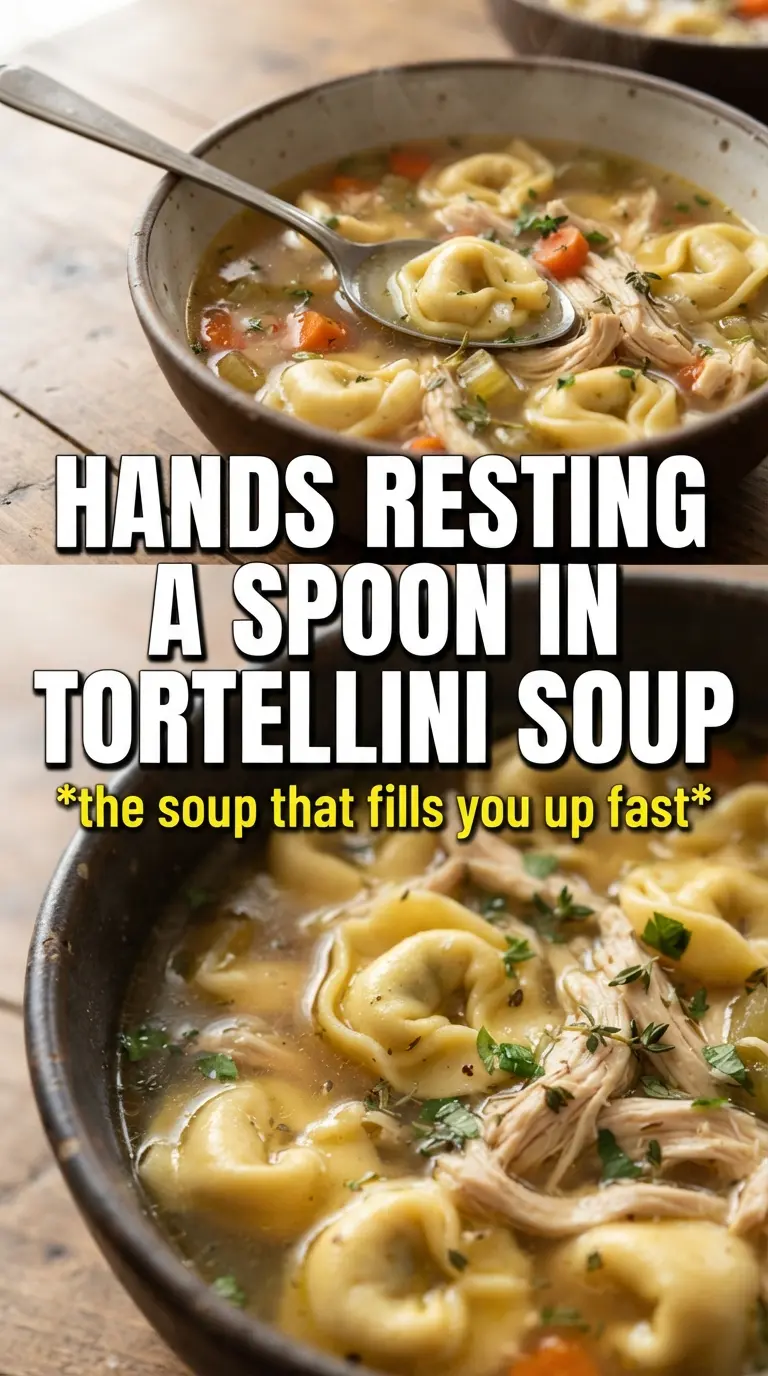
Pin this chicken tortellini soup for a fast, brothy dinner with tender pasta, shredded chicken, and a fresh basil finish.
The Secret to Keeping the Tortellini Tender Instead of Mushy
The biggest mistake with tortellini soup is treating the pasta like it needs a long simmer. It doesn’t. Refrigerated cheese tortellini cook fast, and once they cross that tender point they keep softening in the hot broth. That’s why the broth needs to be ready before the tortellini go in, so you can watch them closely and pull the pot off the heat as soon as they’re just cooked through.
The same rule applies to the chicken. Since it’s already cooked and shredded, it only needs long enough to warm through and soak up some broth. If you simmer it hard, the meat can go stringy and the tortellini can split. Keep the heat at a steady boil only for the broth stage, then drop it to a gentler cook once the pasta is added.
- Refrigerated tortellini — This is the ingredient that sets the timing for the whole pot. Fresh refrigerated pasta cooks fast and keeps a better texture than dried tortellini here. Frozen tortellini can work, but add a minute or two and check one piece before you add the chicken.
- Cooked shredded chicken — Rotisserie chicken works well and keeps the recipe fast. If you cook chicken breasts from scratch, shred them while they’re still warm so they stay moist. Very finely shredded chicken disappears a bit more in the soup; larger pieces give you more bite.
- Chicken broth — Use a broth you’d be happy to sip. This soup doesn’t rely on cream or a long simmer to build richness, so the broth carries the flavor. If yours tastes flat, a little extra parmesan at the end helps more than extra salt alone.
- Parmesan and basil — Add both at the table, not too early in the pot. Parmesan brings salt and body, while fresh basil gives the soup a brighter finish that dried herbs can’t match.
What Each Ingredient Is Actually Doing in This Recipe
- Primary ingredient (the star) — Quality matters most. Choose the best you can find.
- Cooking medium (oil, butter, or broth) — This carries flavors and prevents dryness.
- Seasonings (salt, pepper, spices, herbs) — Layer flavors so nothing overpowers. Build depth gradually.
- Aromatics (garlic, onion, herbs) — Cook with fat to bloom flavors. Become the foundation.
- Supporting ingredients — Complement the main ingredient without overpowering it.
- Sauce or liquid (if applicable) — Brings flavors together. Balance richness with acid.
- Acid (lemon, vinegar, wine, or other) — Brightens and prevents flat-tasting results.
- Final finish (garnish, glaze, or sauce) — Prevents one-dimensional taste and adds visual appeal.
Building the Broth Before the Pasta Goes In
Softening the Onion and Carrots
Start with the olive oil, onion, and carrots in a large pot over medium heat. You want the onion to turn translucent and the carrots to take on a little edge of color, not brown aggressively. Five minutes is usually enough. If the vegetables stay raw at this stage, the broth tastes thin and the carrot slices will still feel crunchy when the soup is otherwise done.
Waking Up the Garlic and Herbs
Add the garlic, Italian seasoning, and dried basil once the vegetables have softened. Stir for about a minute, just until the garlic smells fragrant. This short step pulls the herbs into the oil and keeps the soup from tasting like plain broth with things floating in it. If the garlic starts to brown, the heat is too high and it will turn bitter.
Cooking the Tortellini at the Last Possible Minute
Pour in the broth and bring it to a boil before adding the tortellini. Cook them only until they float and feel tender when you cut one open, usually 4 to 5 minutes. The exact time depends on the brand, so taste one early instead of trusting the package blindly. Once they’re done, add the chicken and spinach and cook just long enough for the spinach to wilt and the chicken to warm through.
Make It Creamier Without Turning It Heavy
Stir in a splash of half-and-half at the end if you want a softer, richer broth. Add it after the heat is lowered so it stays smooth. The soup will lose some of its brothy brightness, but it gains a rounder, more comforting finish.
Dairy-Free Version That Still Tastes Full
Skip the parmesan garnish and use a good-tasting dairy-free tortellini if you can find one. Add an extra pinch of salt and a little more basil at the end to replace the savory lift parmesan would have given. The soup stays light and clean instead of creamy, but it still feels complete.
Use Kale Instead of Spinach
If you swap in chopped kale, add it with the broth or a minute before the tortellini so it has time to soften. Kale keeps more texture than spinach and gives the soup a heartier feel. It’s a better choice if you’re planning leftovers.
Storage and Reheating
- Refrigerator: Store in an airtight container for 3 days. The tortellini will keep absorbing broth, so the soup thickens a bit as it sits.
- Freezer: It’s not the best freezer soup because tortellini can turn soft and the spinach loses its texture. If you want to freeze it, freeze the broth, chicken, and vegetables without the pasta, then add fresh tortellini later.
- Reheating: Warm it gently over low to medium heat until just hot. A hard boil will split the tortellini and make the chicken dry. Add a splash of broth if the soup looks too thick.
Questions I Get Asked About This Recipe

Chicken Tortellini Soup
Ingredients
Equipment
Method
- Heat the olive oil in a large pot over medium heat, then add the onion and carrots and sauté for 5 minutes until softened and glossy.
- Add the garlic, Italian seasoning, and dried basil and cook for 1 minute, stirring constantly until fragrant.
- Pour in the chicken broth and bring it to a boil.
- Add the refrigerated cheese tortellini and cook for 4-5 minutes until just tender.
- Stir in the shredded chicken and baby spinach, then cook for 2-3 minutes until the spinach wilts and the chicken is heated through.
- Season with salt and pepper to taste, then serve immediately with generous parmesan and fresh basil on top.