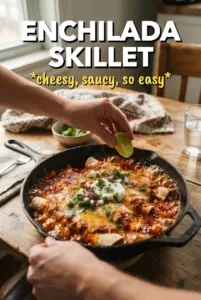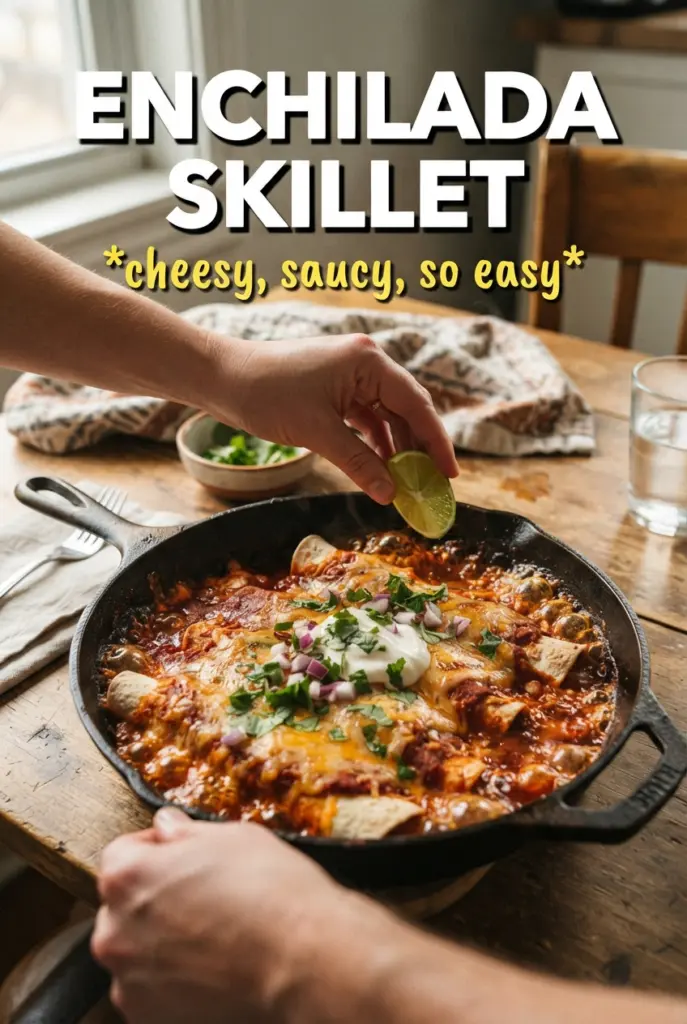
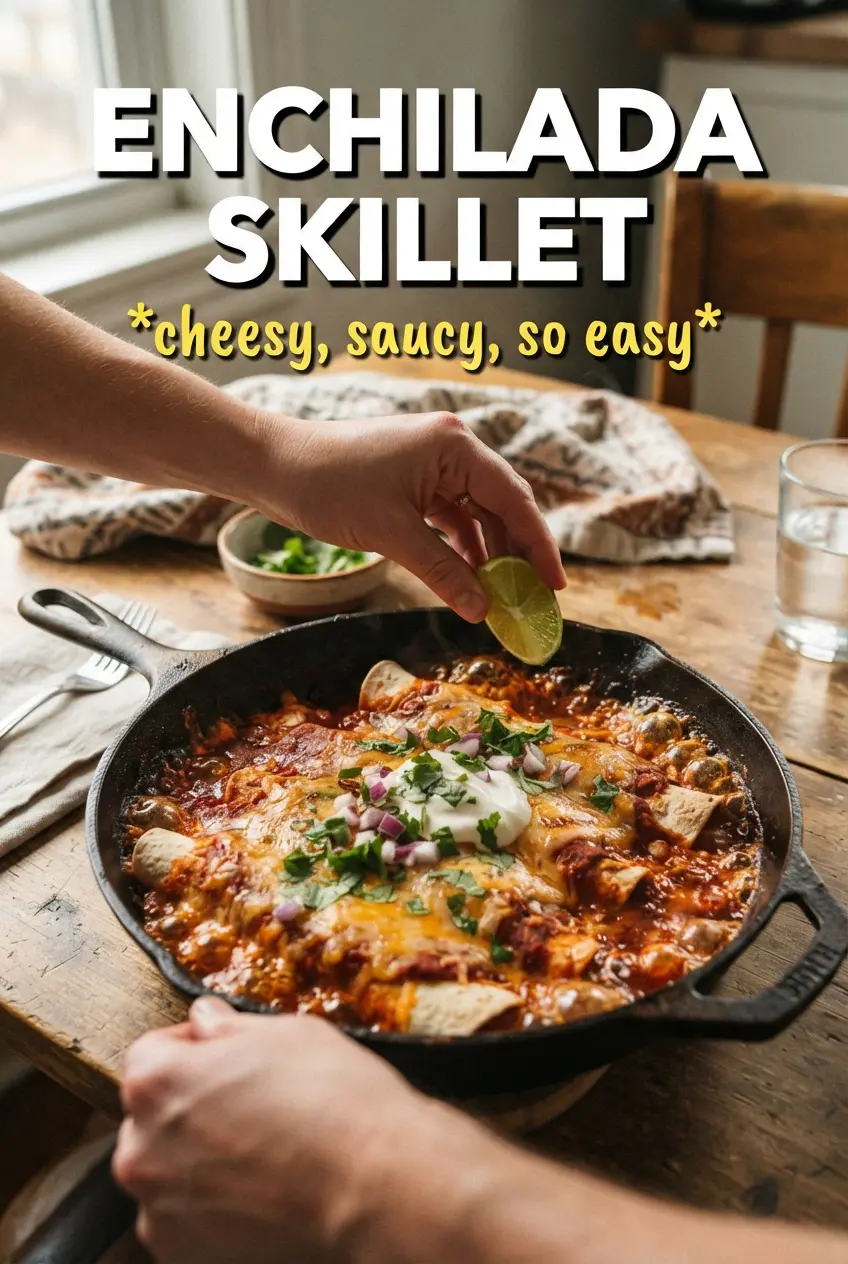
Deep red sauce, tender tortilla strips, and melted cheese make this enchilada skillet feel like the best part of a pan of enchiladas without the layering fuss. The tortillas soften right in the sauce, so every bite picks up the beef, beans, corn, and spice in one spoonful instead of sliding apart on the plate.
This version works because the tortillas simmer in the sauce long enough to turn supple without disappearing into mush. The ground beef gets browned first for flavor, then the onion, garlic, cumin, and chili powder bloom in the same pan before the sauce goes in. That means the whole dish tastes built, not dumped together.
Below, I’ve included the timing that keeps the tortillas intact, the cheese finish that gives you those browned spots on top, and a few swaps if you want to make it lighter, meatless, or easier to stretch for a bigger crowd.
The tortillas softened perfectly in the sauce and didn’t turn to mush. I loved how the cheese browned under the broiler, and my husband went back for seconds before I even sat down.
Love the saucy one-pan finish and bubbly cheese on this enchilada skillet? Save it to Pinterest for the nights when you want Tex-Mex comfort without rolling a single tortilla.
The Part That Keeps the Tortillas from Turning to Paste
The biggest mistake with skillet enchiladas is rushing the tortillas through the sauce too long or adding too much liquid at once. Corn tortillas need time to soften, but they still need some structure left when the cheese goes on top. If the pan looks soupy before the tortillas go in, the finished dish usually ends up loose instead of scoopable.
Pressing the tortilla strips into the sauce helps them absorb flavor from the bottom up. That’s better than stirring hard, which tears them apart before they’ve had a chance to soften evenly. You want the sauce bubbling gently around the edges, not boiling aggressively through the center.
- Ground beef — Use an 80/20 blend if you can. It brings enough fat for flavor, and you can drain off the excess after browning. Leaner beef works too, but the skillet will taste a little drier unless you leave a bit of the rendered fat in the pan.
- Red enchilada sauce — This is the backbone of the dish, so choose one you actually like on its own. Mild or medium both work. If your sauce tastes flat from the can, a pinch more cumin and chili powder wakes it up fast.
- Corn tortillas — These matter. Flour tortillas soften differently and can turn gummy in this format. Cutting the corn tortillas into strips helps them cook through evenly without clumping into one heavy layer.
- Black beans and corn — They stretch the dish and give it more texture. Canned is fine here; just drain them well so they don’t water down the skillet. Frozen corn works too, straight from the freezer.
- Cheddar and mozzarella — Cheddar gives the sharp flavor, mozzarella gives the melt. Using both is what gives you that stretchy, browned top instead of a dry cheese lid.
What Each Ingredient Is Actually Doing in This Recipe
- Primary ingredient (the star) — Quality matters most. Choose the best you can find.
- Cooking medium (oil, butter, or broth) — This carries flavors and prevents dryness.
- Seasonings (salt, pepper, spices, herbs) — Layer flavors so nothing overpowers. Build depth gradually.
- Aromatics (garlic, onion, herbs) — Cook with fat to bloom flavors. Become the foundation.
- Supporting ingredients — Complement the main ingredient without overpowering it.
- Sauce or liquid (if applicable) — Brings flavors together. Balance richness with acid.
- Acid (lemon, vinegar, wine, or other) — Brightens and prevents flat-tasting results.
- Final finish (garnish, glaze, or sauce) — Prevents one-dimensional taste and adds visual appeal.
Building the Skillet in the Right Order
Browning the Beef First
Cook the beef in a large oven-safe skillet until it loses its pink color and picks up a little browned crust on the bottom. That browning is where the savory depth comes from. Drain off the excess fat if the pan looks greasy, but leave enough behind to cook the onion. If you skip the browning step or crowd the pan too much, the dish tastes flatter and the sauce has less body.
Waking Up the Spices
Add the diced onion and let it soften for about three minutes before the garlic, cumin, and chili powder go in. The onion should look translucent at the edges and smell sweet, not raw. Stir the spices for a minute so they bloom in the fat and hit the hot pan before the sauce arrives. If the garlic starts to brown hard, the heat is too high and it will taste bitter in the finished skillet.
Softening the Tortillas Without Losing Them
Stir in the beans, corn, enchilada sauce, and diced tomatoes, then fold in the tortilla strips. Press them down so they’re coated and mostly submerged, then let the mixture simmer gently for 8 to 10 minutes. You’re watching for the tortillas to turn flexible and the sauce to thicken slightly around the edges. If the skillet dries out before the tortillas are tender, add a splash of water or broth; if it looks too loose, let it bubble uncovered for a minute or two longer.
Melting and Browning the Cheese Top
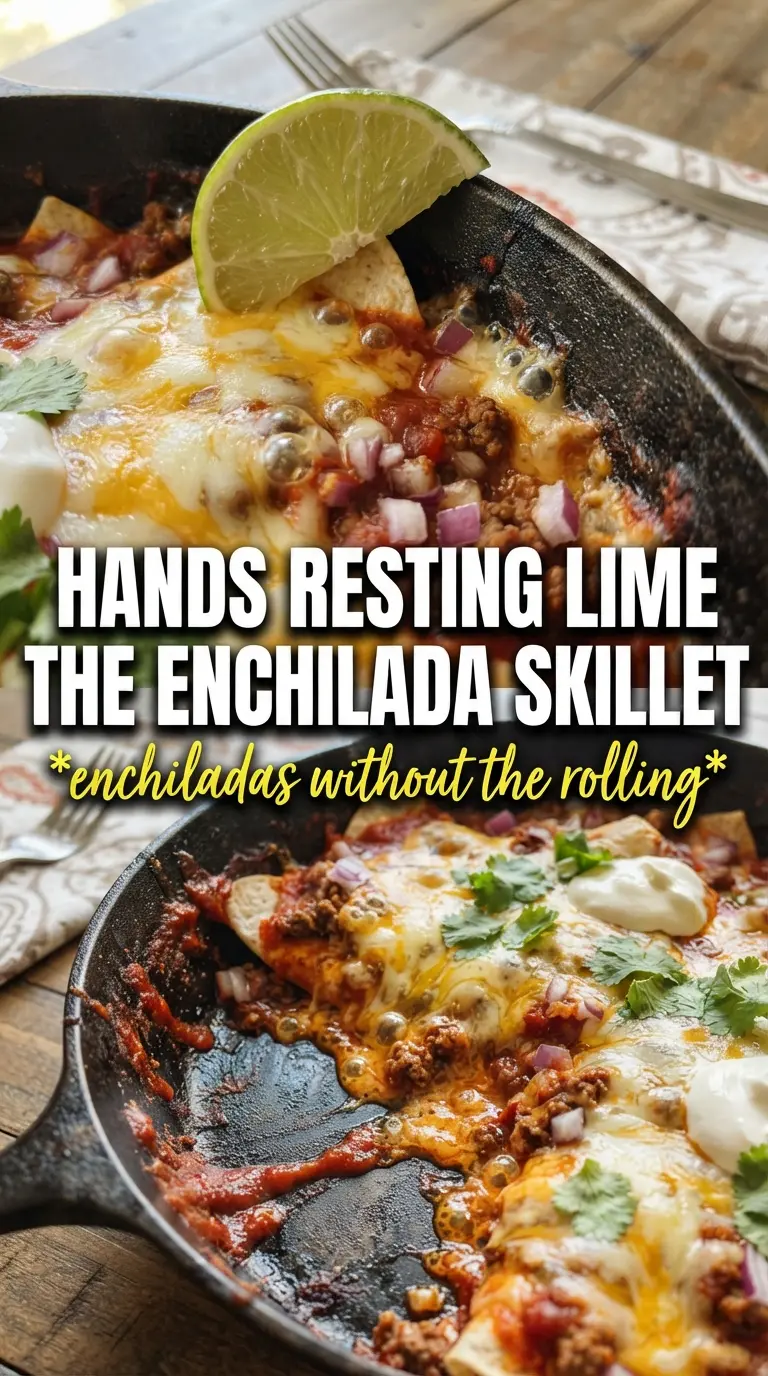
Scatter the cheese over the top and broil just until it melts, bubbles, and starts to take on golden spots. Stay close here, because the jump from melted to scorched happens fast. The skillet should be under the broiler for only a few minutes. Once the cheese is glossy and spotted with brown, pull it out and let it sit briefly so it settles instead of running everywhere when you serve it.
How to Adapt This Enchilada Skillet Without Losing the Point
Make It Gluten-Free Without Any Extra Work
This dish is naturally gluten-free as long as your enchilada sauce is certified gluten-free. Corn tortillas are the right choice here, and they give the skillet its texture. Just check the label on the sauce, since that’s where hidden flour or additives usually sneak in.
Swap in Ground Turkey for a Lighter Skillet
Ground turkey works well, but it needs a little help because it’s leaner than beef. Add a tablespoon of oil when you brown it and don’t overcook it before the sauce goes in. The skillet will taste a bit lighter and less rich, but the enchilada sauce keeps it from feeling dry.
Make It Vegetarian with Beans and More Vegetables
Skip the beef and add an extra can of black beans, plus diced zucchini or bell peppers if you want more volume. The trick is to cook the vegetables down first so they don’t leak water into the sauce later. You’ll lose the meaty richness, but the skillet still eats like a full dinner.
Storage and Reheating
- Refrigerator: Store leftovers in an airtight container for up to 4 days. The tortillas will soften more as they sit, but the flavor holds up well.
- Freezer: It freezes okay, though the tortilla texture gets softer after thawing. Cool it completely, pack it tightly, and freeze for up to 2 months.
- Reheating: Reheat covered in the oven at 350°F until hot, or warm single portions in the microwave. The common mistake is blasting it uncovered, which dries out the beef and hardens the cheese before the center is hot.
Answers to the Questions Worth Asking
Enchilada Skillet
Ingredients
Equipment
Method
- Brown the ground beef in a large oven-safe skillet over medium-high heat and drain the fat.
- Sauté the onion for 3 minutes, then add the garlic, cumin, and chili powder and cook for 1 minute, stirring until fragrant and evenly coated.
- Add the black beans, corn, enchilada sauce, and diced tomatoes, then stir to combine into a thick, saucy mixture.
- Fold in the tortilla strips and press them into the sauce, then simmer for 8-10 minutes until the tortillas soften and absorb some sauce.
- Scatter the shredded cheddar and mozzarella over the top, then broil for 3-4 minutes until bubbly and golden.
- Serve immediately with sour cream, avocado, and cilantro, and season with salt and pepper to taste.