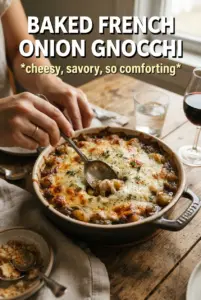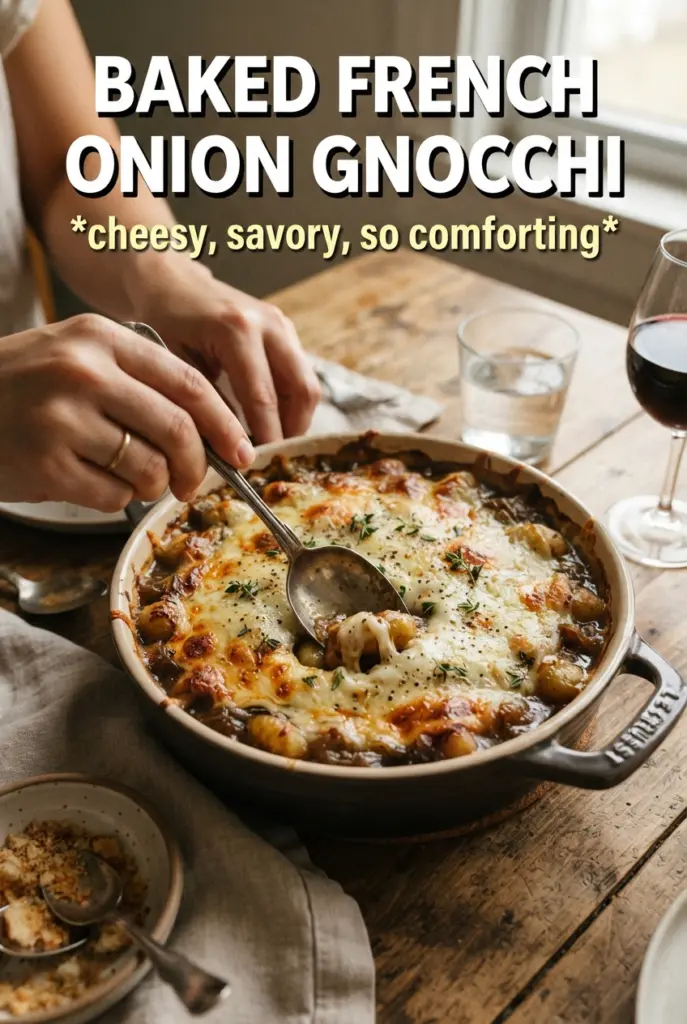
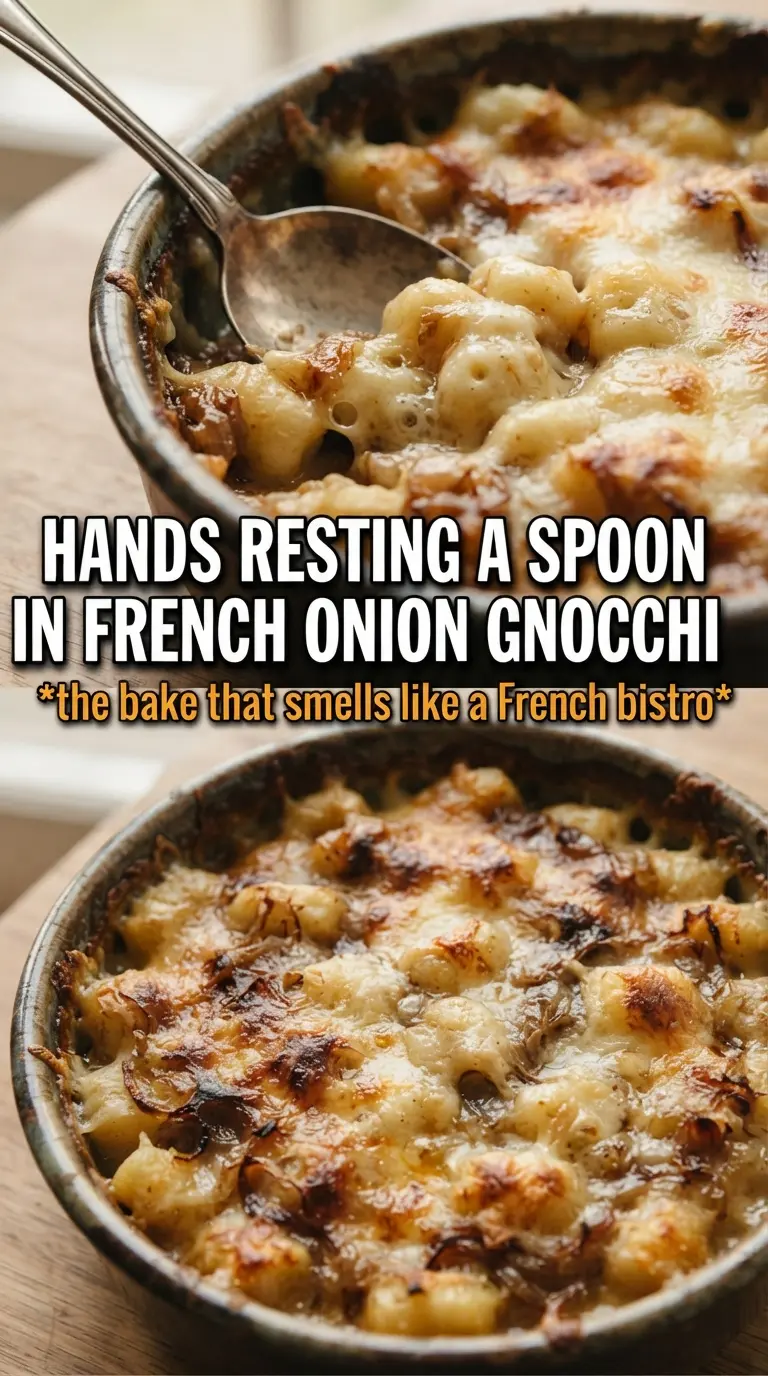
Deep caramelized onions, pillowy gnocchi, and a bubbling Gruyere top turn this into the kind of baked dinner that feels much slower and more special than the clock says it should. The sauce gets rich and savory from the onions and broth, then the cheese browns into a crust that cracks lightly under the spoon before giving way to the soft gnocchi underneath.
What makes this version work is patience at the start. The onions need the full 35 to 40 minutes over medium-low heat so they turn sweet and jammy instead of soft and pale. After that, the wine lifts the browned bits from the pan, and the broth plus cream build a sauce that’s loose enough for the uncooked gnocchi to finish in the oven without drying out.
Below, I’ve included the timing cues that matter most, plus a few swaps for when you don’t have Gruyere or dry sherry on hand. The goal is the same either way: a French onion-inspired skillet dinner with a spoonable broth and a proper browned top.
The onions took a while, but that was the whole point — they turned sweet and sticky, and the gnocchi baked up tender without getting mushy. The Gruyere browned beautifully and the broth stayed silky instead of watery.
Save this baked French onion gnocchi for the night when you want deep caramelized onion flavor, a bubbling Gruyere crust, and one skillet that goes from stovetop to oven.
The Part That Keeps French Onion Gnocchi from Turning Watery
The biggest mistake with a dish like this is rushing the onions. If they stay blonde, the sauce tastes flat and the finished bake reads more like cream and cheese than French onion anything. You want the onions deep amber, soft enough to collapse at the touch of a spoon, with the bottom of the pan picking up browned bits along the way.
That slow cooking does two jobs at once. It concentrates sweetness, and it gives the broth something to stand on so the sauce tastes layered instead of thin. Once the wine goes in, scrape the pan well and let it reduce for a minute or two before adding the broth and cream; otherwise the whole dish can taste a little raw and one-note.
- Onions — Yellow onions are the best choice here because they caramelize steadily and bring the sweetness this dish needs. Slice them thin and evenly so they soften at the same pace; thick wedges take longer and can leave you with some strands browned while others are still firm.
- Dry white wine or dry sherry — This is what cuts through the richness and loosens the fond from the pan. If you skip it, the sauce still works, but it loses some of that French onion depth. A splash of extra broth plus a teaspoon of apple cider vinegar is the closest stand-in.
- Gruyere — Gruyere melts into a stretchy, nutty crust that fits this dish better than basic mozzarella or cheddar. If you need a substitute, use Swiss cheese or a mix of Swiss and Parmesan, but expect a slightly sharper, less silky top.
- Uncooked potato gnocchi — Shelf-stable gnocchi is perfect because it finishes right in the sauce and soaks up flavor as it bakes. Fresh gnocchi can work too, but it softens faster, so keep a close eye on the bake time once it hits the oven.
What Each Ingredient Is Actually Doing in This Recipe
- Primary ingredient (the star) — Quality matters most. Choose the best you can find.
- Cooking medium (oil, butter, or broth) — This carries flavors and prevents dryness.
- Seasonings (salt, pepper, spices, herbs) — Layer flavors so nothing overpowers. Build depth gradually.
- Aromatics (garlic, onion, herbs) — Cook with fat to bloom flavors. Become the foundation.
- Supporting ingredients — Complement the main ingredient without overpowering it.
- Sauce or liquid (if applicable) — Brings flavors together. Balance richness with acid.
- Acid (lemon, vinegar, wine, or other) — Brightens and prevents flat-tasting results.
- Final finish (garnish, glaze, or sauce) — Prevents one-dimensional taste and adds visual appeal.
Building the Broth So the Gnocchi Cooks Through Without Overbaking
Caramelizing the Onions Slowly
Melt the butter with the olive oil in an oven-safe skillet, then add the onions and salt them lightly so they release moisture. Keep the heat at medium-low and give them time; they should shrink, soften, and turn a deep golden brown, not blacken at the edges. If the pan looks dry before the onions are done, a small splash of water helps loosen the bottom without scorching the sugars.
Deglazing and Layering the Base
Pour in the wine or sherry and stir up every browned bit from the pan. Let it bubble until the sharp alcohol smell fades and the liquid reduces a little, then add the garlic and thyme just long enough to bloom their aroma. Garlic burns fast in hot fat, so it goes in after the wine, not before.
Turning It into a Bake
Stir in the broth, Worcestershire sauce, and cream, then bring the mixture to a steady simmer before adding the gnocchi. The sauce should look loose at this stage, almost thinner than you want, because the gnocchi absorbs liquid in the oven and the cheese thickens everything on top. Scatter the Gruyere over the surface and bake or broil until the top is deeply golden and the sauce bubbles around the edges.
How to Adapt This for a Smaller Dinner or a Different Dairy Finish
Dairy-Free Version
Use olive oil in place of the butter, swap the heavy cream for full-fat coconut cream or an unsweetened oat cooking cream, and top with a good melting dairy-free cheese. The flavor shifts a little away from classic French onion, but the sweet onions and savory broth still carry the dish well.
Gluten-Free Swap
Use certified gluten-free gnocchi and check your Worcestershire sauce label, since some brands include gluten. The texture stays nearly the same, and the rest of the recipe needs no adjustment.
When You Want It Extra Rich
Stir a small handful of Parmesan into the sauce before the gnocchi goes in, then keep the Gruyere on top. That gives you a saltier, more savory base, but don’t overdo it or the final dish can tip heavy instead of luxurious.
Storage and Reheating
- Refrigerator: Keep leftovers covered for up to 3 days. The sauce thickens as it chills and the gnocchi softens a bit, which is normal.
- Freezer: It freezes, but the cream sauce and gnocchi lose some of their texture. If you do freeze it, cool it completely and store in a tightly sealed container for up to 1 month.
- Reheating: Warm it covered in a 350F oven with a splash of broth to loosen the sauce. The common mistake is blasting it in the microwave until the cheese turns greasy and the gnocchi gets rubbery.
Answers to the Questions Worth Asking
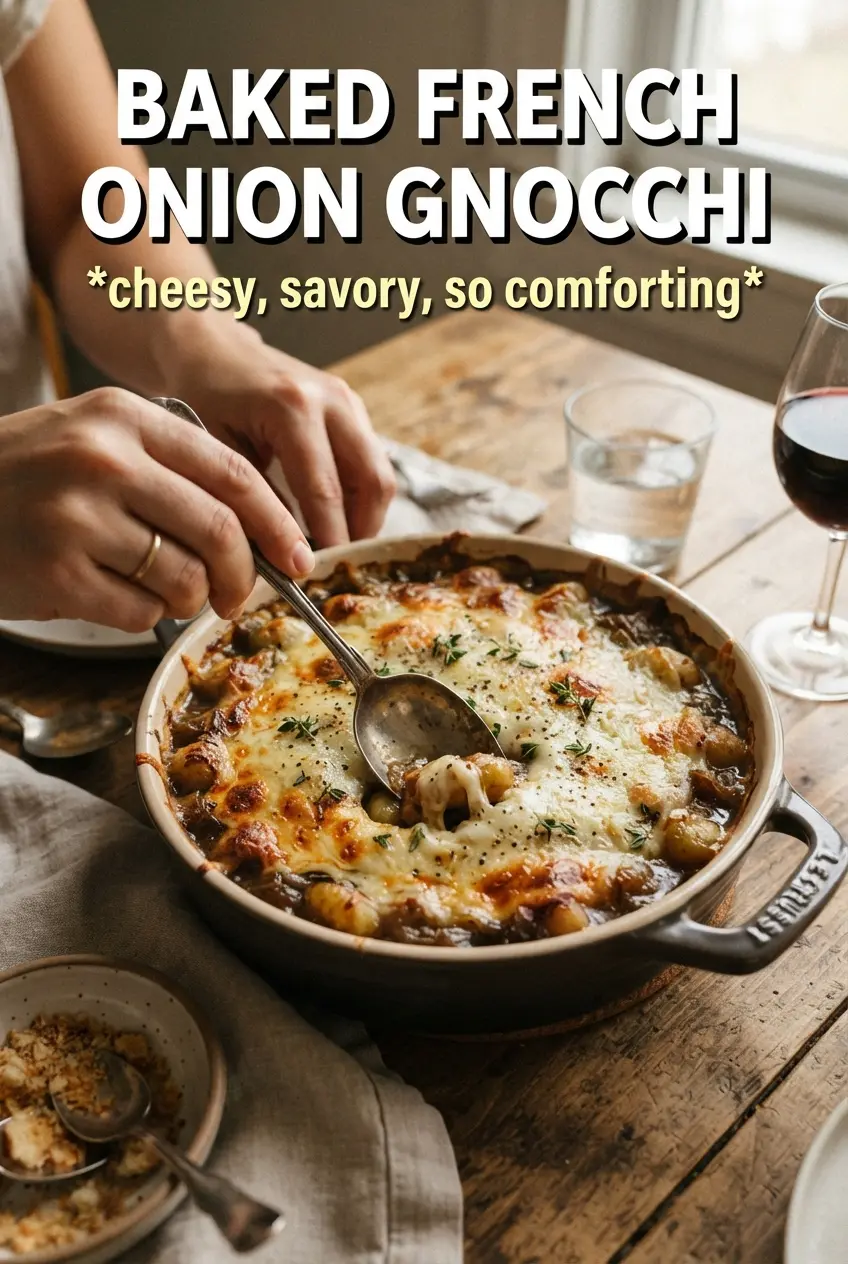
Baked French Onion Gnocchi
Ingredients
Equipment
Method
- Melt butter with olive oil in a large oven-safe skillet over medium-low heat, then add the thinly sliced onions and season with salt and pepper. Cook, stirring occasionally, for 35-40 minutes until the onions are deeply caramelized and dark golden.
- Pour in the dry white wine (or dry sherry) and deglaze the skillet, scraping up browned bits. Cook for 2 minutes until the liquid reduces slightly.
- Add minced garlic and fresh thyme, stirring to coat the onions. Cook for 1 minute until fragrant.
- Add beef broth, Worcestershire sauce, and heavy cream, stirring to combine. Bring the mixture to a simmer.
- Add uncooked potato gnocchi and stir to coat them in the simmering onion broth. Cook just until evenly distributed and glossy.
- Scatter shredded Gruyère over the top in an even layer. Keep the skillet level so the cheese forms a crust as it melts.
- Broil or bake at 425F for 15-18 minutes until the gnocchi are cooked through, the sauce is bubbling at the edges, and the cheese is golden. Remove when the top looks browned and set.