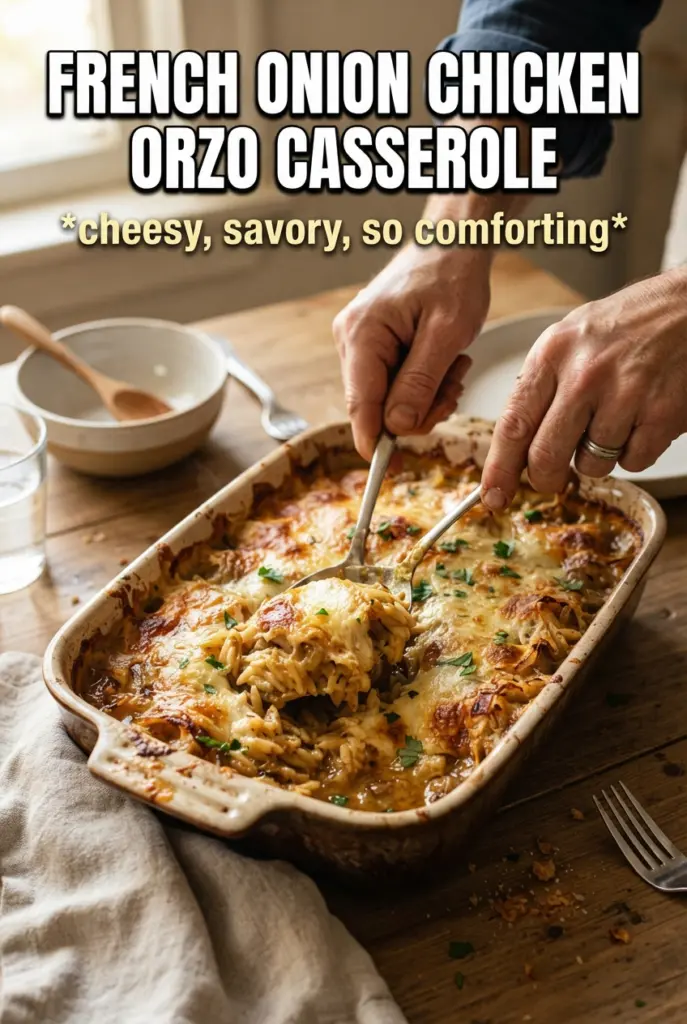
Deeply caramelized onions turn this French onion chicken orzo casserole into something far more satisfying than a standard baked pasta. The onions melt into the broth and wine, the orzo cooks right in that savory base, and the Gruyere on top bakes into a bronzed crust that cracks a little when you scoop through it. You get creamy, spoonable comfort with the kind of browned onion richness that makes the whole dish taste like it took all day.
The trick here is giving the onions enough time to go past soft and pale. Thirty minutes can feel long when the pan starts out full, but that slow browning is what gives the casserole its backbone. The uncooked orzo goes straight into the skillet, so it absorbs all that flavor as it bakes instead of tasting separately sauced. Cream cheese helps the filling stay plush, while a little wine and Worcestershire keep the whole thing from reading flat or one-note.
Below, I’ve included the parts that matter most: how to keep the orzo from going gummy, which cheese gives you the best crust, and what to change if you need to make it ahead or swap ingredients.
The onions got sweet and jammy, and the orzo came out creamy without turning mushy. I used the Gruyere on top like suggested, and the crust browned beautifully while the chicken stayed tender.
Save this French onion chicken orzo casserole for the nights when you want caramelized onions, creamy orzo, and a golden Gruyere top in one pan.
The Reason the Onions Need the Full 30 Minutes
French onion flavor lives or dies by the onions. If they only soften, the casserole tastes like chicken and pasta with onion in it; when they go deeply golden and jammy, they turn into the sauce itself. That slow caramelization is what gives the dish its sweetness, body, and that classic savory edge you expect from French onion anything.
The other place people go wrong is rushing the liquid. Once the wine goes in, let it cook down before adding the broth. That step pulls up the browned bits from the pan and keeps the final sauce from tasting sharp or thin. The orzo then cooks in a seasoned, concentrated base instead of a bland one.
- Onions — Yellow onions are the right choice here because they caramelize into a mellow, almost jammy sweetness. White onions work in a pinch, but they stay a little sharper.
- Gruyere — This is what gives you the nutty, stretchy top and that classic French onion character. Swiss cheese can stand in, but it won’t brown with the same depth.
- Cream cheese — It melts into the broth and gives the casserole a creamy, cohesive texture without needing a separate sauce. Cut it into cubes so it disappears faster and more evenly.
- Beef broth and Worcestershire — These two carry the savory backbone. Chicken broth will work, but the dish loses some of that dark French onion richness.
- Orzo — Use it dry and uncooked. That lets it absorb flavor as it bakes, but it also means you need enough liquid in the pan for the pasta to finish properly.
What Each Ingredient Is Actually Doing in This Recipe
- Primary ingredient (the star) — Quality matters most. Choose the best you can find.
- Cooking medium (oil, butter, or broth) — This carries flavors and prevents dryness.
- Seasonings (salt, pepper, spices, herbs) — Layer flavors so nothing overpowers. Build depth gradually.
- Aromatics (garlic, onion, herbs) — Cook with fat to bloom flavors. Become the foundation.
- Supporting ingredients — Complement the main ingredient without overpowering it.
- Sauce or liquid (if applicable) — Brings flavors together. Balance richness with acid.
- Acid (lemon, vinegar, wine, or other) — Brightens and prevents flat-tasting results.
- Final finish (garnish, glaze, or sauce) — Prevents one-dimensional taste and adds visual appeal.
How to Build the Casserole Without Ending Up With Gummy Orzo
Caramelizing the Onions First
Start with the onions in butter and give them time. They need to soften, then slowly take on color until they look deep golden-brown and smell sweet, not raw. If the pan starts to dry out or the onions look like they’re sticking too aggressively, lower the heat and let them continue more patiently. Rushing this stage is how you end up with a casserole that tastes flat.
Reducing the Wine, Not Just Heating It
Once the garlic and thyme go in, pour in the wine and let it bubble for a couple of minutes. You’re not just warming it through; you’re burning off the harsh alcohol edge and loosening the browned bits from the pan. When the liquid has reduced a little and smells rounder, add the broth and Worcestershire. If you skip the reduction, the finished dish can taste boozy instead of savory.
Letting the Orzo Finish in the Oven
Stir in the uncooked orzo and chicken, then bring the skillet to a simmer before it goes into the oven. That head start matters because the pasta needs some liquid movement to begin cooking evenly. Once it bakes, the orzo should be tender but still hold its shape. If the mixture looks dry before baking, it won’t fix itself in the oven, so the pan should look loose and brothy when you add the cheese.
Blistering the Gruyere Top
Scatter the cheese evenly across the surface and bake until it melts into a browned, slightly crisp lid. You want some dark spots on the cheese, not just a pale melt. That top layer gives the casserole its most satisfying texture contrast against the creamy filling underneath. If the cheese browns before the orzo is tender, cover the dish loosely with foil and keep baking until the pasta is done.
What to Change When You Need to Work Around an Ingredient
Make It Gluten-Free
Swap the orzo for a gluten-free small pasta that bakes well, but watch the liquid closely because different brands absorb differently. Add a splash more broth if the pan looks dry before it goes into the oven. The texture will still be creamy, though the pasta may be a little softer than traditional orzo.
Dairy-Free Version
Use a dairy-free cream cheese that melts smoothly and replace the Gruyere with a plant-based shred that browns well. The flavor won’t be as nutty, but the casserole will still have a creamy center and a baked top. Choose a brand that melts instead of one that just sits on top.
Use Chicken Thighs Instead of Breast
Boneless, skinless thighs work well if you want a juicier result and a little more richness. Cut them into bite-size pieces and bake until just cooked through so they stay tender. The dish gets a deeper savory note from the thigh meat, which fits the caramelized onion base nicely.
Storage and Reheating
- Refrigerator: Store leftovers covered for up to 4 days. The orzo will thicken as it sits, so expect a softer, more casserole-like texture the next day.
- Freezer: It freezes fairly well in individual portions for up to 2 months, though the pasta will be a little softer after thawing. Cool it completely before freezing and wrap it tightly.
- Reheating: Reheat covered in a 325F oven with a splash of broth or water to loosen the sauce. The biggest mistake is blasting it in the microwave until the chicken turns dry and the pasta tightens up.
Questions I Get Asked About This Recipe
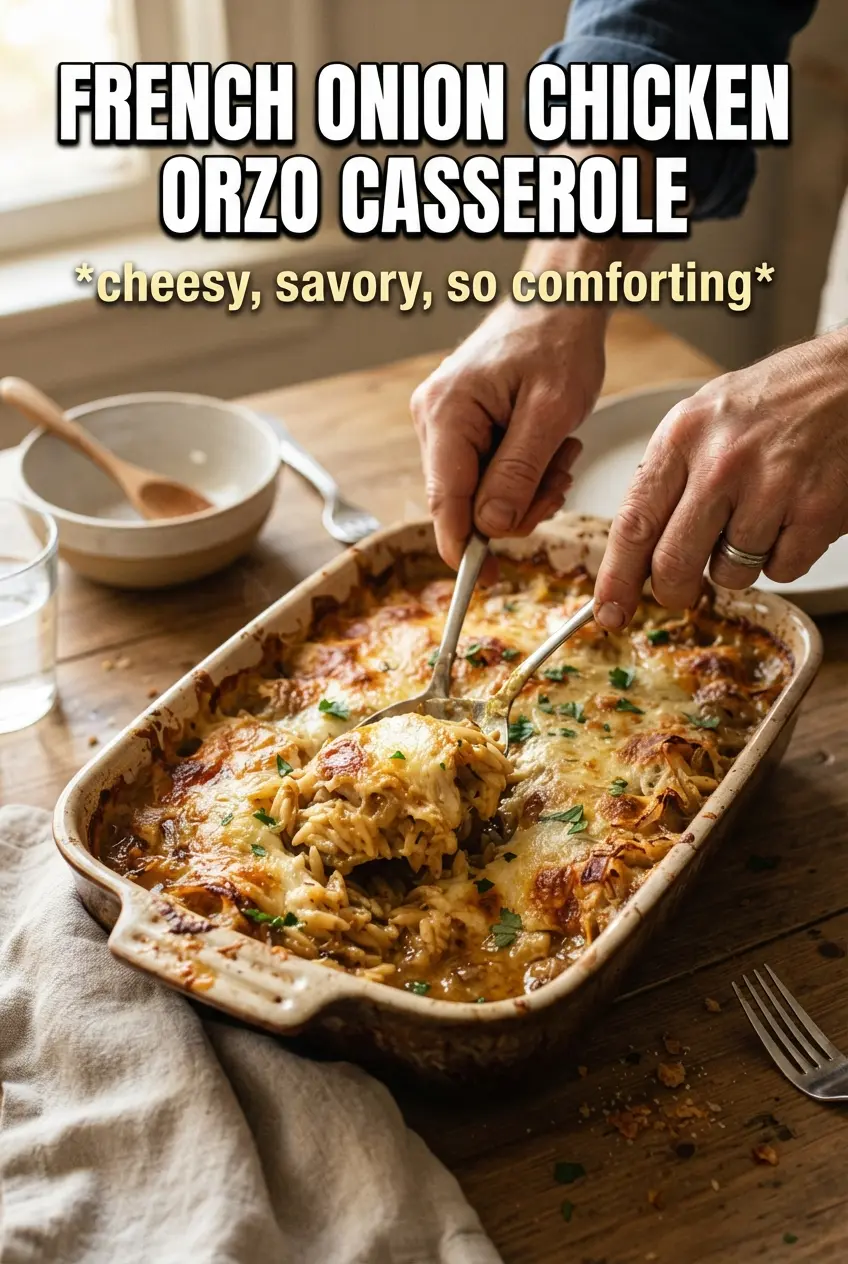
French Onion Chicken Orzo Casserole
Ingredients
Equipment
Method
- Preheat the oven to 375F.
- Melt butter in a large oven-safe skillet over medium heat, then cook the onions for 30-35 minutes until deeply caramelized, stirring occasionally and watching for deep golden-brown edges.
- Add the garlic and dried thyme and cook for 2 minutes, stirring until fragrant.
- Add the white wine and cook for 2 more minutes, scraping up browned bits from the pan.
- Add the beef broth, Worcestershire sauce, and uncooked orzo, then stir in the diced chicken until evenly combined.
- Bring everything to a simmer, then stir in the cubed cream cheese until fully melted and the mixture looks creamy.
- Season with salt and pepper, scatter the shredded Gruyere over the top, and ensure most of the cheese is visible for browning.
- Bake for 25-30 minutes at 375F until the orzo is cooked through, the chicken is done, and the cheese is golden with lightly browned spots.
- Top with fresh thyme just before serving so the garnish stays bright and aromatic.