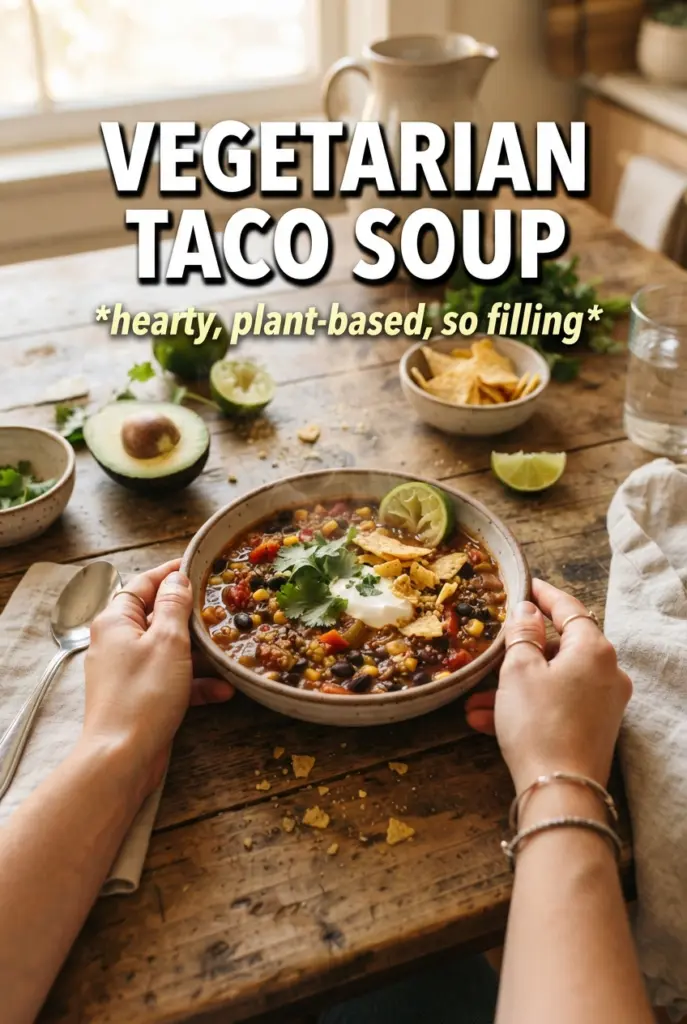
Vegetarian taco soup lands in that sweet spot between hearty and light: a big bowl with enough beans and vegetables to eat like a meal, but still bright with tomatoes, lime, and taco seasoning. The broth comes out tomato-rich and a little smoky, with black beans, pinto beans, and kidney beans giving it that thick, spoon-coating texture that makes you reach for another chip. It tastes like something that simmered all afternoon, even though it’s on the table fast.
What makes this version work is the layering. Onion and bell pepper get a head start so the soup doesn’t taste like canned ingredients dumped together, and the spices bloom in the pot before the broth goes in. That short step wakes up the cumin and chili powder and keeps the taco seasoning from tasting flat. Fire-roasted tomatoes add a deeper, less acidic base, while Rotel brings the little bit of heat and tang that keeps each spoonful lively.
Below you’ll find the easiest way to build the soup without overcooking the beans, plus the toppings that make it taste complete. A squeeze of lime at the end matters more than people think here, and the right garnish turns a good pot of soup into the kind you want again tomorrow.
The broth had that taco-seasoning flavor without tasting salty, and the beans stayed hearty instead of turning mushy. I added the lime at the table like you suggested and it made the whole pot taste brighter.
Love the smoky, bean-packed comfort of this Vegetarian Taco Soup? Save it to Pinterest for busy nights when you want a fast Tex-Mex dinner with real staying power.
The Secret to Keeping Taco Soup Thick Without Turning It Pasty
The texture of this soup comes from the beans and tomatoes working together, not from a thickener. If you let it boil hard for too long, the beans start to break down and the broth can turn muddy instead of clean and hearty. A steady simmer is enough to meld the flavors while keeping each bean intact.
Another common mistake is adding too much broth too early. Start with the amount here, then adjust only if you want a looser soup. The broth should still cling a little to the spoon, with the tomatoes and beans giving it body.
- Black beans — These add the deepest bean flavor and hold their shape well. Drain them, but don’t rinse them obsessively if you like a slightly thicker broth.
- Pinto beans — They soften into the soup a bit more than black beans, which helps create that taco-soup texture without any flour or cornstarch.
- Fire-roasted tomatoes — This is the ingredient that gives the soup its darker, slightly smoky background. Regular diced tomatoes work, but the fire-roasted can is worth grabbing if you want more depth.
- Rotel tomatoes — This brings the spice and acidity in one can. If you can’t find it, use diced tomatoes plus a small can of green chiles and a pinch more salt.
- Vegetable broth — Use a broth you’d actually sip. If yours is bland, the soup will taste thin even with all the spices.
What Each Ingredient Is Actually Doing in This Recipe
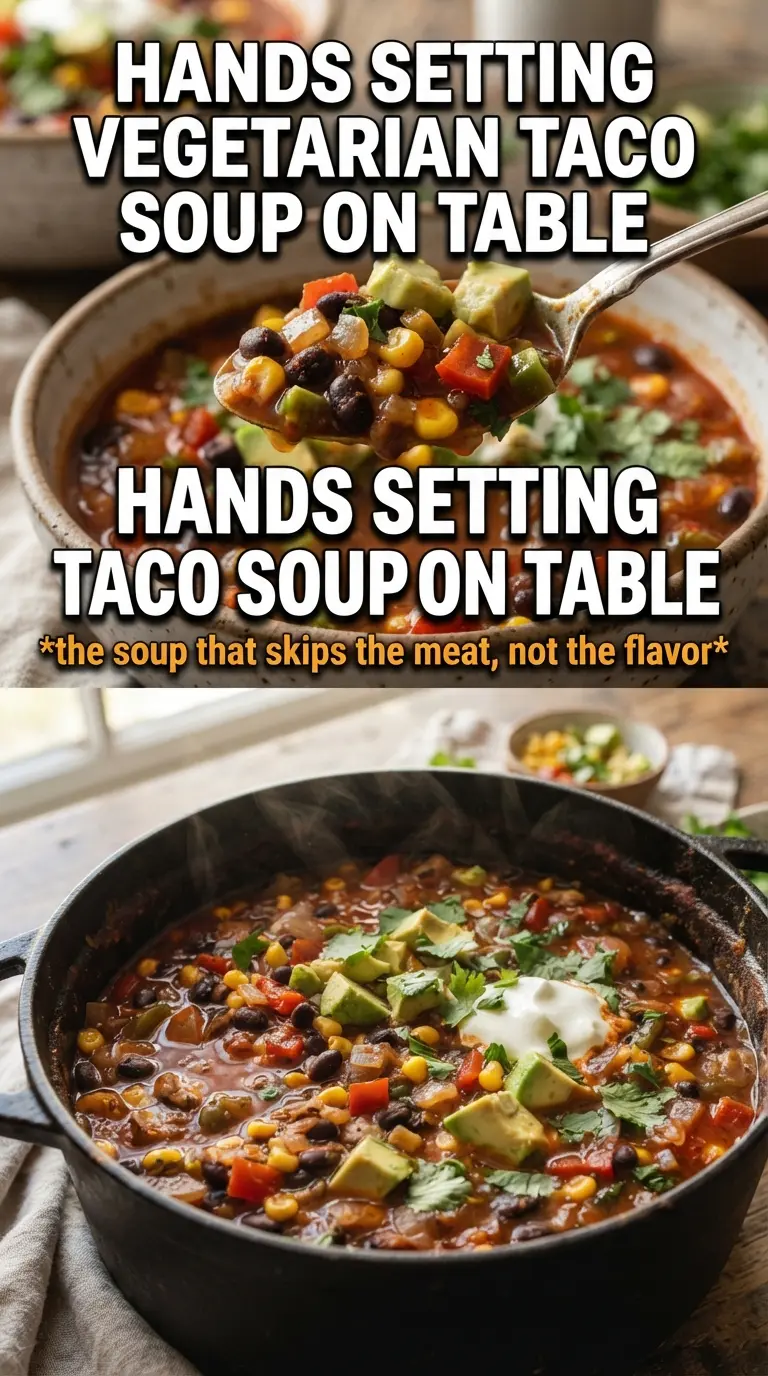
- Primary ingredient (the star) — Quality matters most. Choose the best you can find.
- Cooking medium (oil, butter, or broth) — This carries flavors and prevents dryness.
- Seasonings (salt, pepper, spices, herbs) — Layer flavors so nothing overpowers. Build depth gradually.
- Aromatics (garlic, onion, herbs) — Cook with fat to bloom flavors. Become the foundation.
- Supporting ingredients — Complement the main ingredient without overpowering it.
- Sauce or liquid (if applicable) — Brings flavors together. Balance richness with acid.
- Acid (lemon, vinegar, wine, or other) — Brightens and prevents flat-tasting results.
- Final finish (garnish, glaze, or sauce) — Prevents one-dimensional taste and adds visual appeal.
Building the Broth in the Right Order
Softening the Onion and Bell Pepper
Warm the olive oil first, then cook the onion and bell pepper until the onion turns translucent and the pepper loses its raw edge. You’re not looking for browning here; you want the vegetables softened enough that they disappear into the broth instead of floating as crunchy pieces. If the pan is crowded or the heat is too low, they’ll steam and stay sharp-tasting.
Blooming the Spices
Stir in the garlic, taco seasoning, cumin, chili powder, and smoked paprika and let them cook for about a minute. The pot should smell toasted and fragrant, not burnt. This step pulls the flavor out of the spices before the broth dilutes them, which is why the finished soup tastes seasoned all the way through instead of just on the surface.
Simmering for a Soup That Tastes Integrated
Add the tomatoes, beans, corn, and broth, then bring everything up to a boil before lowering it to a steady simmer. Fifteen to twenty minutes is enough for the flavors to settle together. If you go much longer, the beans can soften too much and the vegetables lose their brightness. Taste at the end and adjust salt and pepper only after the soup has had time to reduce a little.
How to Adapt This for Different Diets and Different Nights
Make It Dairy-Free Without Losing Creaminess
Skip the sour cream or use vegan sour cream on top. The soup itself doesn’t need dairy to feel rich because the beans and tomatoes already give it body. Avocado adds the same cooling contrast that sour cream usually brings.
Make It a Little Spicier
Add diced jalapeño with the onion and bell pepper, or stir in a pinch of cayenne with the spices. The soup already has a gentle Tex-Mex base, so extra heat fits naturally without changing the structure of the recipe.
Use What Beans You Have
The exact bean mix isn’t sacred. If you only have black beans and pinto beans, use those. If you want to swap in cannellini or great northern beans, the soup will be a little lighter and less earthy, but it still works well.
Stretch It for a Bigger Crowd
This soup scales cleanly. Add another can of beans, another can of tomatoes, and an extra cup or two of broth if you need more servings. Keep the seasoning modest at first, then taste after simmering so the larger batch doesn’t end up too salty.
Storage and Reheating
- Refrigerator: Store in an airtight container for 4 to 5 days. The broth thickens a bit as it sits because the beans keep softening.
- Freezer: It freezes well for up to 3 months. Cool it completely first, then portion it into freezer containers, leaving a little space at the top.
- Reheating: Warm it gently on the stove over medium-low heat or in the microwave in short bursts. If it seems too thick, add a splash of broth or water after reheating rather than before, since the soup thickens as it stands.
Answers to the Questions Worth Asking
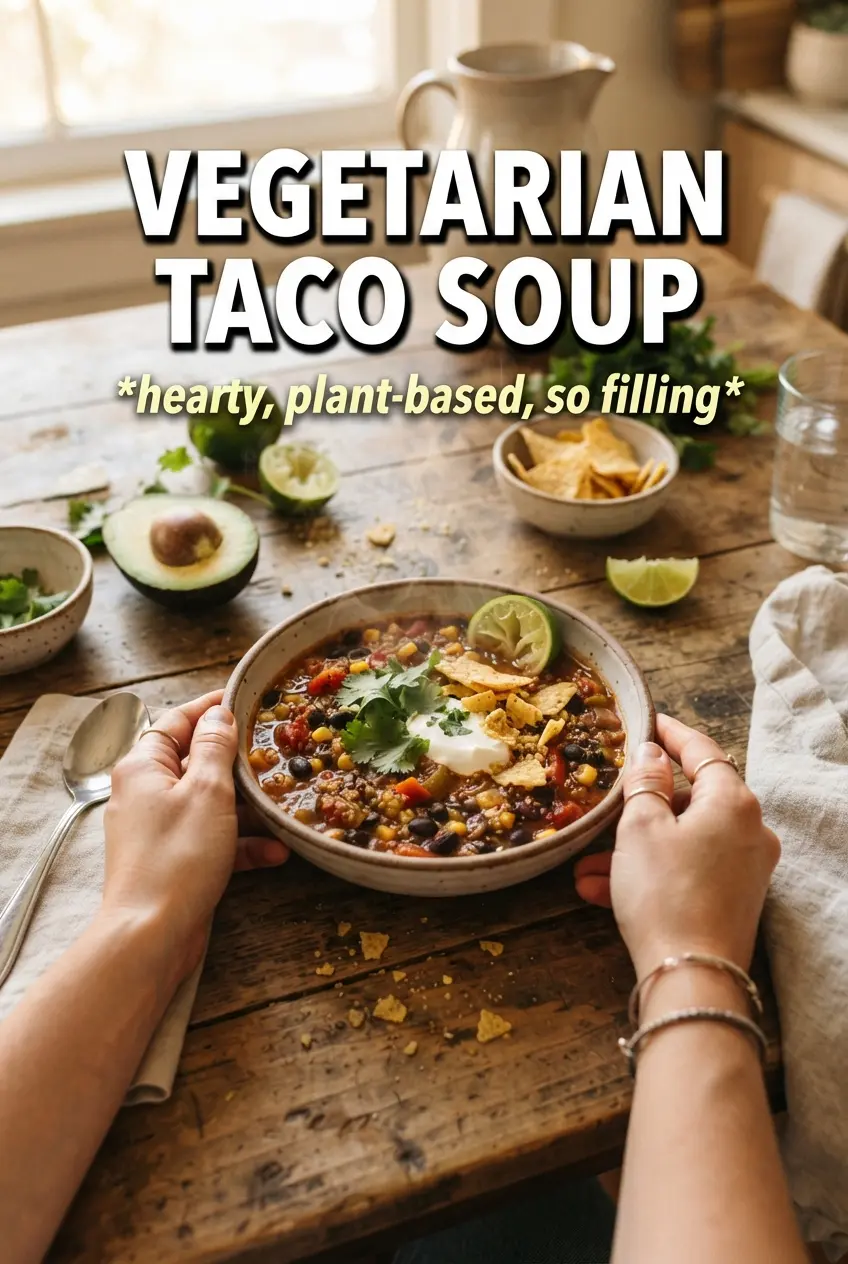
Vegetarian Taco Soup
Ingredients
Equipment
Method
- Heat 1 tablespoon olive oil in a large pot over medium heat, then sauté the onion and green bell pepper for 4-5 minutes until softened and fragrant.
- Add the minced garlic and cook for 1 minute, stirring constantly so it smells aromatic but doesn’t brown.
- Stir in taco seasoning, cumin, chili powder, and smoked paprika, cooking for about 30 seconds until the spices darken slightly and bloom.
- Add black beans, pinto beans, kidney beans, corn, Rotel tomatoes, diced tomatoes, fire-roasted tomatoes, and vegetable broth, then bring the mixture to a boil.
- Simmer the soup for 15-20 minutes until the flavors meld and the broth looks cohesive.
- Season with salt and pepper to taste, then serve hot with avocado, cilantro, lime wedges, sour cream, and tortilla chips.