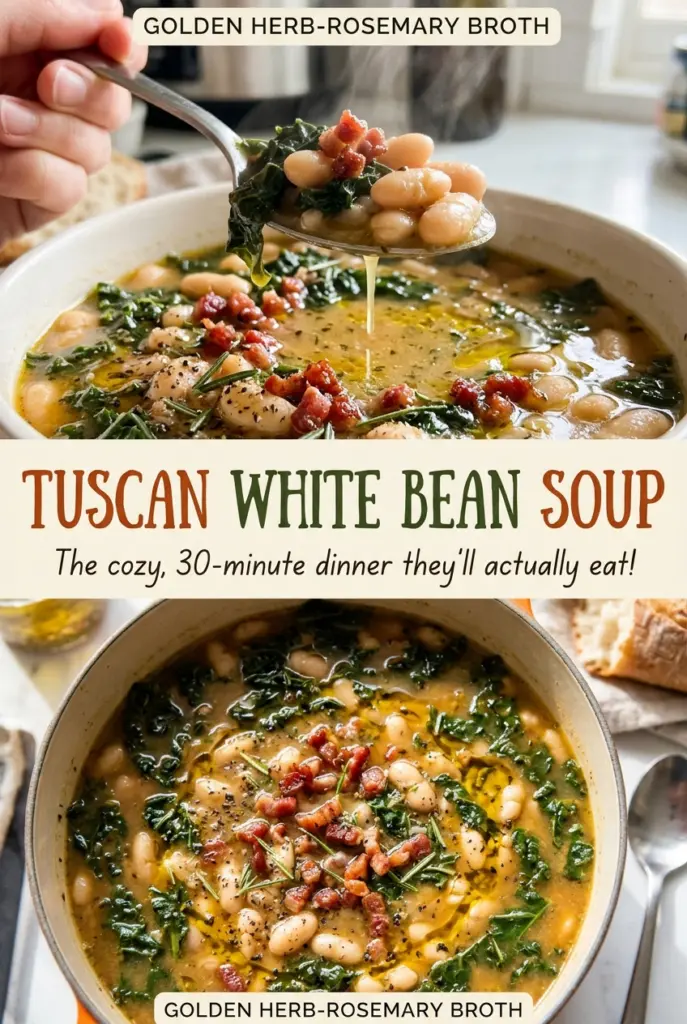
Golden broth, creamy cannellini beans, and tender ribbons of kale give this Tuscan white bean soup the kind of depth that makes a simple pot feel complete. The pancetta brings a salty, savory base, while rosemary and parmesan rind turn the broth from basic to layered and rich. It’s the sort of soup that eats like a full meal, especially with crusty bread for soaking up every last spoonful.
What makes this version work is the order of the build. The pancetta renders first, so the onion, celery, and garlic can cook in that seasoned fat instead of starting from plain oil. Then the beans simmer long enough to soften and release starch, which is what gives the soup body without needing cream. A quick mash of some of the beans at the end thickens the pot in a way that feels natural, not heavy.
You’ll also find a few practical notes below on swapping bacon for pancetta, making it vegetarian, and getting the kale tender without turning it dull or swampy.
The broth turned out silky and the mashed beans gave it this perfect thickness without needing cream. I used bacon, and my husband kept going back for a second bowl with extra parmesan on top.
Save this Tuscan white bean soup for the nights when you want a brothy, hearty bowl with rosemary, kale, and a parmesan-rich finish.
The Step That Gives This Soup Its Body
Most bean soups go thin because everything simmers together and the broth never gets a chance to pick up enough starch. The fix here is simple: let the beans cook long enough to soften, then mash a portion of them right in the pot. That gives the soup a creamy texture without turning it into puree.
The parmesan rind matters if you have one. It doesn’t make the soup taste cheesy in a loud way; it adds a rounded, savory backbone that sits underneath the rosemary and tomatoes. If your soup tastes flat at the end, it usually needs a little more salt and a little longer to simmer after the beans go in.
What Each Ingredient Is Doing in This Bowl
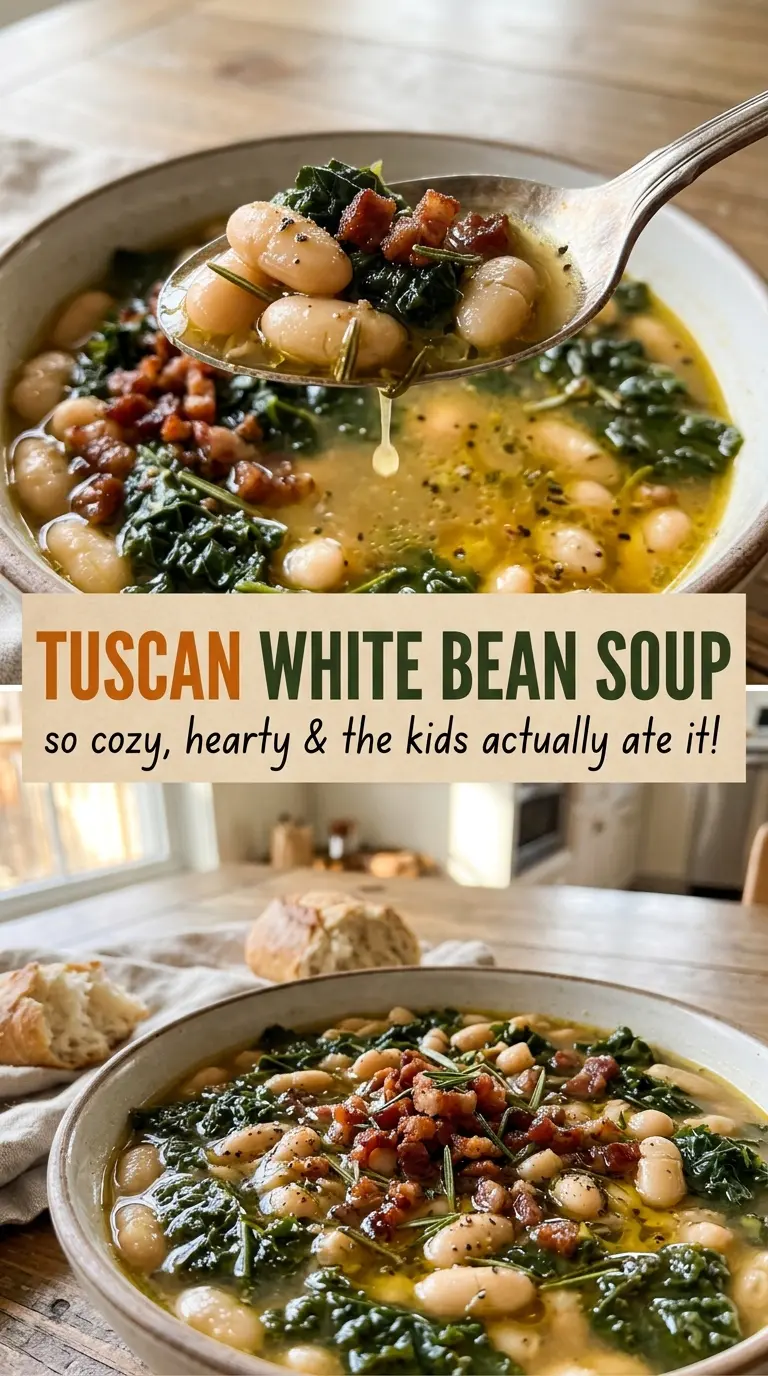
- Cannellini beans — These are the backbone of the soup. They turn creamy on the inside and hold their shape better than softer beans, which gives you body without mush.
- Pancetta or bacon — This is your first layer of flavor. Pancetta is a little cleaner and rounder; bacon gives a smokier edge. Either one works as long as you cook it until the fat renders and the pieces crisp up.
- Kale — Kale stands up well in hot broth and keeps some texture after simmering. Chop it into bite-size pieces and strip out the tough stems, or you’ll end up chewing on woody bits in every bowl.
- Parmesan rind — Optional, but worth using if you’ve got it. It melts flavor into the broth slowly, and you can fish it out before serving. If you don’t have one, a little extra parmesan at the table helps, but it won’t replace the same depth in the pot.
- Rosemary — Fresh rosemary is strong here, so use sprigs, not a heavy-handed pile of chopped leaves. Simmering the sprigs whole gives the broth an herbal edge without turning it bitter.
Building the Soup in Layers, Not All at Once
Rendering the Pancetta
Cook the pancetta in a large pot over medium heat until it’s browned and crisp at the edges and the fat has collected in the bottom. If you rush this and pull it too early, you lose both the texture and the flavored fat that carries the next stage. Lift the pancetta out and keep it aside, but leave the fat in the pot.
Softening the Aromatics
Add the onion and celery to the fat first, then the garlic once the onion starts to turn translucent. The onions should soften and smell sweet, not brown hard on the edges. Garlic goes in for just a minute or so; if it darkens, it turns sharp and bitter in the finished soup.
Simmering the Broth and Beans
Pour in the tomatoes, broth, rosemary, parmesan rind, and Italian seasoning, then bring the pot up to a steady boil before lowering it to a simmer. Add the beans and give them about 20 minutes so they can absorb the broth and start to break down. A hard boil here will rough up the beans and make the broth cloudy in a heavy, muddy way.
Finishing with Kale and a Little Thicken
Pull out the rosemary and parmesan rind before you mash a portion of the beans against the side of the pot. You want some beans intact and some broken down so the soup turns silky, not paste-like. Stir in the kale at the end and simmer just until it wilts and turns deep green, then season and serve with olive oil, parmesan, and the crisp pancetta on top.
Three Useful Ways to Change This Soup Without Losing What Makes It Good
Make it vegetarian
Skip the pancetta and use olive oil to soften the onion and celery, then lean harder on the parmesan rind if you have one. Vegetable broth works fine here, but choose one that tastes savory on its own or the soup can land a little thin. A pinch of smoked paprika can replace some of the depth you lose from the meat.
Use bacon instead of pancetta
Bacon gives the soup a smokier finish, which changes the flavor but not the structure. If the bacon is very salty, wait until the end to adjust the salt so you don’t overdo it while the broth is still reducing. Thick-cut bacon needs a little extra time to render fully, so don’t pull it too soon.
Use Swiss chard instead of kale
Swiss chard softens faster and brings a milder, cleaner green flavor. Add the stems a few minutes before the leaves if you want them to soften properly, because the ribs take longer than the greens. The soup will be a little more delicate and less rustic, but it still works beautifully.
Make it gluten-free and still satisfying
The soup is naturally gluten-free as written, so the real work is in the bread you serve with it. Use a gluten-free crusty loaf if you want something to dip, or serve it with roasted potatoes on the side for the same cozy, filling effect. The soup itself doesn’t need any flour or starch to hold together.
Storage and Reheating
- Refrigerator: Store in an airtight container for up to 4 days. The beans will absorb some broth, so the soup thickens overnight.
- Freezer: It freezes well for up to 3 months. Cool it completely first, then freeze in portions and leave a little space in the container for expansion.
- Reheating: Warm it gently on the stove over medium-low heat and add a splash of broth or water if it has tightened up. Don’t boil it hard again, or the kale can go drab and the beans can start to fall apart.
Answers to the Questions Worth Asking
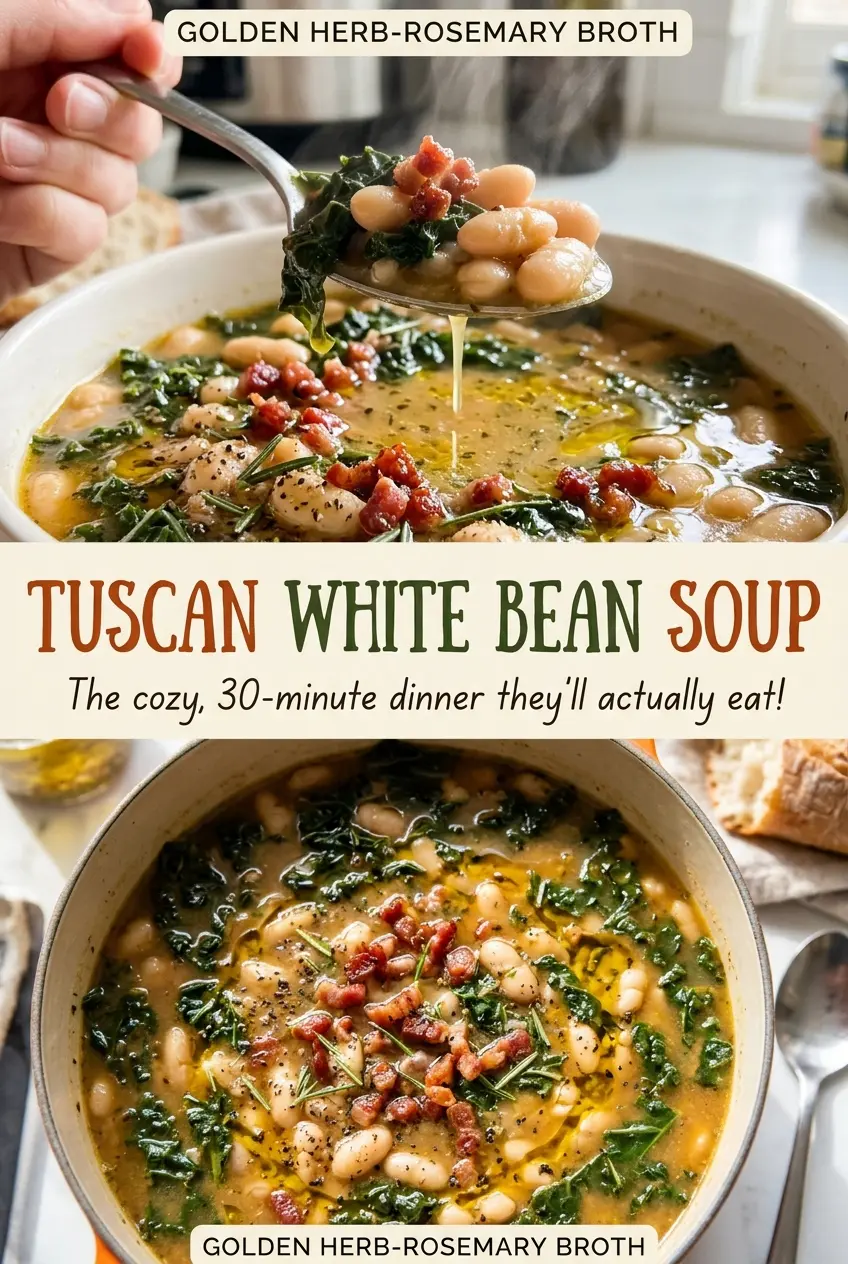
Tuscan White Bean Soup
Ingredients
Equipment
Method
- Cook the pancetta in a large pot over medium heat until crispy, then remove and set aside.
- Reserve the rendered fat in the pot for sautéing the vegetables.
- Sauté the onion, celery, and garlic in the reserved fat for 5 minutes, stirring until fragrant and softened.
- Add the diced tomatoes, broth, rosemary sprigs, parmesan rind if using, and Italian seasoning, then bring the mixture to a boil.
- Add the cannellini beans and simmer for 20 minutes.
- Remove the rosemary and parmesan rind, then mash about a third of the beans in the pot to thicken the broth.
- Add the kale and simmer for 5-8 minutes until wilted.
- Season with salt and pepper, then drizzle with olive oil and top with parmesan shavings and the pancetta.