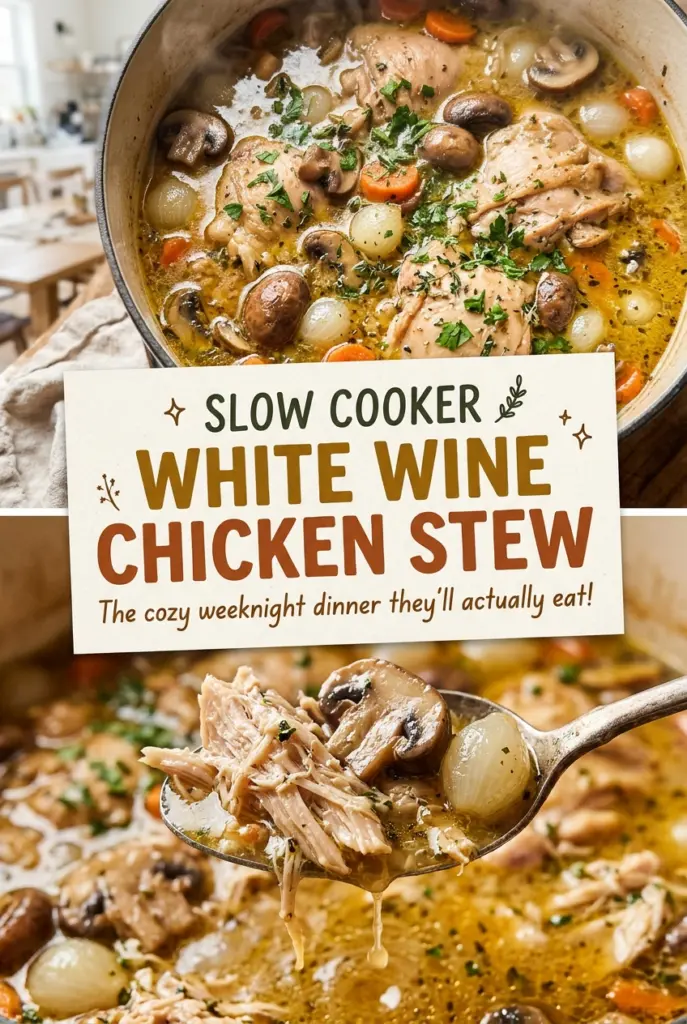
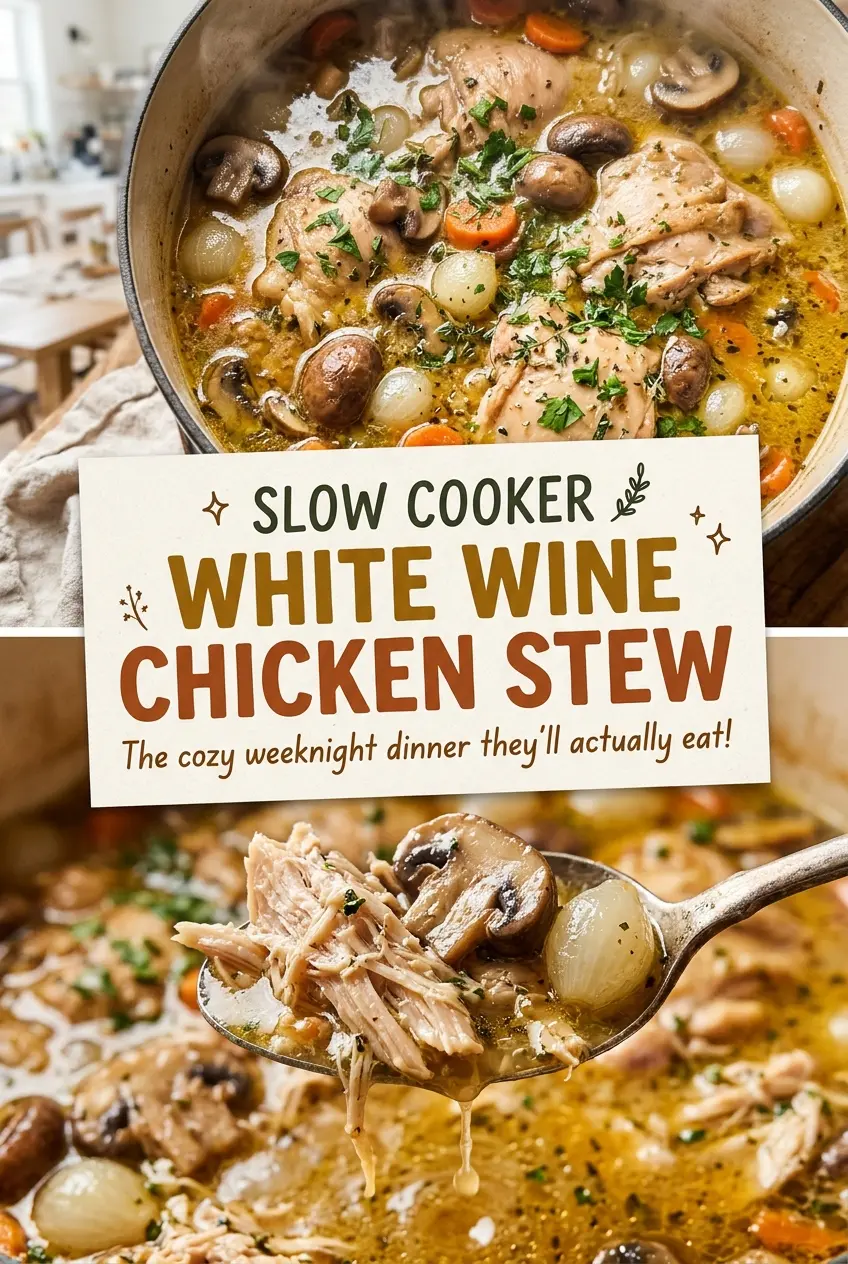
Deep, savory slow cooker white wine chicken stew has the kind of broth that tastes like it simmered all afternoon on a stove, with tender chicken thighs, softened carrots, and mushrooms that soak up every bit of flavor. The slow cooker does the heavy lifting here, but the stew still tastes layered and deliberate, not flat or watery. The wine doesn’t make it boozy; it gives the broth brightness and a little edge so the finished bowl tastes rich instead of heavy.
The key is building enough structure before the lid goes on. Tomato paste and Dijon give the broth body, the thyme and rosemary bring that French-style backbone, and the cornstarch slurry goes in only at the end so the stew thickens cleanly instead of turning gluey. Butter stirred in right before serving rounds out the broth and gives it that silky finish that makes people reach for bread.
Below, you’ll find the small details that keep the chicken tender and the sauce balanced, plus a few smart swaps if you need to work with what’s in the pantry.
The broth thickened up beautifully and the chicken thighs stayed so tender they fell apart with a spoon. I served it with crusty bread and my husband went back for seconds before I even sat down.
Save this slow cooker white wine chicken stew for a night when you want tender chicken, a silky broth, and crusty bread doing all the work.
The Reason the Broth Stays Rich Instead of Thin
The most common problem with slow cooker stews is that they come out tasting diluted. Vegetables release water, chicken gives off juices, and the broth can lose its shape if there isn’t enough concentrated flavor in the pot from the start. Tomato paste and Dijon fix that here. They don’t make the stew taste like tomato or mustard; they give the liquid enough backbone to taste like a finished sauce instead of seasoned stock.
The other thing that matters is the wine. Use a dry white wine you’d actually drink, because it becomes part of the sauce. A sweet wine will throw the balance off, and a harsh one will stay sharp after hours of cooking. By the time the stew is done, the alcohol cooks down and what’s left is brightness, not bite.
What Each Ingredient Is Actually Doing in This Stew

- Bone-in chicken thighs — These hold up better than breasts in a long cook and stay juicy even after hours in the slow cooker. Bone-in meat also gives the broth more body. If you swap in boneless thighs, cut the cook time down a bit so they don’t go stringy.
- Dry white wine — This adds acidity and depth, which keeps the stew from tasting heavy. A Sauvignon Blanc, Pinot Grigio, or unoaked Chardonnay works well. Don’t use cooking wine; it tastes flat and salty.
- Tomato paste — This is the hidden flavor builder. It deepens the broth and gives it that slow-cooked color and savoriness without making the stew taste tomato-forward. Stir it into the liquid before it goes into the pot so it disperses evenly.
- Dijon mustard — Dijon sharpens the broth and helps the sauce taste more complete. It won’t stand out as mustard in the finished stew, but if you leave it out, the flavor loses contrast.
- Pearl onions and mushrooms — These are the vegetables that make the stew feel finished. Pearl onions turn sweet and soft, while mushrooms soak up the broth and stay meaty. Frozen pearl onions work fine and save a lot of prep time.
- Cornstarch slurry and butter — The slurry thickens the liquid at the end without needing flour or a roux, and butter smooths out the finish. Add both late, after the chicken is tender, or the stew can turn too thick and pasty.
How to Keep the Chicken Tender and the Sauce Smooth
Loading the Slow Cooker the Right Way
Season the chicken well before it goes into the pot. That first layer of salt matters because the stew won’t get a chance to reduce much during cooking. Nestle the thighs in with the mushrooms, pearl onions, carrots, and garlic so the vegetables sit in the broth and release flavor as they cook. If the chicken is stacked too tightly, it can steam unevenly, so spread everything out as best you can.
Whisking the Broth Before It Goes In
Combine the wine, broth, tomato paste, and Dijon until the tomato paste is fully dissolved. If you leave little streaks of paste in the liquid, they’ll stay clumpy in the finished stew. Pour the mixture over the chicken and herbs, then cover the slow cooker right away so the heat can build steadily. A loose lid or repeated peeking can drag the cook time out and weaken the texture.
Finishing the Stew Without Breaking It
Cook until the chicken is very tender and pulls away easily with a fork. Then stir in the cornstarch slurry and cook on High for about 20 minutes so the broth turns glossy and lightly thickened. If you add the slurry too early, it can lose its thickening power during the long cook. Pull out the herb sprigs, stir in the butter, and taste before serving; slow cooker stews often need that last pinch of salt at the end to wake everything up.
How to Adapt This for Different Kitchens and Different Eaters
Make It Dairy-Free
The stew is naturally close to dairy-free already; just skip the butter at the end or replace it with a small splash of olive oil for sheen. You’ll lose a little richness, but the broth will still taste full thanks to the wine, Dijon, and tomato paste.
Use Boneless Chicken Thighs Instead
Boneless thighs work if that’s what you have, but they cook faster and can dry out at the edges if left too long. Start checking early, and stop cooking when the meat is tender rather than waiting for it to fall apart completely. The stew will still be rich, just a little less deeply flavored than with bone-in thighs.
Make It Gluten-Free
This recipe is already gluten-free as written as long as your broth is certified gluten-free. The cornstarch slurry does the thickening work, so you don’t need flour or any other wheat-based ingredient to get a silky sauce.
Turn It Into a Heartier Dinner
Add baby potatoes or serve the stew over mashed potatoes, buttered noodles, or rice if you want a more filling bowl. The stew is already balanced, so the extra starch just gives you something to catch the broth. Keep the portion of liquid the same so the sauce still tastes concentrated.
Storage and Reheating
- Refrigerator: Store in an airtight container for up to 4 days. The broth thickens a bit as it chills, which is normal.
- Freezer: It freezes well for up to 2 months. Cool it completely first, then freeze in portions; the potatoes aren’t in this version, so the texture holds up nicely.
- Reheating: Reheat gently on the stove over low heat or in the microwave at medium power, stirring once or twice. Don’t boil it hard, or the chicken can dry out and the sauce can turn overly reduced.
Questions I Get Asked About This Recipe
Slow Cooker White Wine Chicken Stew
Ingredients
Equipment
Method
- Season the bone-in chicken thighs with salt and pepper, then place them in the slow cooker. Add the halved cremini mushrooms, pearl onions, sliced carrots, and minced garlic around the chicken.
- Whisk together the dry white wine, chicken broth, tomato paste, and Dijon mustard until smooth. Pour the mixture over the chicken and vegetables so everything is well coated.
- Add the thyme sprigs and rosemary sprig to the slow cooker. Nestle them into the liquid for even flavor throughout the stew.
- Cook on Low for 6 to 7 hours, or High for 3 to 4 hours, until the chicken is very tender. Check that the chicken easily pulls apart with a fork.
- Whisk the cornstarch with the water to make a slurry, then stir it into the hot stew. Cook on High for 20 minutes until the broth thickens to a glossy consistency.
- Remove the thyme and rosemary sprigs from the stew. Stir in the unsalted butter until melted, then season with more salt and pepper if needed.
- Serve the stew hot, topped with fresh parsley, with crusty bread on the side for dipping.