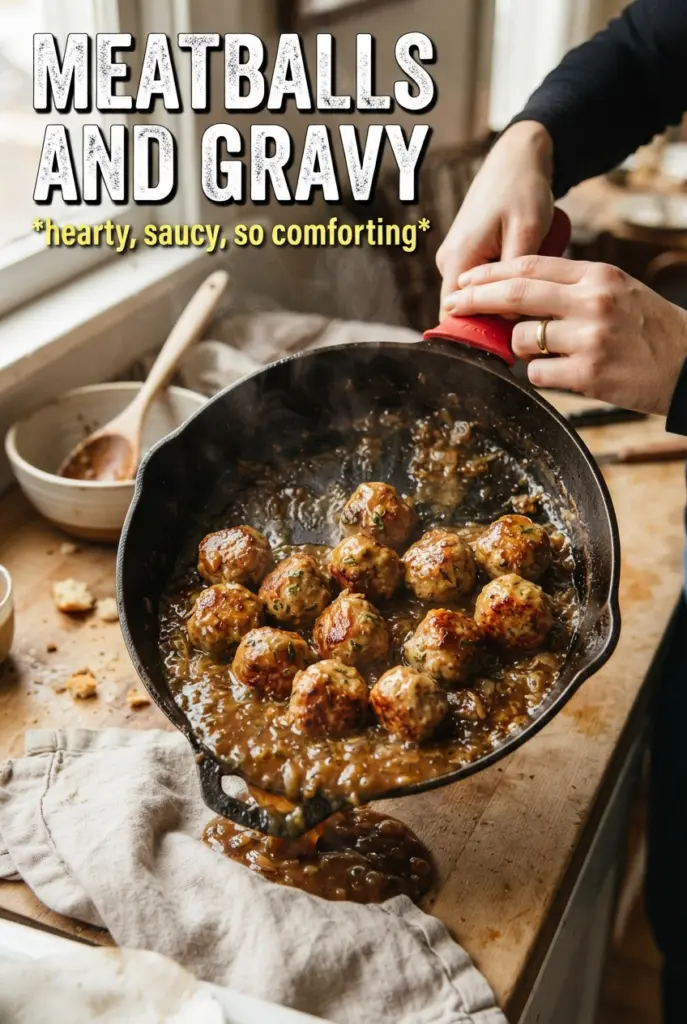
Meatballs and gravy hits that rare sweet spot where the meat stays tender, the gravy turns rich and glossy, and everything tastes like it took a lot more work than it actually did. The meatballs hold together without turning dense, and the onion gravy clings to every bite instead of sliding off the spoon. Piled over mashed potatoes, it’s the kind of dinner that gets scraped clean from the bowl.
What makes this version work is the way the meatballs are mixed and cooked in stages. The beef stays juicy because the mixture is only combined until it comes together, not beaten into paste, and the first browning step gives the gravy a deeper base to build on. The onions cook long enough to soften and sweeten, which matters because they’re doing more than just adding texture here — they’re carrying a lot of the flavor in the sauce.
Below, I’ll walk you through the parts that matter most: how to keep the meatballs tender, how to build a gravy that thickens without turning pasty, and a few swaps that still give you a solid, homestyle dinner.
The gravy thickened up perfectly and the meatballs stayed so tender after simmering. I served it over mashed potatoes and my husband went back for seconds before I even sat down.
Save these tender meatballs and that rich onion gravy for the kind of night when you want a cozy dinner with real homemade flavor.
The Trick to Tender Meatballs That Don’t Fall Apart
The fastest way to ruin meatballs is to overwork them. Once the ground beef starts to look tight and sticky, you’ve gone too far and the final texture gets springy instead of soft. Mix just until the breadcrumbs disappear and the egg is evenly distributed, then stop. Rolling them into even 1.5-inch portions helps them cook at the same rate, which matters later when they finish in the gravy.
The other detail that pays off is the browning step. You’re not cooking the meatballs through here; you’re giving them color and building the base of the sauce at the same time. If the pan is crowded, they’ll steam and pale instead of developing that deep golden crust. Work in batches if you need to.
- Ground beef — An 80/20 blend gives you enough fat for flavor and tenderness. Leaner beef can work, but the meatballs will be a little less plush.
- Breadcrumbs and egg — This is the binder that keeps the meatballs intact without making them heavy. If you need a swap, crushed saltines or plain panko both work, though panko makes a slightly lighter texture.
- Parmesan — It adds salt and a little savory depth. It’s not the main flavor, but it keeps the meatballs from tasting flat.
What the Onions, Flour, and Broth Are Actually Doing in the Gravy

- Onion — Thin slices soften into the gravy and give it body, sweetness, and a little texture. Let them cook until they’re deeply softened and lightly caramelized; pale onions make a flat gravy.
- Butter and flour — These form the roux that thickens the sauce. Cook the flour for a full minute so the gravy doesn’t taste raw or chalky.
- Beef broth — This is the backbone of the gravy, so use a broth you actually like the taste of. If yours is weak, the sauce will be weak too.
- Worcestershire and Dijon — Worcestershire adds savoriness, while Dijon sharpens the gravy just enough to keep it from tasting heavy. Don’t skip both or the sauce loses its edge.
Building the Gravy in the Same Pan
Browning the Meatballs First
Heat the skillet over medium-high and let the meatballs sear without moving them too soon. They should release easily once a crust forms. If they stick, give them another minute; forcing them early tears the surface and costs you flavor in the pan. Pull them out when they’re browned on the outside but still undercooked in the center.
Cooking the Onions Until They Turn Sweet
Use the same pan and let the onions cook in the drippings and butter until they collapse and pick up color. This takes about 10 minutes, and rushing it leaves you with sharp onion flavor instead of the rounded sweetness that makes the gravy taste homemade. If the pan looks dry, add a small knob of butter so the onions can soften instead of scorch.
Whisking in the Flour and Broth
Stir the flour into the onions and butter until it looks pasty, then cook it for a minute. That short cook time takes away the raw flour taste. Add the broth gradually while whisking so the gravy stays smooth; dumping it in all at once can leave you with lumps that are annoying to chase down later. Once it comes to a simmer, it should thicken enough to coat a spoon.
Finishing the Simmer
Return the meatballs to the pan and spoon gravy over the top. Let everything simmer gently until the meatballs are cooked through and the sauce has tightened up around them. Keep the heat modest. A hard boil can toughen the meatballs and reduce the gravy too fast, which makes it pasty instead of silky.
How to Adapt This for Different Kitchens and Different Moods
Make It Gluten-Free
Swap the breadcrumbs for gluten-free breadcrumbs and use a 1:1 gluten-free flour blend in the gravy. The texture stays close to the original, though gluten-free flour can thicken a little faster, so add the broth slowly and stop as soon as the sauce coats a spoon.
Make It Dairy-Free
Use olive oil or a neutral plant-based butter in place of the butter, and skip the Parmesan or replace it with a dairy-free Parmesan-style alternative. The gravy will still be rich and oniony, but it loses a little of the roundness that butter adds.
Swap the Beef for Ground Turkey
Ground turkey works, but it needs the Parmesan and Worcestershire to keep it from tasting lean and dry. Brown it gently and don’t overcook it in the gravy, because turkey tightens faster than beef.
Stretch It for a Bigger Crowd
You can easily add an extra half pound of beef and scale the gravy up with another tablespoon of butter, flour, and broth if needed. Keep the meatballs spaced out when browning so they still get color instead of steaming in a crowded pan.
Storage and Reheating
- Refrigerator: Store in an airtight container for up to 4 days. The gravy will thicken as it chills, which is normal.
- Freezer: This freezes well for up to 2 months. Cool it completely, then freeze the meatballs and gravy together; thaw overnight in the fridge before reheating.
- Reheating: Rewarm gently on the stovetop over low heat with a splash of broth to loosen the sauce. High heat can make the meatballs tough and turn the gravy grainy.
Answers to the Questions Worth Asking
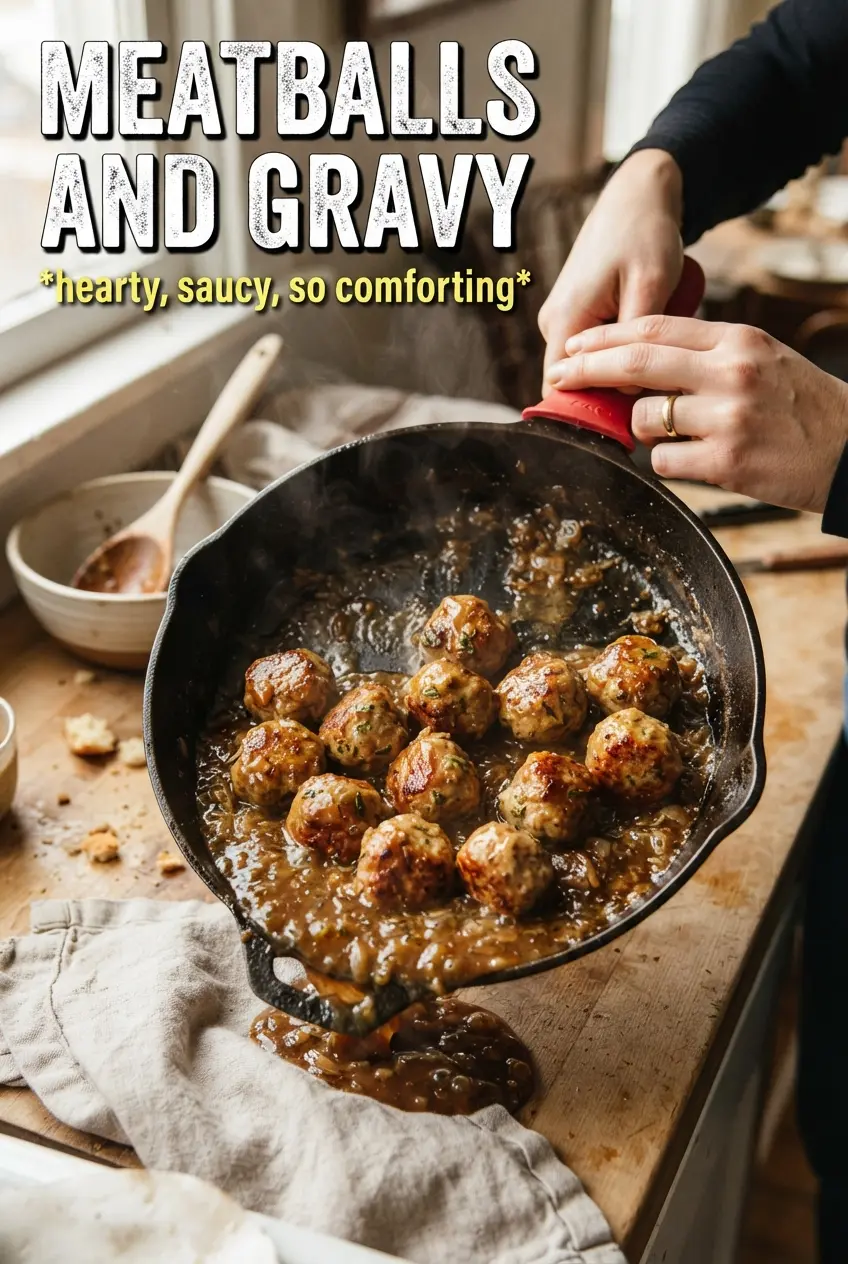
Meatballs And Gravy
Ingredients
Equipment
Method
- In a large bowl, mix ground beef, breadcrumbs, parmesan, egg, minced garlic, onion powder, Worcestershire sauce, salt, and pepper until just combined, avoiding overmixing so the meatballs stay tender.
- Roll the mixture into 1.5-inch meatballs and set them aside while you heat the skillet.
- Brown the meatballs in a large skillet over medium-high heat until golden on the outside, then remove and set aside.
- Melt the butter in the same skillet and caramelize the thinly sliced onion over medium heat for 10 minutes until softened and golden.
- Whisk in the flour and cook for 1 minute to eliminate the raw flour taste.
- Gradually whisk in the beef broth, Worcestershire, and Dijon mustard, scraping up browned bits from the pan.
- Simmer the gravy until thickened, then return the browned meatballs to the skillet.
- Simmer the meatballs in the gravy for 15 minutes until cooked through.
- Serve meatballs and gravy over mashed potatoes, then scatter fresh parsley on top.