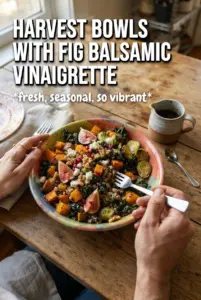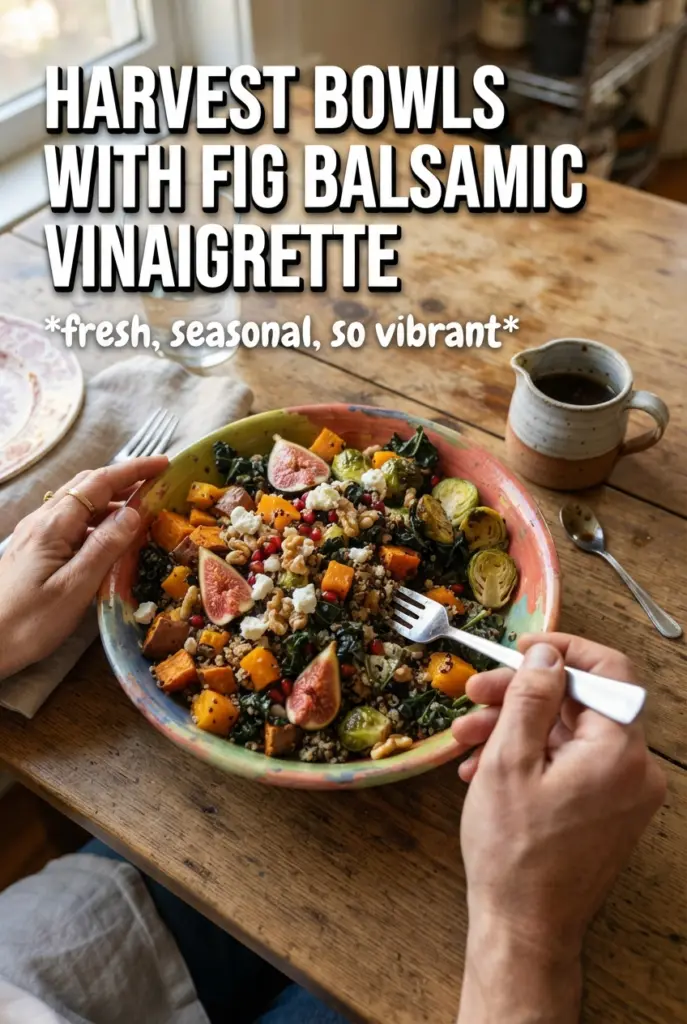
Roasted sweet potatoes, crisp chickpeas, crunchy Brussels sprouts, and a glossy fig balsamic drizzle make these harvest bowls the kind of meal that feels complete the second they hit the table. You get warm and cool, soft and crisp, sweet and tangy in every bite, which is exactly why this bowl never tastes like a pile of leftovers dressed up to look nice. It eats like dinner, but it still has the brightness and texture to keep every forkful interesting.
What makes this version work is that each part gets treated like it matters. The sweet potatoes and chickpeas roast separately so the potatoes turn tender instead of soggy and the chickpeas have time to dry out and crisp. The vinaigrette leans on fig jam for body and sweetness, but Dijon and balsamic keep it from going flat or sticky. I also like shaving the Brussels sprouts raw so they stay snappy under the warm toppings instead of turning limp.
Below you’ll find the little details that make the bowl hold together, plus a few easy ways to adapt it depending on what you’ve got in the pantry. The goal is a bowl that feels layered, not random.
The sweet potatoes got those caramelized edges and the chickpeas stayed crunchy even after I drizzled the dressing. The fig balsamic tied everything together without making the bowl heavy.
Save this harvest bowl for the nights when you want roasted sweet potatoes, crispy chickpeas, and fig balsamic all in one bowl.
The Trick to Keeping the Bowl Crisp, Not Soggy
The biggest mistake with grain bowls is treating every part the same. If the chickpeas, sweet potatoes, and greens all go onto the pan at the same time, one of two things happens: the vegetables overcook or the chickpeas never crisp up. Separate roasting fixes that immediately. Sweet potatoes need enough time to soften and caramelize, while chickpeas need a little less time so they dry out and get crisp at the edges instead of chewy in the center.
The other thing that matters here is temperature contrast. Raw shaved Brussels sprouts give the bowl structure, and they stay lively under the warm toppings. If you sauté them first, they lose the snap that keeps the whole bowl from feeling heavy. The vinaigrette also needs to be smooth enough to cling, but not so thick that it sits on top like jam. A good whisk and a little patience solves that.
What Each Ingredient Is Actually Doing in This Bowl
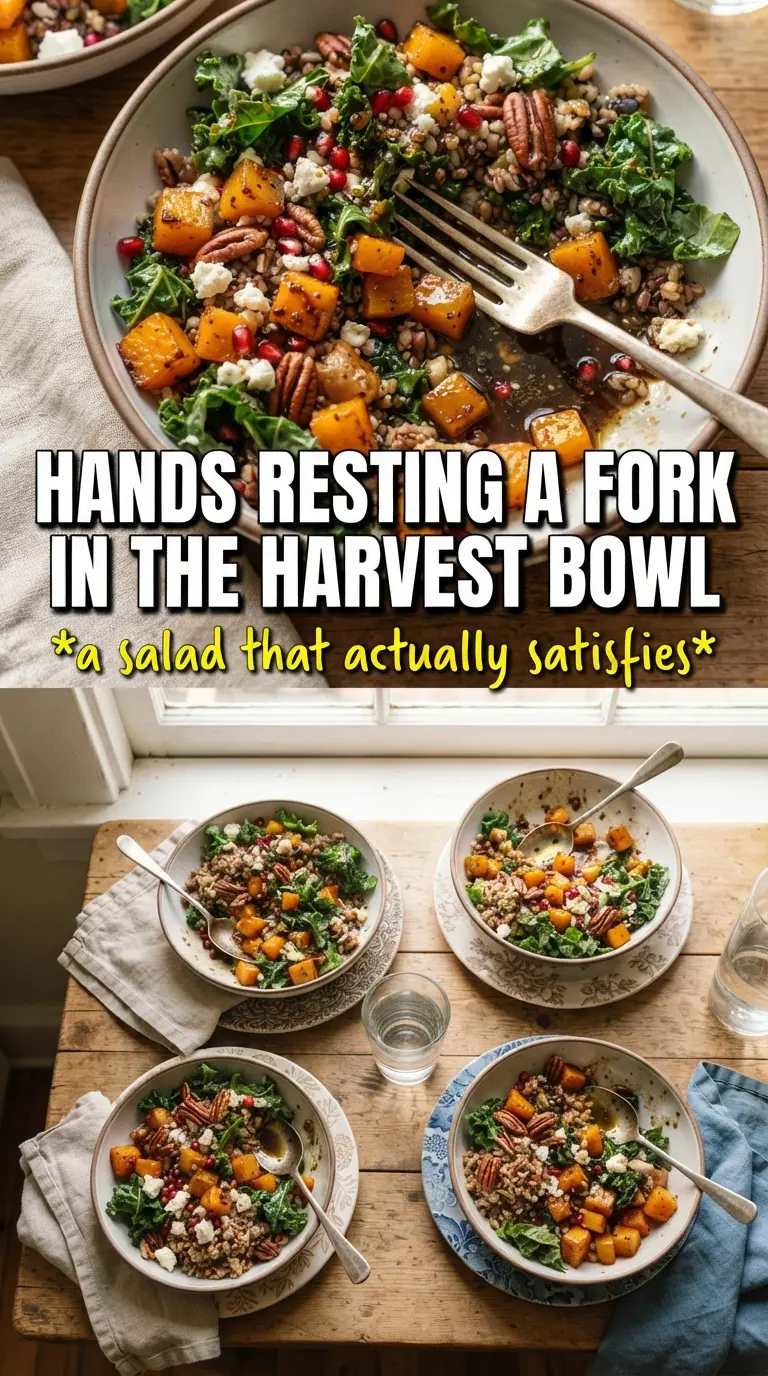
- Farro or quinoa — This is the base that soaks up the vinaigrette. Farro gives you a chewy, nutty bite, while quinoa keeps the bowl gluten-free and a little lighter. Either one works, but farro needs a bit more salt in the cooking water to taste fully seasoned.
- Sweet potatoes — Roast them until the edges brown and the centers are soft. That little bit of caramelization matters because it gives the bowl sweetness that can stand up to the balsamic. Cut them into even cubes so they finish at the same time.
- Chickpeas — They add protein and the crisp texture that makes this feel like a meal. Dry them well before roasting or they’ll steam instead of crisp. If you skip that step, they’ll still taste fine, but they’ll be soft instead of crunchy.
- Brussels sprouts — Shaving them raw keeps the bowl fresh and gives it a sharp, clean bite. If you only have whole sprouts, slice them very thin with a knife or a mandoline. Thick shreds won’t soften enough under the dressing.
- Fig jam — This is what gives the vinaigrette its body and gentle sweetness. A decent store-bought jam works fine here because it gets balanced by vinegar and mustard. If your jam is very thick, whisk it with the vinegar first before adding the oil.
- Goat cheese and candied pecans — The cheese adds tang and creaminess, and the pecans bring another layer of crunch. If you want a dairy-free bowl, leave out the cheese and add avocado or a handful of toasted pumpkin seeds for richness.
The Order That Gives You the Best Texture
Roast the Sweet Potatoes and Chickpeas Separately
Spread the sweet potatoes on one pan and the chickpeas on another. Sweet potatoes need enough surface contact to brown, and chickpeas need room so their skins dry out. If you crowd them together, the steam trapped on the pan keeps both from crisping properly. Pull the chickpeas when they sound dry and rattly in the pan and the sweet potatoes when the edges are deeply browned and the centers yield to a fork.
Whisk the Vinaigrette Until It Turns Glossy
Start with the fig jam, balsamic, Dijon, and garlic, then whisk in the olive oil slowly. The dressing should turn smooth and glossy instead of separated or grainy. If it looks broken, keep whisking for another minute; Dijon helps hold the emulsion together. Taste it after the oil goes in, because fig jam sweetness can vary a lot from jar to jar.
Build the Bowl in Layers
Put the grain down first so it catches the dressing. Add the warm roasted pieces next, then the raw Brussels sprouts, pomegranate seeds, pecans, and goat cheese. Drizzle the vinaigrette over the top right before serving. If you dress the greens too early, they soften and the whole bowl loses that clean crunch.
How to Make It Vegan
Leave out the goat cheese and use extra candied pecans or toasted pumpkin seeds for richness. The bowl still has enough tang and sweetness from the vinaigrette and pomegranate to feel complete.
How to Keep It Gluten-Free
Use quinoa instead of farro. Quinoa stays fluffy and picks up the vinaigrette well, though it won’t give you the same chewy texture farro does.
Swap the Nuts for a Seed Crunch
Use toasted pumpkin seeds if you don’t have candied pecans or want a less sweet finish. You lose some dessert-like crunch, but you gain a more savory bowl that still has texture.
Storage and Reheating
- Refrigerator: Store the components separately for up to 4 days. The grains and roasted vegetables hold well, but the Brussels sprouts are best kept undressed so they stay crisp.
- Freezer: The roasted sweet potatoes, chickpeas, and cooked grains freeze well for up to 2 months. The fresh toppings and vinaigrette don’t freeze well, so add those after thawing.
- Reheating: Warm the grains, sweet potatoes, and chickpeas in a skillet or 350F oven until just hot. Don’t microwave the chickpeas if you want them crisp again; the oven is the only way to bring back some of that texture.
Answers to the Questions Worth Asking
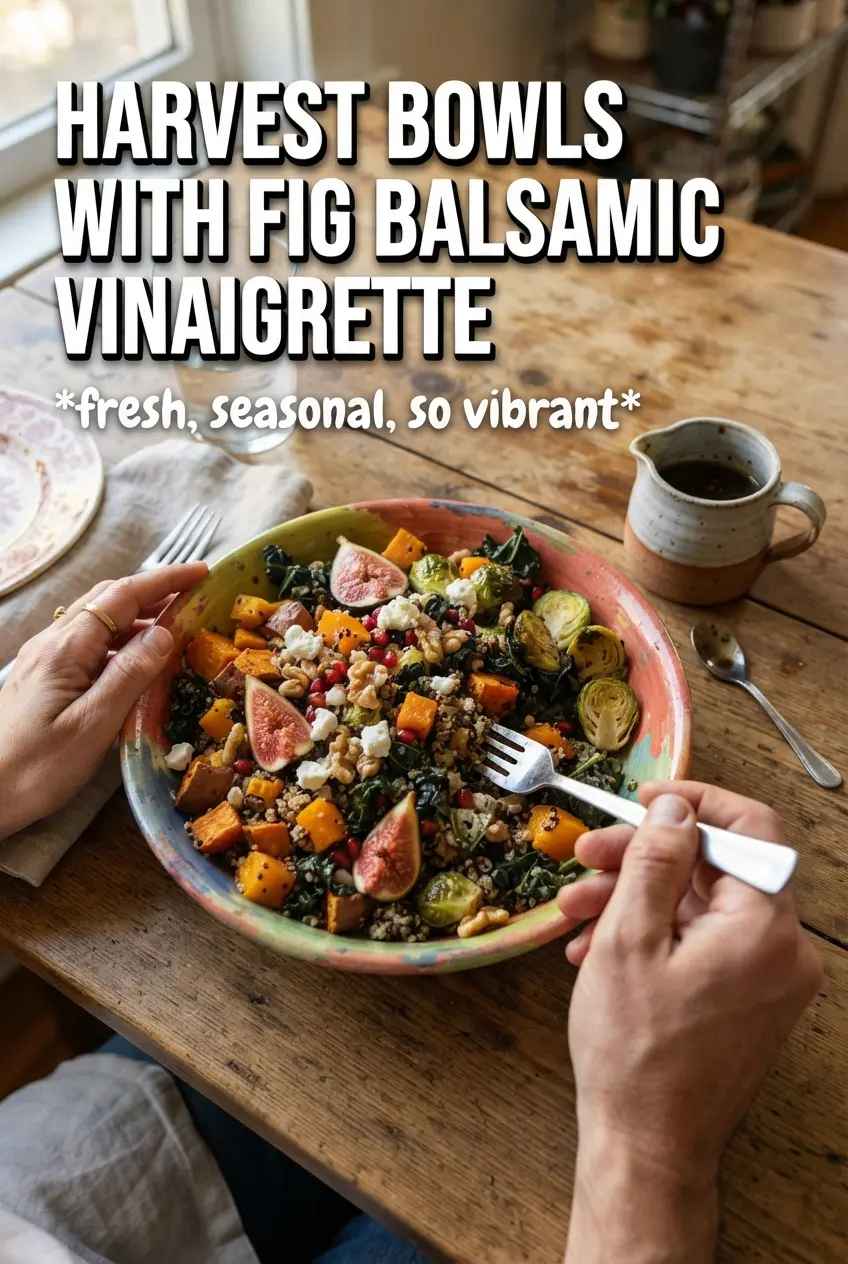
Harvest Bowls With Fig Balsamic Vinaigrette
Ingredients
Equipment
Method
- Preheat the oven to 425°F and spread the sweet potato cubes on one sheet pan in an even layer for roasting.
- Roast the sweet potatoes at 425°F for 25 minutes, until tender and browned around the edges, with a visible caramelized surface.
- Spread the drained chickpeas on a second sheet pan in an even layer for roasting.
- Roast the chickpeas at 425°F for 20-25 minutes, until crisp and deeply golden, shaking the pan once for even browning.
- Whisk the fig jam, balsamic vinegar, olive oil, Dijon mustard, minced garlic, and salt and pepper together until smooth.
- Divide the cooked farro or quinoa among 4 bowls as the base.
- Top each bowl with roasted sweet potatoes and crispy chickpeas.
- Add the shaved Brussels sprouts over the top so they stay bright and fresh-looking.
- Sprinkle pomegranate seeds and candied pecans over each bowl for pops of color and crunch.
- Crumble goat cheese over each bowl and drizzle generously with the fig balsamic vinaigrette right before serving.