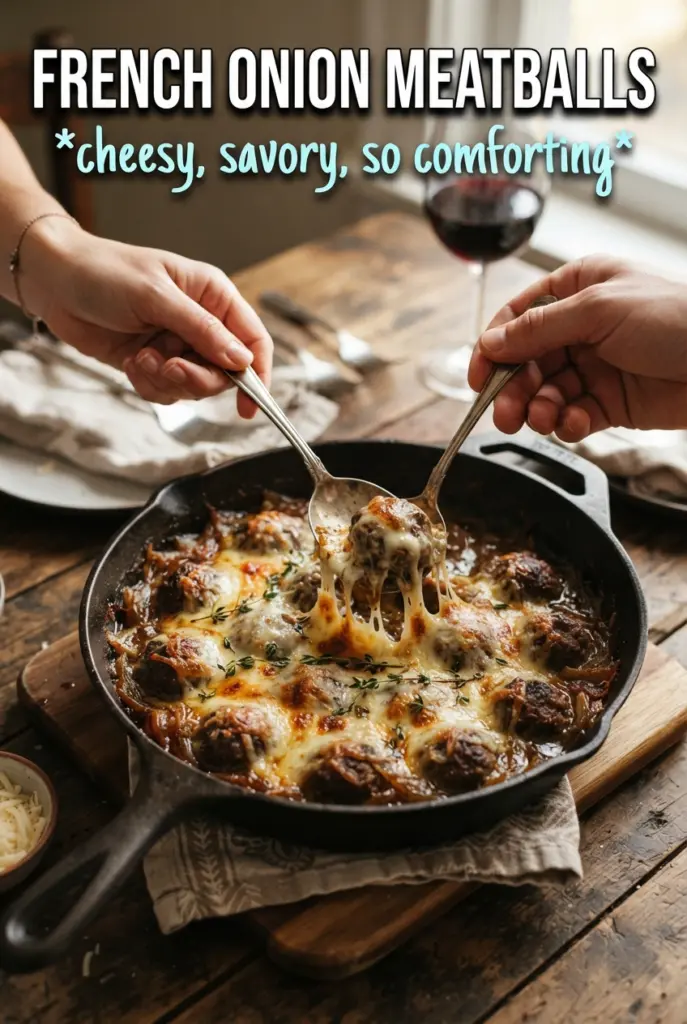
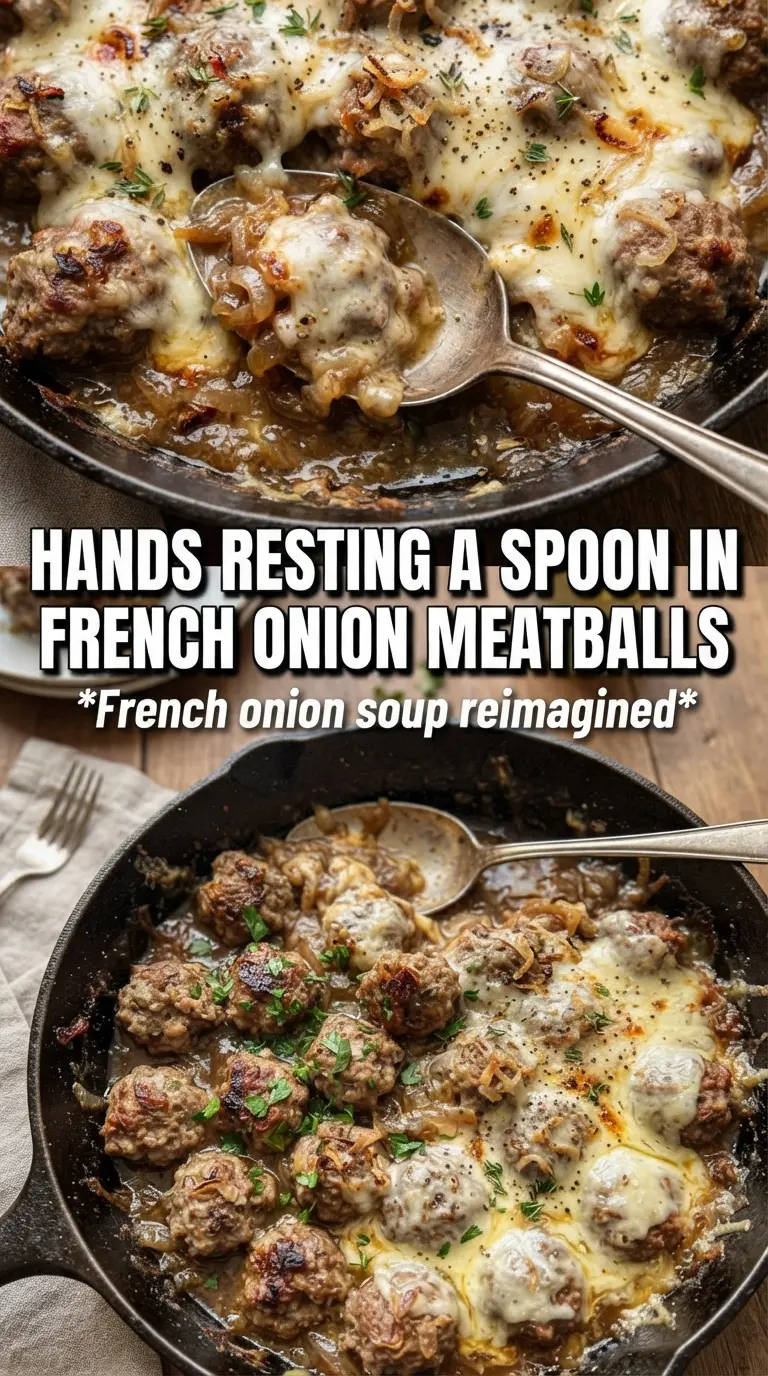
French onion meatballs bring the best parts of a classic French onion soup into a hearty main dish: deeply browned meatballs, sweet slow-cooked onions, and a broiled cheese blanket that turns golden and bubbling at the edges. The whole thing lands somewhere between cozy dinner and bistro comfort food, and it earns its place because every layer tastes like it was built with a purpose.
The key is giving the onions enough time to turn soft, sweet, and jammy before the broth goes in. That slow caramelization is what gives the sauce its backbone, and it keeps the final dish from tasting flat or rushed. Browning the meatballs first does the same job on the savory side, adding flavor to the pan and helping the meatballs hold their shape when they finish in the sauce.
Below, I walk through the one step that matters most if you want that deep onion flavor, plus a few ways to adapt the dish depending on what you have on hand.
The onions took patience, but the sauce turned silky and the meatballs stayed tender all the way through. The Gruyere browned beautifully under the broiler and my husband kept scooping up the sauce with bread.
Love the melty Gruyere topping and rich onion gravy? Save these French onion meatballs for the nights when you want a cozy skillet dinner that tastes like it took all day.
The Onion Pan Needs Time Before It Needs Liquid
The biggest mistake with French onion flavor is rushing the onions. If you add broth too soon, they steam and soften, but they never get that deep, sweet, almost jammy quality that makes the sauce taste like more than beef broth with onions floating in it. Give them the full 30 to 35 minutes over medium-low heat, and stir often enough that the bottom stays golden instead of scorched.
Brown bits on the pan are a good sign here. They’re the foundation of the sauce, and the wine or broth lifts them right back up once the onions are ready. If the pan looks dry before the onions are fully caramelized, add a small knob of butter rather than turning up the heat. High heat gives you bitter edges, not better flavor.
What Each Ingredient Is Actually Doing in This Dish
- Ground beef — A mix with enough fat keeps the meatballs juicy and lets them hold up after simmering in the sauce. Very lean beef works, but the meatballs will eat a little firmer.
- Breadcrumbs and egg — These bind the meatballs so they stay tender instead of compacting into little meat pucks. If you need a gluten-free swap, use gluten-free breadcrumbs in the same amount.
- Worcestershire — This is doing a lot of the savory work. It brings salt, tang, and depth to both the meatballs and the sauce, and there isn’t a perfect one-ingredient substitute for it.
- Dry white wine or beef broth — Wine gives the sauce a sharper, more layered finish, while broth keeps it simple and still very good. If you skip the wine, use broth and a small splash of extra Worcestershire to keep the sauce from tasting one-note.
- Gruyere or provolone — Gruyere gives the most classic French onion flavor and melts into a nutty crust. Provolone is milder and melts easily, which makes it a solid backup if you want a softer finish.
Building the Sauce Without Losing the Meatballs
Mixing and Browning the Meatballs
Combine the beef, breadcrumbs, egg, Worcestershire, garlic powder, onion powder, salt, and pepper just until the mixture comes together. Overmixing tightens the meatballs, and that’s how you end up with a dense texture instead of a tender bite. Roll them into 1.5-inch balls, then brown them in butter until the outside has a deep crust but the centers are still undercooked. They’ll finish in the sauce, so you’re looking for color, not doneness.
Caramelizing the Onions Slowly
Use the same skillet so all that flavor stays in the pan. Add the sliced onions and cook them over medium-low heat, stirring often and scraping the bottom as they soften and deepen in color. They should go from sharp and watery to soft, browned, and sweet-smelling. If they start to catch too fast, lower the heat and add a spoonful of butter rather than trying to rush through it.
Deglazing and Simmering the Sauce
Pour in the wine or broth and scrape the pan until the browned bits dissolve into the liquid. That’s where the sauce gets its backbone. Add the beef broth, Worcestershire, and thyme, then return the meatballs to the skillet and let them simmer for about 15 minutes. The sauce should look glossy and slightly reduced, and the meatballs should feel firm but still tender when pressed.
Finishing Under the Broiler
If your skillet isn’t oven-safe, move everything to a baking dish before adding the cheese. Scatter the shredded cheese evenly over the top and broil just until it turns melted, bubbling, and spotty-golden in places. Watch it closely because the line between browned and burnt is short under a broiler. You want a cheesy crust with a little color, not a dark shell.
How to Adapt These French Onion Meatballs for Different Kitchens
Make It Gluten-Free Without Losing the Binder
Use gluten-free breadcrumbs in the meatballs and keep the rest of the recipe the same. The texture stays close to the original, and the sauce doesn’t need any flour at all, so this is one of the easier swaps to make.
Use Provolone for a Softer, Milder Cheese Finish
Gruyere gives the most classic French onion flavor, but provolone melts beautifully and browns well under the broiler. The final dish will taste a little less nutty and a little creamier, which works nicely if you want the cheese to stay in the background.
Turn It Into a Bigger Batch for Guests
Double the meatballs and sauce, then use a wide baking dish so the cheese can cover the top in a thin layer instead of a thick pile. A shallow layer reheats better and broils more evenly, which keeps the top crisp instead of greasy.
Storage and Reheating
- Refrigerator: Store leftovers for up to 4 days. The sauce may thicken as it chills, but the flavor gets even deeper.
- Freezer: This freezes well without the cheese topping. Cool completely, pack the meatballs and sauce tightly, and freeze for up to 2 months. Add fresh cheese after thawing and reheating.
- Reheating: Reheat covered in a 325°F oven or gently on the stovetop with a splash of broth. Don’t blast it on high heat or the meatballs can tighten and the sauce can separate.
Answers to the Questions Worth Asking
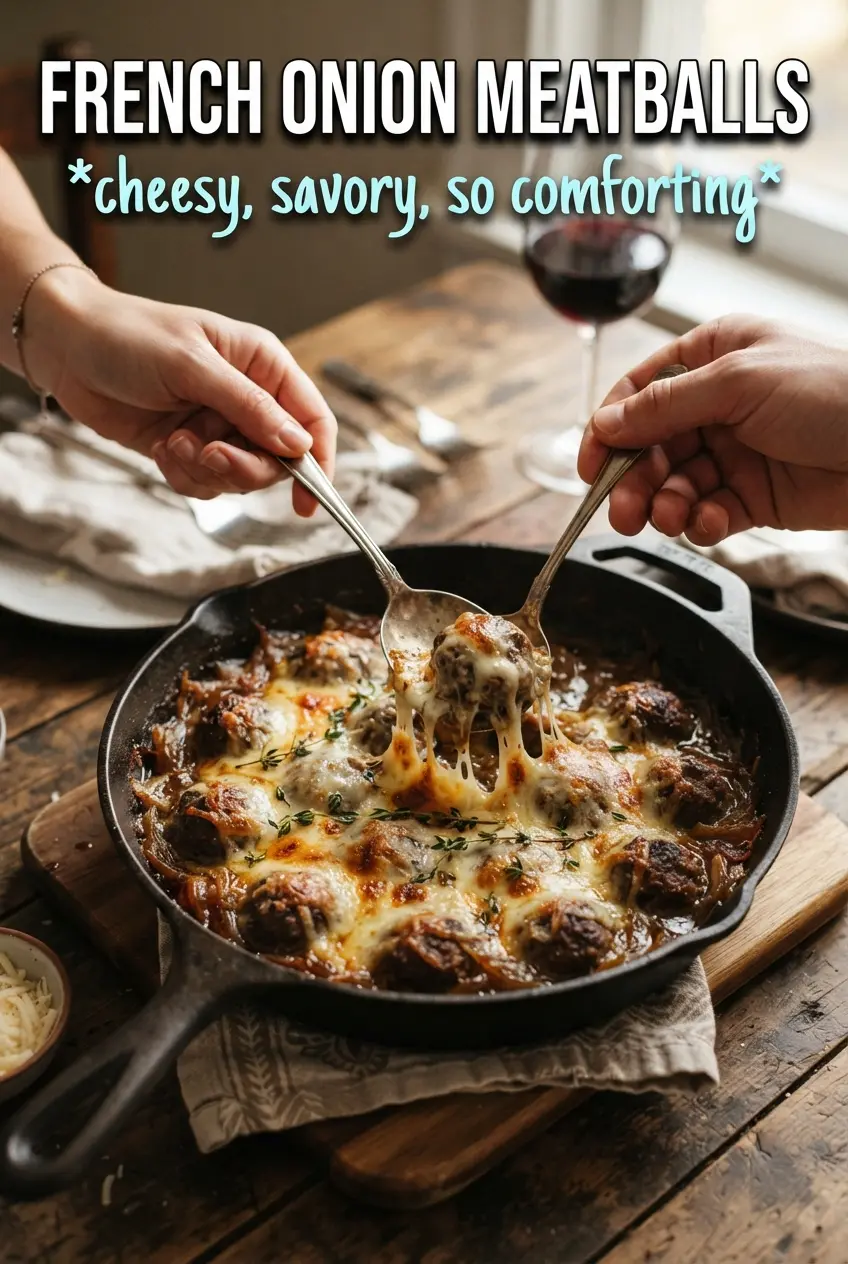
French Onion Meatballs
Ingredients
Equipment
Method
- In a bowl, mix ground beef, breadcrumbs, egg, Worcestershire, garlic powder, onion powder, salt, and pepper until just combined, then roll into 1.5-inch balls.
- Heat 2 tablespoons of the butter in a skillet over medium-high heat and brown the meatballs, then transfer them to a plate.
- In the same skillet, add the remaining 2 tablespoons butter and cook the sliced onions over medium-low heat, stirring occasionally, for 30-35 minutes until deeply caramelized.
- Deglaze the skillet with the wine (or broth), scraping up browned bits from the bottom, then simmer briefly for 2-3 minutes.
- Add beef broth, Worcestershire, and thyme, and stir to combine.
- Return the browned meatballs to the onion sauce and simmer for 15 minutes, so the sauce reduces slightly and the meatballs cook through.
- Transfer to a baking dish if the skillet is not oven-safe, then scatter Gruyère/provolone over the top.
- Broil 3-4 minutes at high heat until the cheese is golden and bubbly, then serve hot.