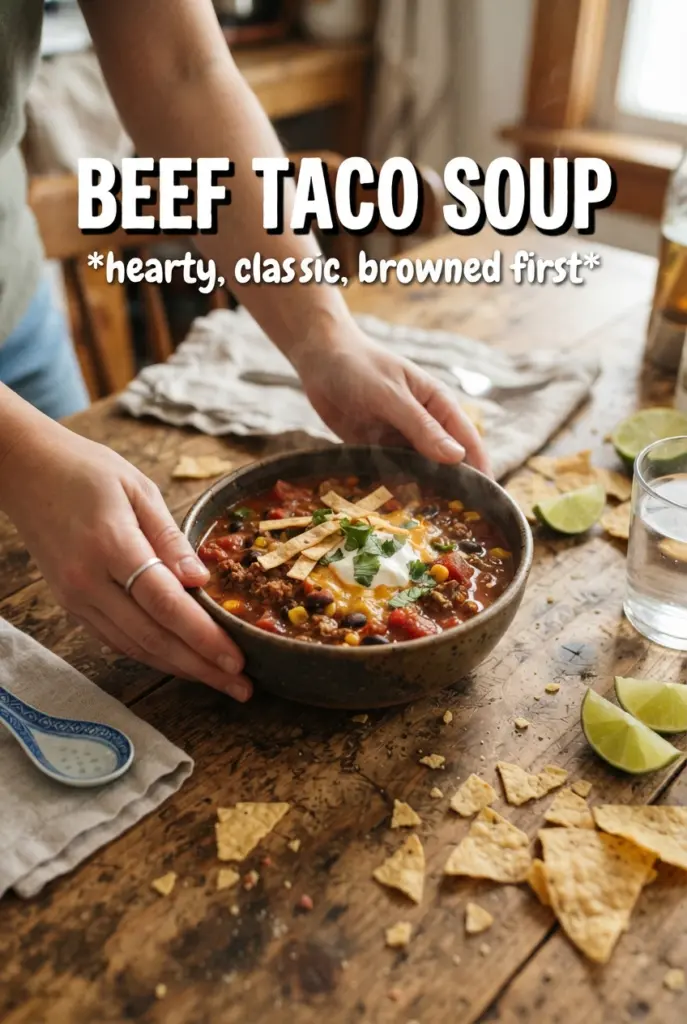
Beef taco soup has that dependable, crowd-pleasing comfort that lands somewhere between chili and a taco night bowl, but with less effort and a lot more spoonable broth. The broth turns deep orange-red, the beef stays hearty, and the beans and corn give each bite enough texture that it never feels thin or watery. It’s the kind of pot that disappears fast because people keep going back for “just one more bowl.”
What makes this version work is the layering. The beef gets browned first, which gives the soup a savory base before the onions, pepper, garlic, and spices go in. Taco seasoning alone can taste flat if it never gets cooked, so I stir it into the hot pan for a minute before adding the broth and tomatoes. That quick bloom wakes everything up and keeps the finished soup from tasting like canned ingredients dumped together.
Below you’ll find the small details that matter: how to keep the broth bold instead of bland, which toppings actually change the bowl, and a few smart swaps for making it your own without losing the Tex-Mex character.
The broth had so much more depth than I expected, and letting it simmer the full 20 minutes made the beans and tomatoes taste like they belonged together. My husband kept adding tortilla chips to his bowl because the texture was perfect.
Love the rich broth and loaded toppings? Save this beef taco soup for the nights when you want a fast Tex-Mex dinner that eats like a full meal.
The Step That Stops Beef Taco Soup From Tasting Flat
The biggest mistake with taco soup is treating it like a dump-and-simmer recipe. If the beef never browns properly, and if the spices never hit the hot pot before the liquid goes in, the soup tastes like seasoned broth instead of a built, layered meal. Browning the meat gives you those browned bits on the bottom of the pot. That’s where the depth lives.
The other thing that matters is the simmer. Twenty minutes is enough time for the tomatoes, beans, and broth to settle into each other, but not so long that the corn gets tired or the beans start breaking apart. If your soup tastes thin at the end, it’s usually because it needed a little more time uncovered, not because it needed more seasoning right away.
- Browned beef — Use 80/20 ground beef for the best balance of flavor and texture. If you go leaner, the soup will still work, but it won’t have the same savory depth unless you add a little olive oil when sautéing the vegetables.
- Taco seasoning plus cumin and chili powder — The packet gives you salt and a base blend, while the extra spices make the broth taste fuller and more homemade. If you only use the packet, the flavor is fine but a little one-note.
- Rotel and diced tomatoes — The combination gives you both acidity and body. Rotel brings the Tex-Mex heat and tomato flavor, while the diced tomatoes keep the broth from turning too sharp.
- Beans and corn — These are more than filler. They give the soup body and make it eat like dinner instead of starter soup. Drain them well so the broth stays rich, not cloudy.
- Beef broth — This matters more than water ever would. A good broth carries the seasoning and makes the soup taste finished. If you need to use low-sodium broth, taste at the end and season more aggressively.
What Each Ingredient Is Actually Doing in This Recipe

- Primary ingredient (the star) — Quality matters most. Choose the best you can find.
- Cooking medium (oil, butter, or broth) — This carries flavors and prevents dryness.
- Seasonings (salt, pepper, spices, herbs) — Layer flavors so nothing overpowers. Build depth gradually.
- Aromatics (garlic, onion, herbs) — Cook with fat to bloom flavors. Become the foundation.
- Supporting ingredients — Complement the main ingredient without overpowering it.
- Sauce or liquid (if applicable) — Brings flavors together. Balance richness with acid.
- Acid (lemon, vinegar, wine, or other) — Brightens and prevents flat-tasting results.
- Final finish (garnish, glaze, or sauce) — Prevents one-dimensional taste and adds visual appeal.
Building the Bowl in the Right Order
Brown the beef until it actually colors
Set a large pot over medium-high heat and cook the ground beef until it’s no longer pink and the edges have browned. If the meat just steams, you lose flavor before the soup even starts. Drain off excess fat, but leave the browned bits stuck to the pot. Those will dissolve into the soup once the vegetables go in.
Wake up the onion, pepper, and garlic
Add the diced onion and bell pepper to the same pot and cook them for about 4 minutes, just until they start to soften and smell sweet. Stir in the garlic for the last minute so it doesn’t burn. Burnt garlic turns bitter fast, and once that happens you’ll taste it in every spoonful.
Toast the spices before the liquid goes in
Stir in the taco seasoning, cumin, chili powder, and smoked paprika and let them cook for about a minute. The spices should smell fragrant and a little warmer, not dusty. This is the point where the soup gets its backbone. If you skip it, the final broth can taste like the ingredients never fully met each other.
Simmer until the broth tastes layered
Add the canned tomatoes, beans, corn, and beef broth, then bring everything to a boil before lowering it to a steady simmer. Give it about 20 minutes. The broth should look slightly thicker and the flavors should taste more cohesive by the end. Taste for salt and pepper after the simmer, not before, because the broth and seasoning packet both add salt of their own.
What to Change When You Need a Different Bowl
Make it dairy-free without losing the creamy finish
Skip the sour cream and top with diced avocado or a spoonful of dairy-free yogurt instead. The soup itself is already dairy-free, so the swap only changes the finish. You still get that cool contrast on top without watering down the broth.
Make it gluten-free with one label check
This soup can be naturally gluten-free, but the taco seasoning packet is the place to check. Some blends use flour or starches as fillers. Use a certified gluten-free seasoning mix, or make your own blend with chili powder, cumin, paprika, garlic powder, onion powder, and salt.
Make it meatless and keep the same Tex-Mex shape
Swap the beef for an extra can of black beans, pinto beans, or a plant-based ground. You’ll lose some of the deep beefy richness, so use vegetable broth and add a little extra smoked paprika for depth. The texture stays hearty, which is what matters most in a soup like this.
Storage and Reheating
- Refrigerator: Store in an airtight container for up to 4 days. The broth thickens a bit as it sits, which is normal and usually makes the flavor even better.
- Freezer: It freezes well for up to 3 months. Cool it fully first, then freeze in portions so the beans and beef reheat evenly.
- Reheating: Warm it gently on the stove over medium-low heat, adding a splash of broth or water if it looks too thick. Don’t boil it hard, or the beans can split and the beef can turn dry.
Answers to the Questions Worth Asking
Beef Taco Soup
Ingredients
Equipment
Method
- Brown the ground beef in a large pot over medium-high heat, breaking it up until no longer pink; drain excess fat for a cleaner broth.
- Sauté the onion and green bell pepper in the same pot for 4 minutes, stirring, until softened; add the garlic and cook for 1 minute.
- Add taco seasoning, cumin, chili powder, and smoked paprika and stir for 1 minute to bloom the spices.
- Add the kidney beans, black beans, corn, Rotel tomatoes, diced tomatoes, and beef broth, then bring the mixture to a boil.
- Simmer for 20 minutes until the broth is deeply flavored; season with salt and pepper to taste.
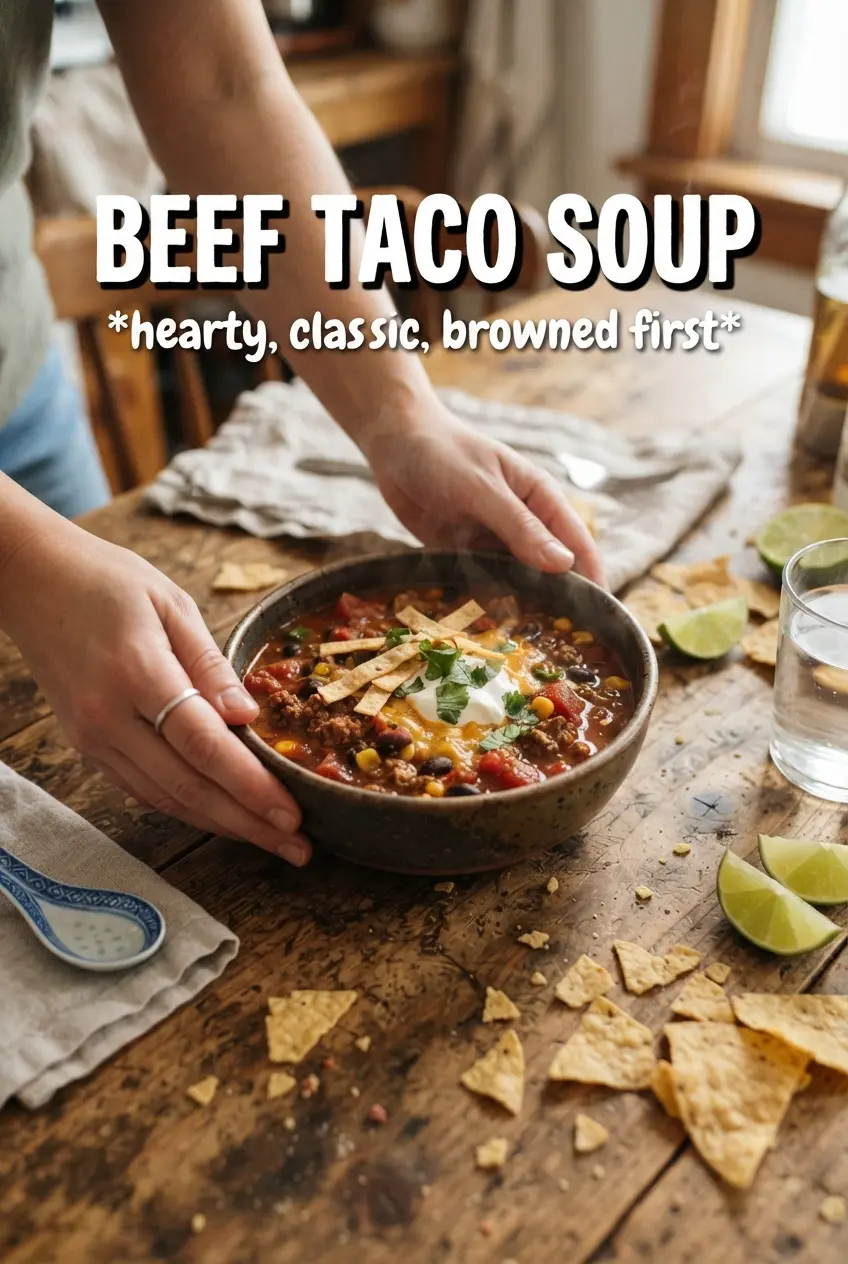
- Ladle the soup into bowls and serve loaded with cheddar, sour cream, tortilla chips, jalapeños, and cilantro.