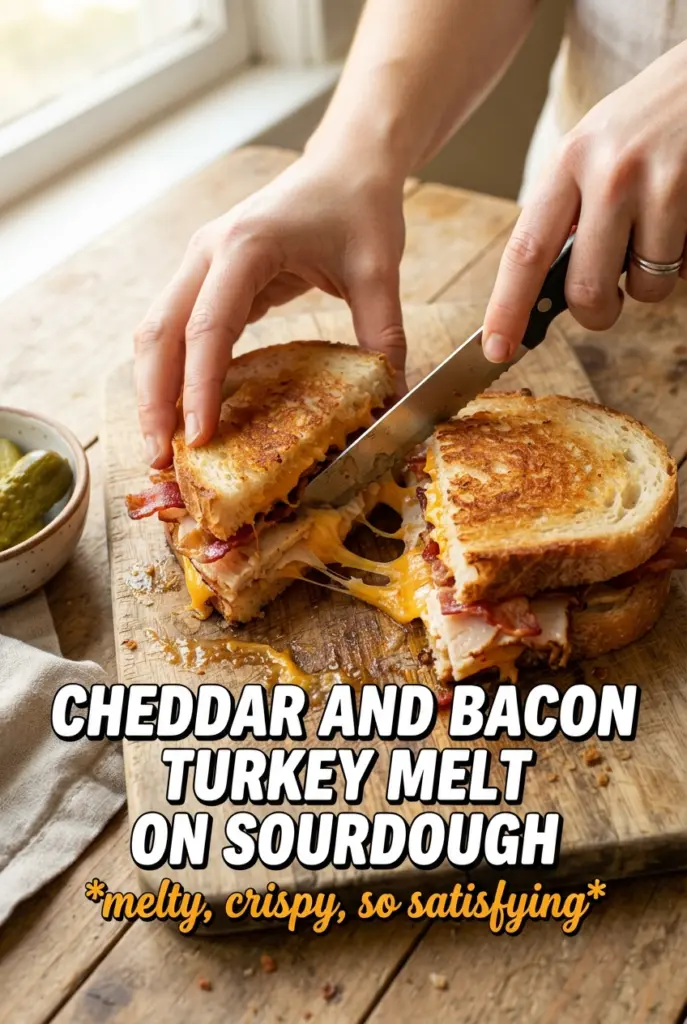
Golden sourdough, sharp cheddar, crispy bacon, and turkey make a melt that lands somewhere between diner comfort food and the kind of lunch you plan around. The bread turns deeply toasted and shattery at the edges while the cheese softens into the turkey and bacon, so every bite gets crunch, salt, and a little tang from the mustard and mayo. It’s the kind of sandwich that eats like a meal, not a snack.
The trick here is keeping the bread and the fillings in balance. Butter on the outside gives you that even, bronzed crust, while the Dijon on one half and mayonnaise on the other keep the sandwich from tasting flat. The tomato and arugula go in after cooking so they stay fresh and don’t steam the bread into softness.
Below, I’ve included the small details that matter most for a melt like this — when to build it, how to get the cheese fully melted before the sourdough burns, and what to swap if you need to work with what’s already in the fridge.
The sourdough got perfectly crisp, the cheddar melted all the way through, and the Dijon kept it from tasting heavy. I added the tomatoes after cooking like you said and the sandwich stayed crunchy instead of soggy.
Save this cheddar and bacon turkey melt for the days when you want a crisp, melty sandwich with diner-style comfort and almost no cleanup.
The Reason This Melt Stays Crisp Instead of Turning Soggy
The biggest mistake with a sandwich like this is piling on the cold fillings before the bread has a chance to toast. Once the tomato and greens hit the heat, they release moisture, and that moisture goes straight into the bread. That’s how you end up with a sandwich that tastes fine at the center but loses its crunch halfway through.
This version avoids that by building a strong barrier first. The butter goes on the outside for browning, the cheese sits between the turkey and the heat so it can melt and glue the sandwich together, and the fresh greens go in after cooking. That gives you a hot, crisp exterior with cool, fresh contrast inside.
- Sourdough — Its sturdy crumb holds up to the cheese and fillings without collapsing. A soft sandwich bread will brown faster but won’t give you the same crisp bite.
- Sharp cheddar — This is the cheese that carries the flavor. Mild cheddar melts fine, but sharp cheddar gives you a more pronounced, salty edge that stands up to the turkey and bacon.
- Dijon mustard — The mustard adds acidity and bite, which keeps the sandwich from tasting heavy. Yellow mustard can work in a pinch, but it won’t bring the same depth.
- Mayonnaise — Mayo adds richness and helps balance the sharper notes. It also browns well on the bread, so the side with mayo tends to toast a little more evenly.
- Thick-cut bacon — Crisp bacon gives you texture and salt in every bite. Thin bacon can work, but it disappears faster once the sandwich is pressed and sliced.
- Arugula and tomato — These go in after cooking for freshness. Arugula adds a peppery bite, while tomato brings juiciness without making the hot sandwich waterlogged.
What Each Ingredient Is Actually Doing in This Recipe

- Primary ingredient (the star) — Quality matters most. Choose the best you can find.
- Cooking medium (oil, butter, or broth) — This carries flavors and prevents dryness.
- Seasonings (salt, pepper, spices, herbs) — Layer flavors so nothing overpowers. Build depth gradually.
- Aromatics (garlic, onion, herbs) — Cook with fat to bloom flavors. Become the foundation.
- Supporting ingredients — Complement the main ingredient without overpowering it.
- Sauce or liquid (if applicable) — Brings flavors together. Balance richness with acid.
- Acid (lemon, vinegar, wine, or other) — Brightens and prevents flat-tasting results.
- Final finish (garnish, glaze, or sauce) — Prevents one-dimensional taste and adds visual appeal.
Building the Melt So the Cheese Stays Gooey and the Bread Stays Golden
Getting the Bread Ready
Spread the softened butter on one side of every slice first, before you reach for the mustard or mayo. That gives you an even coat and keeps the bread from tearing. Flip the slices and spread Dijon on half of them, mayonnaise on the other half. If the butter is too cold, it drags instead of spreading; let it sit until it’s soft enough to move across the bread without tearing it.
Layering the Filling
Build the sandwich on the Dijon side with turkey, bacon, and cheddar. Keep the fillings centered so they don’t spill out as the sandwich cooks and gets pressed by the weight of the skillet. The cheese should be on the inside, touching the warm fillings, so it starts melting before the bread gets too dark.
Toasting Over Medium Heat
Set the skillet or griddle over medium heat and give it time to warm through. If the heat is too high, the sourdough browns before the cheddar melts and you’ll end up with cold spots in the center. Cook the sandwiches butter-side down, then top with the mayo-spread slices butter-side up. Flip after 3 to 4 minutes, when the first side is deep golden and the cheese has started to soften at the edges.
Finishing and Serving
After both sides are toasted and the cheddar is fully melted, open the sandwich and add the arugula and tomato. Close it up and press gently so the layers settle without squeezing everything out. Slice on a diagonal for the best look and the easiest bite; you should see melted cheese stretching at the cut and the bacon tucked right into the center.
How to Adapt This for a Different Lunch Routine
Make It Without Bacon
Skip the bacon and add an extra slice of cheddar plus a pinch of black pepper. You lose the smoky crunch, but the sandwich still feels hearty because the cheese and turkey carry the center of the flavor.
Gluten-Free Version
Use a sturdy gluten-free sandwich bread that can handle pan-toasting. Softer loaves tend to crumble, so choose one with enough structure to hold the melted cheese and sliced turkey without falling apart.
Swap the Turkey for Ham
Ham gives you a saltier, more classic deli flavor and pairs well with the Dijon. The sandwich gets a little punchier, so keep the tomato and greens in place to balance it out.
Storage and Reheating
- Refrigerator: Store assembled sandwiches without the tomato and greens for up to 2 days. The bread softens a bit, but they’ll still reheat well.
- Freezer: Freezing isn’t ideal once the sandwich is assembled because the lettuce and tomato don’t thaw well. You can freeze the cooked bacon and sliced turkey separately, then build fresh sandwiches later.
- Reheating: Reheat in a skillet over medium-low heat or in a toaster oven until the bread crisps again and the cheese loosens. Microwaving makes the sourdough rubbery and mutes the toasted edges.
Answers to the Questions Worth Asking
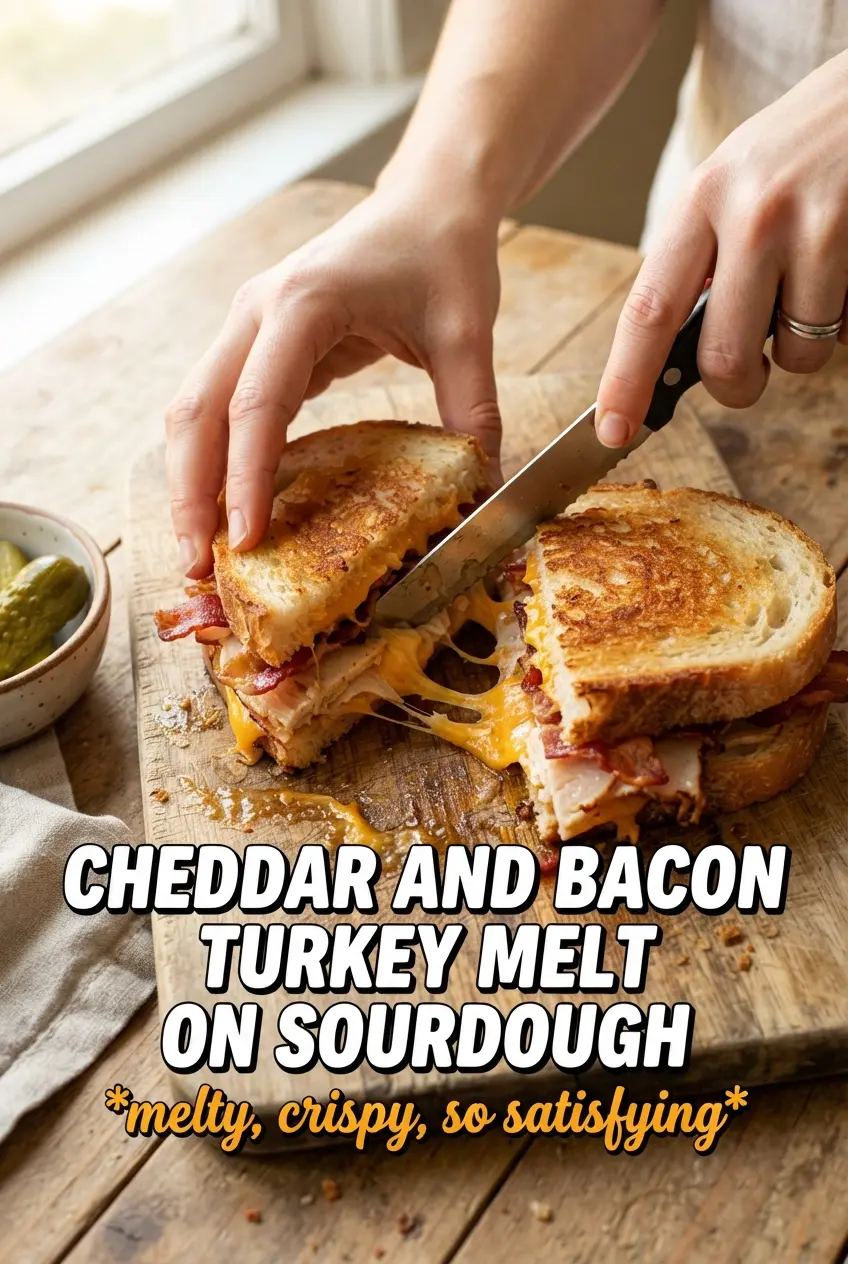
Cheddar and Bacon Turkey Melt on Sourdough
Ingredients
Equipment
Method
- Cook the thick-cut bacon until crispy, then drain and set aside.
- Keep the bacon warm so it stays crisp while you assemble the sandwiches.
- Spread softened butter on one side of each sourdough bread slice.
- Flip the bread over and spread Dijon mustard on half the slices and mayonnaise on the other half.
- Layer sliced deli turkey breast, crispy bacon, and sharp cheddar cheese on the Dijon side.
- Heat a skillet or griddle over medium heat, then place sandwiches butter-side down.
- Top with the mayonnaise-spread slices butter-side up.
- Cook 3-4 minutes per side until the sourdough is golden and the cheddar is fully melted.
- Open each sandwich and add arugula or mixed greens and ripe tomato slices.
- Press the sandwiches closed and serve immediately, with the greens lightly wilted by the heat.