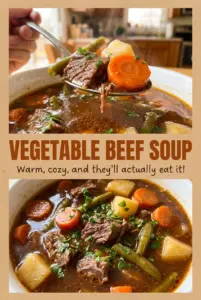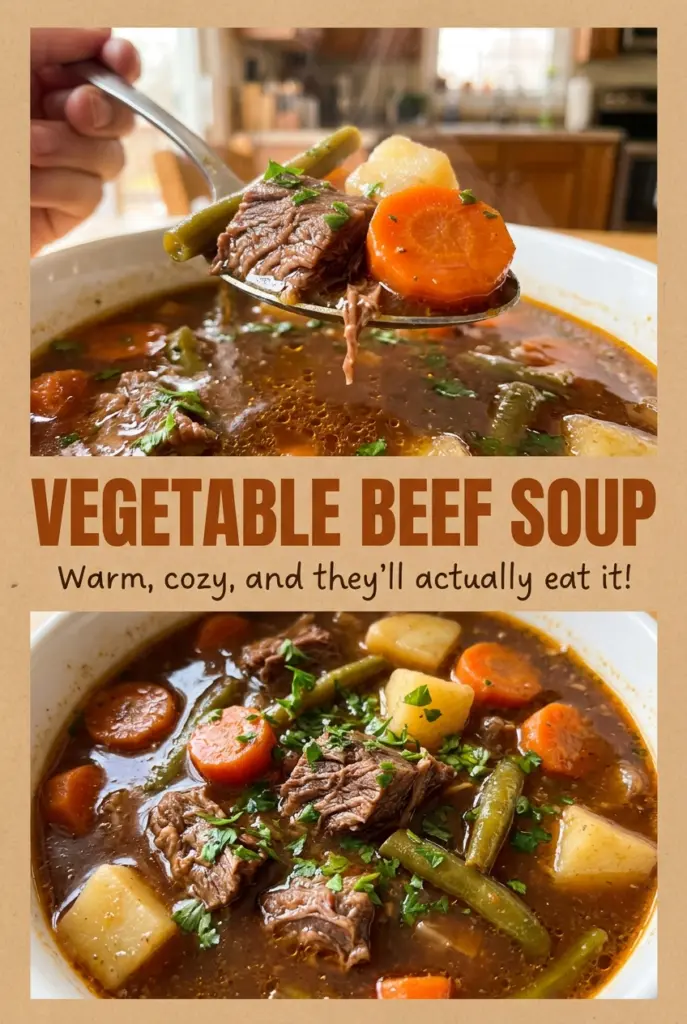
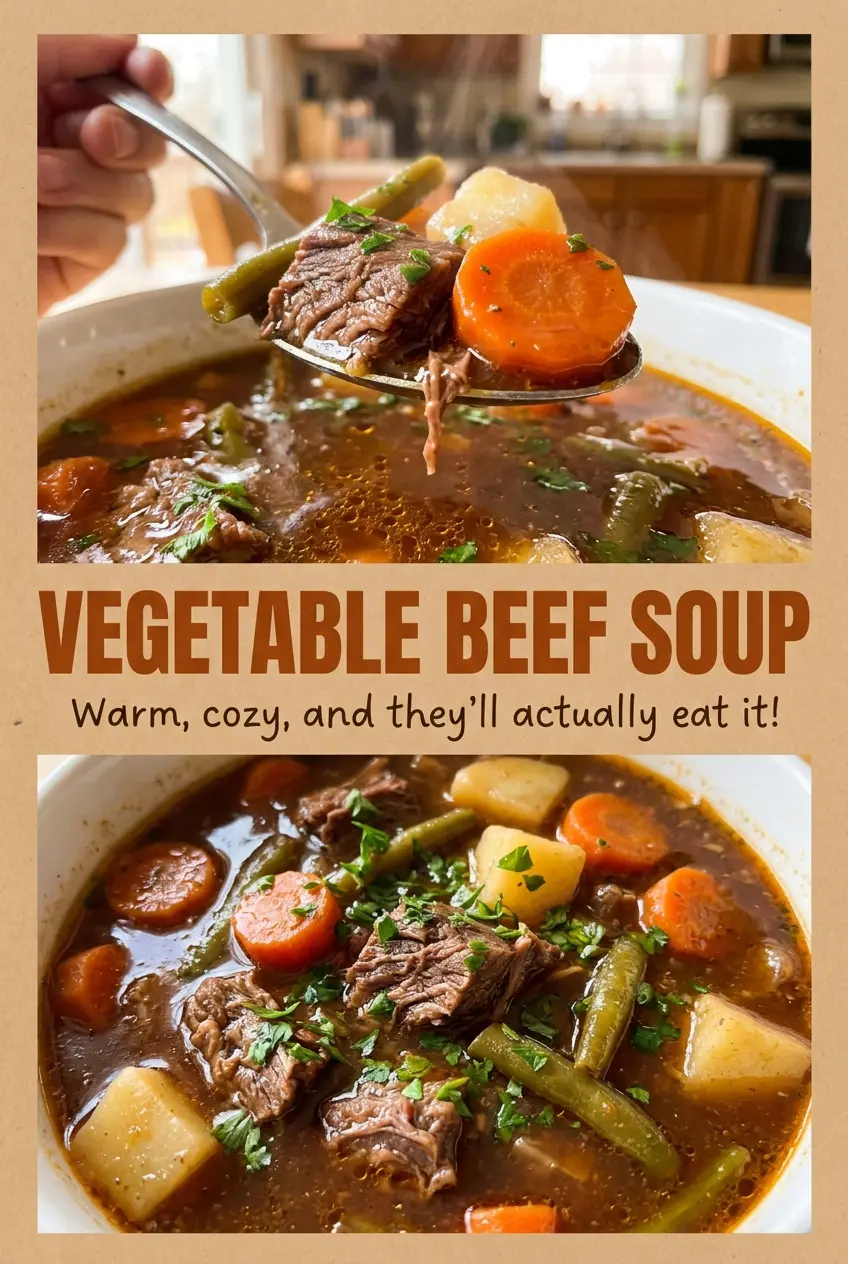
Vegetable beef soup lands in that sweet spot between hearty and comforting without feeling heavy. The broth turns deep and savory, the beef goes tender enough to cut with a spoon, and the vegetables keep their shape instead of dissolving into the pot. What makes this version worth keeping is the way it builds flavor in layers: first the browned beef, then the cooked-down onion, carrot, and celery, then the tomato paste and broth working together until everything tastes like it simmered for hours.
The key is not rushing the early stages. Browning the beef in batches gives you those dark bits on the bottom of the pot that turn into the backbone of the broth. Tomato paste needs a minute or two in the hot oil so it loses that raw edge and deepens the base instead of tasting flat. Once the potatoes go in, the soup gets hearty; adding the green beans and corn near the end keeps them bright and just-tender.
Below you’ll find the timing that keeps the vegetables from going mushy, plus a few practical swaps if you need to work with what’s in the fridge. This is the kind of soup that gets even better the next day, which is exactly why I like making a full pot.
The broth got this deep, rich color from the tomato paste and browned beef, and the potatoes stayed intact instead of turning mealy. I also liked that the green beans and corn went in at the end and kept their bite.
Save this vegetable beef soup for the nights when you want a deep, beefy broth and tender vegetables in one pot.
The Part Most Vegetable Beef Soups Get Wrong: Soft Vegetables and Flat Broth
The biggest problem with vegetable beef soup is timing. If the beef goes in raw and everything simmers together from the start, the vegetables lose their shape before the meat is even tender. If you skip the sear, the broth tastes like boiled beef instead of soup with depth. This version avoids both problems by building flavor first, then adding the vegetables in stages so each one lands at the right texture.
The other detail that matters is the tomato paste. It should cook long enough to darken slightly in the oil, because that short step takes away the sharp canned taste and gives the broth a fuller, more rounded finish. The result is a soup that tastes balanced, not watery or one-note.
What Each Ingredient Is Actually Doing in This Pot

- Beef stew meat — This is the backbone of the soup. It needs time to simmer until it softens, and chuck-style stew meat works better than lean cuts because it stays juicy and turns tender instead of stringy.
- Beef broth — Use a broth you’d actually drink on its own, because this is the liquid the whole soup is built on. If yours is low-sodium, that’s fine; it gives you more control over the final seasoning.
- Tomato paste and diced tomatoes — The paste adds depth and body, while the tomatoes bring a little brightness that keeps the soup from tasting heavy. Don’t skip the paste-to-pan step; it’s what gives the broth that rich mahogany color.
- Potatoes — They make the soup filling, but they also thicken it slightly as they cook. Yukon gold or russet both work; just cut them into even cubes so they cook at the same pace.
- Green beans and corn — These go in late because they only need enough heat to turn tender. If they simmer the whole time, they lose their color and bite.
- Worcestershire sauce — This adds a quiet layer of savoriness that people can’t always name, but they notice when it’s missing. It’s a small amount with a big payoff.
How to Build the Soup So the Beef Gets Tender and the Vegetables Stay Intact
Brown the beef in batches
Heat the oil until it shimmers, then sear the beef in a single layer. If you crowd the pot, the meat steams and turns gray instead of developing the brown crust that gives the broth its depth. Pull it out once the surfaces are deeply browned, even if the centers are still raw; the simmer finishes the job later.
Cook the aromatic base until it smells sweet, not sharp
Add the onion, carrots, and celery to the same pot and cook until the onion softens and the vegetables start to glisten. Stir in the garlic and tomato paste and let them cook for about two minutes. That short cooking time matters because raw garlic can taste harsh and undercooked tomato paste tastes tinny.
Simmer before the potatoes go in
Return the beef to the pot with the broth, tomatoes, Worcestershire sauce, thyme, and bay leaf. Bring it to a boil, then drop it to a steady simmer. This first simmer is where the beef starts to relax, so keep the heat low enough that the surface barely blips; a hard boil tightens the meat and clouds the broth.
Add the finishing vegetables at the end
Once the beef has simmered and the potatoes go in, continue cooking until the potatoes are just tender. Add the green beans and corn only for the last few minutes, when the potatoes are almost done. If you add them too early, they’ll taste tired and the green beans lose their snap.
What to Change When You Need a Different Version of This Soup
Make it gluten-free without losing body
This soup is naturally close to gluten-free as long as your Worcestershire sauce and broth are certified gluten-free. No flour thickener is needed, because the potatoes and tomato paste give the broth enough body on their own.
Use ground beef when stew meat isn’t in the fridge
Brown 1.5 pounds of ground beef and drain off excess fat before adding the vegetables and broth. You’ll lose the slow-simmered texture of stew meat, but you’ll gain a faster soup with the same savory base.
Swap in extra vegetables for a lighter bowl
If you want a soup with more vegetables and a little less meat, add diced zucchini, peas, or cabbage near the end of cooking. Keep the total amount modest so the broth still tastes beefy instead of turning into a generic vegetable soup.
Storage and Reheating
- Refrigerator: Store in an airtight container for up to 4 days. The broth deepens overnight, and the potatoes will soften a little more as it sits.
- Freezer: This soup freezes well for up to 3 months, though the potatoes can turn a bit softer after thawing. For the best texture, freeze in portioned containers and leave a little room at the top for expansion.
- Reheating: Warm it gently on the stovetop over medium-low heat until steaming. A hard boil can break down the potatoes and make the beef tougher, so slow heat is the right move here.
Answers to the Questions Worth Asking
Vegetable Beef Soup
Ingredients
Equipment
Method
- Heat 2 tbsp olive oil in a large Dutch oven over medium-high heat; sear the beef stew meat in batches until browned on all sides, 3-4 minutes per batch, then remove to a plate.
- In the same Dutch oven, sauté the onion, carrots, and celery for 5 minutes, stirring until starting to soften and lightly steam.
- Add the garlic and tomato paste and cook for 2 minutes, stirring constantly until fragrant and darker in color.
- Return the browned beef to the pot, then add beef broth, diced tomatoes, Worcestershire sauce, dried thyme, and bay leaf.
- Bring the soup to a boil over high heat, then reduce to a gentle simmer and cook for 30 minutes with steady bubbling.
- Add the peeled and cubed potatoes and cook for 15 more minutes, stirring occasionally until the potatoes are tender when pierced.
- Stir in the green beans and frozen corn and cook for the last 8 minutes, until the green beans brighten and the corn is heated through.
- Remove the bay leaf, then season with salt and pepper to taste and serve hot.