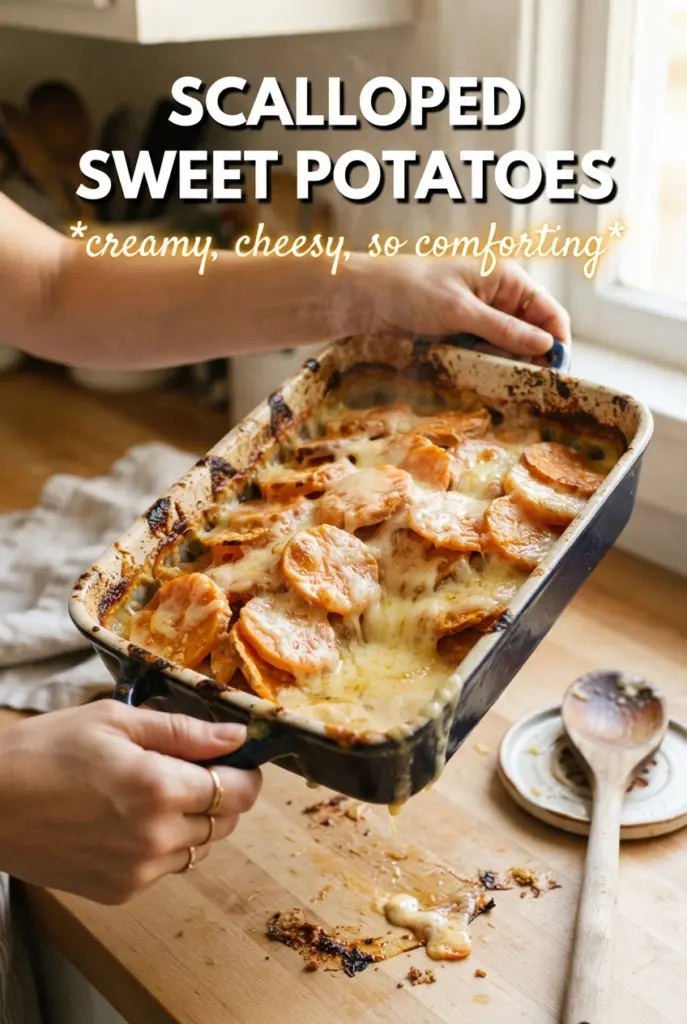
Thin, tender sweet potatoes tucked under a golden Gruyere and parmesan crust turn this dish into more than a holiday side. The maple cream seeps into the layers as it bakes, so every bite lands somewhere between savory gratin and softly sweet casserole, with caramelized edges that taste like the best part of the pan. It’s rich without being heavy, and the thyme keeps the sweetness in check.
What makes this version work is the balance in the cream mixture. Garlic, thyme, cinnamon, and nutmeg give the sweet potatoes depth without pushing them into dessert territory, and the maple syrup rounds out the edges instead of making the dish taste sugary. Baking it covered first matters, because the potatoes need that trapped steam to soften all the way through before the cheese goes on top.
Below you’ll find the layering trick that keeps the potatoes cooking evenly, plus a few swaps that still give you a creamy finish. If your sweet potatoes have ever come out firm in the middle or watery at the bottom, the details here will help.
The layers softened perfectly and the top turned into this gorgeous cheesy crust. I loved that the maple came through just enough without making it taste sweet, and the whole dish was still creamy after resting.
Save these scalloped sweet potatoes for the dinner table when you want creamy layers, a maple-kissed sauce, and a crisp Gruyere top.
The Layering Trick That Keeps the Center Tender
Scalloped sweet potatoes fail when the slices are too thick or stacked too loosely. Thick slices take longer to cook than the top can handle, and loose layers let the cream slide straight to the bottom, which leaves you with a dry upper half and soupy edges. Thin, even slices overlap just enough to hold the sauce in place while still letting heat move through the dish.
Covering the baking dish for the first part of the bake is what gives the potatoes a head start. The foil traps steam and softens the slices before the cheese goes on, which is the difference between a creamy gratin and one that looks done on top but cuts like a baked potato in the middle. Once the foil comes off, the surface can brown without sacrificing tenderness.
What Each Ingredient Is Actually Doing in This Dish
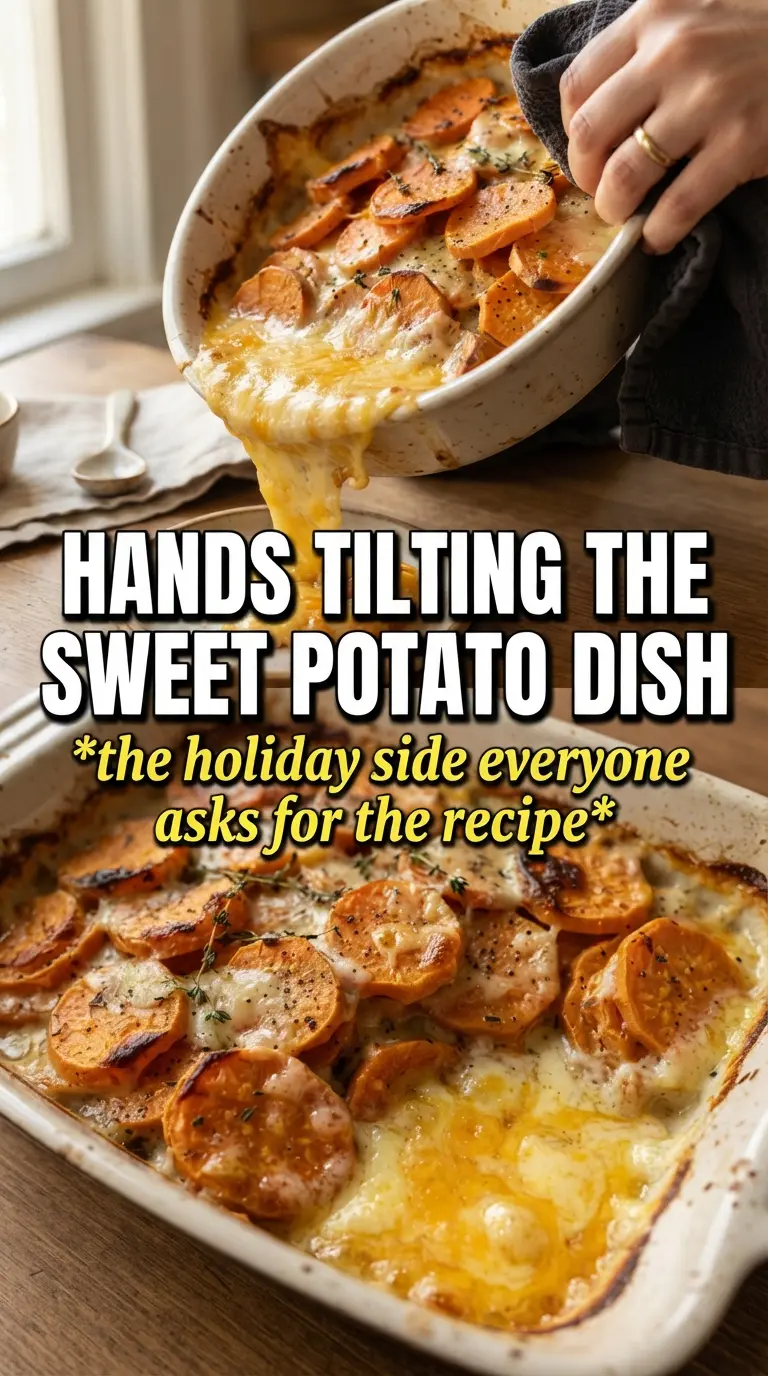
- Sweet potatoes — These need to be sliced thin and evenly so they cook at the same pace. A mandoline helps, but a sharp knife works if you keep the slices close to 1/8 inch. If the slices are too thick, the bake time stretches and the top overbrowns before the center turns soft.
- Heavy cream and whole milk — The cream brings body, while the milk keeps the sauce from feeling too dense. You can swap in half-and-half for both if needed, but the finished dish will be a little lighter and less silky. Don’t use low-fat milk here; it tends to separate and won’t coat the layers the same way.
- Gruyere and parmesan — Gruyere melts into the potatoes and gives you that stretchy, nutty finish, while parmesan sharpens the top and helps it brown. Pre-shredded cheese will work in a pinch, but freshly shredded melts more smoothly. If you need a swap, use fontina or white cheddar for the Gruyere, then keep the parmesan for the crust.
- Maple syrup, cinnamon, and nutmeg — These are subtle, not dessert-like, and they soften the earthiness of the potatoes. The maple won’t make the dish sweet unless you overdo it. If you want a more savory profile, reduce the maple slightly and keep the thyme strong.
- Fresh thyme and garlic — These keep the cream from tasting flat. Fresh thyme gives a cleaner, brighter finish than dried thyme, and the garlic should be minced fine so it melts into the sauce instead of staying sharp in little bites.
Building the Sauce, Then Letting the Oven Do the Rest
Whisk the cream mixture until the spices disappear
Combine the cream, milk, garlic, maple syrup, thyme, cinnamon, nutmeg, salt, and pepper until the mixture looks uniform and the spices are no longer floating in clumps. You want the garlic distributed evenly so every layer gets seasoned. If you skip this and pour everything in separately, the top can taste bland while the bottom turns overly seasoned.
Layer the potatoes tightly enough to hold the sauce
Arrange the sweet potato slices in overlapping rows in the buttered dish, working with a little pressure so the layers sit snugly. The goal is a packed surface with small gaps for the cream to slip through, not a loose pile. Pour the cream mixture slowly over the top so it sinks through the layers instead of flooding one corner.
Bake covered until the potatoes start to yield
Tight foil is doing real work here. Bake for 40 minutes until the potatoes are starting to soften when pierced with a knife and you can see the sauce bubbling around the edges. If the foil isn’t sealed well, the top dries out before the center is cooked.
Finish with cheese and brown the top
Once the potatoes are mostly tender, uncover the dish and scatter the Gruyere and parmesan evenly across the surface. Return it to the oven until the cheese melts into a bubbling crust with browned spots on top and the sauce thickens at the edges. Pull it before the top gets too dark; it will keep cooking as it rests.
Let it settle before serving
The last 10 minutes matter. Resting lets the cream thicken slightly, so the layers hold together when you cut in. If you serve it immediately, the sauce will run and the stack won’t slice cleanly.
How to Adapt These Scalloped Sweet Potatoes Without Losing the Creamy Finish
Dairy-Free Version With a Different Kind of Richness
Use unsweetened oat cream or canned coconut milk instead of the dairy cream and milk, and swap in a good melting dairy-free cheese if you have one you trust. The result will be a little less sharp and more rounded, especially if you use coconut milk, but the texture still stays creamy. Choose a neutral dairy-free option if you want the maple and thyme to stay front and center.
Make It More Savory and Less Sweet
Cut the maple syrup in half and add an extra pinch of thyme plus a little more black pepper. That keeps the potatoes grounded and makes the cheese taste even more prominent. This version works well next to roast chicken, ham, or anything rich that benefits from a less sweet side.
Swap the Cheese for What You Already Have
Fontina melts almost as smoothly as Gruyere and gives you a milder finish, while sharp white cheddar brings more bite and less nuttiness. Parmesan still helps the top brown, so keep it if you can. If you only have cheddar, the sauce will be a little more familiar and a little less elegant, but it still works.
Storage and Reheating
- Refrigerator: Store covered for up to 4 days. The sauce firms up as it chills, but the flavor stays strong.
- Freezer: It freezes, but the cream sauce can turn grainy after thawing, so I only freeze it if I have to. Wrap portions tightly and thaw in the fridge before reheating.
- Reheating: Reheat covered at 325F until hot in the center, then uncover for a few minutes if you want to re-crisp the top. The common mistake is blasting it at high heat, which dries the edges before the middle warms through.
Answers to the Questions Worth Asking
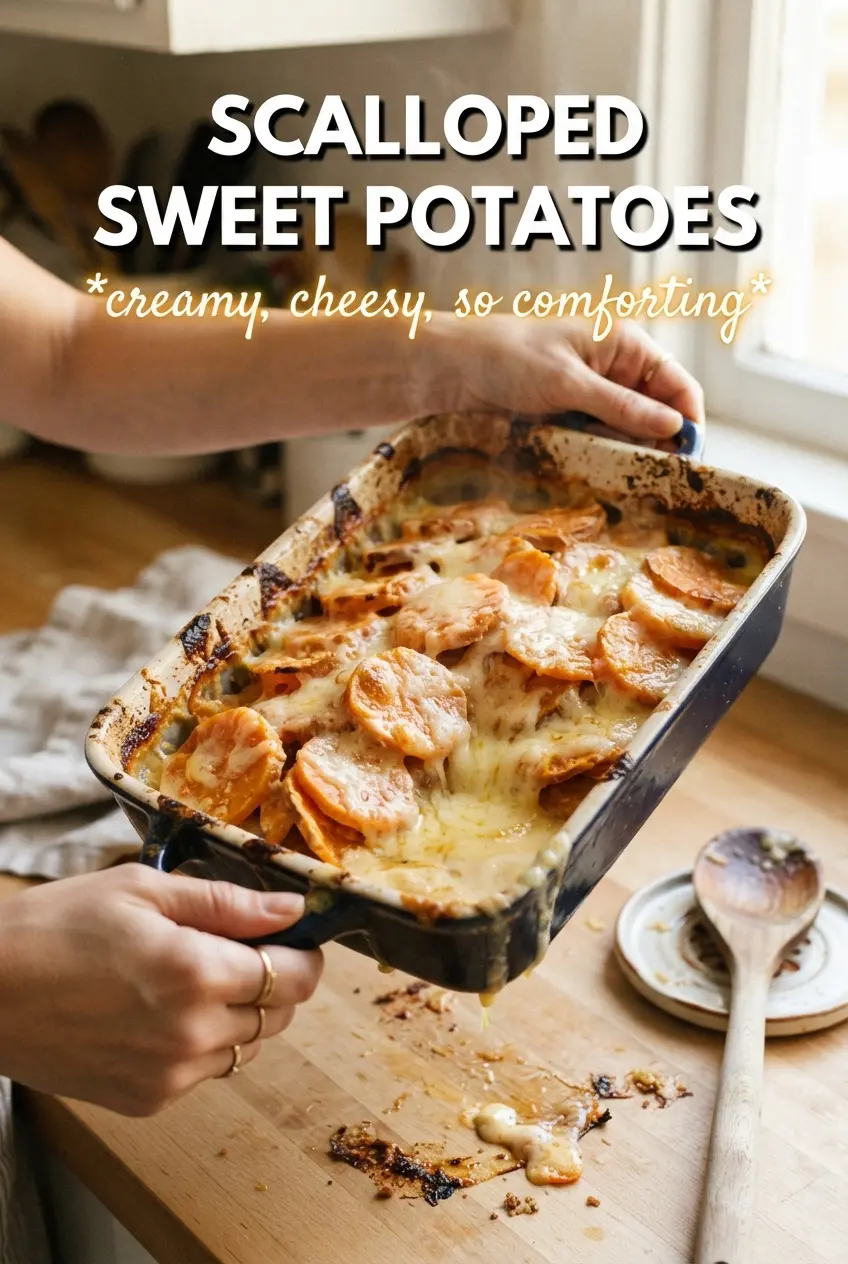
Scalloped Sweet Potatoes
Ingredients
Equipment
Method
- Preheat oven to 375F and butter a 9x13 baking dish.
- Whisk heavy cream, whole milk, garlic, maple syrup, fresh thyme, cinnamon, nutmeg, salt, and pepper until smooth.
- Layer sweet potato slices in overlapping rows, then pour the cream mixture over evenly.
- Cover tightly with foil and bake 40 minutes, until the sweet potatoes are starting to soften.
- Uncover and scatter Gruyere and parmesan over the top.
- Bake 20-25 more minutes at 375F until sweet potatoes are completely tender and the topping is golden and bubbly.
- Rest 10 minutes before serving to set the custard and help the layers hold together.