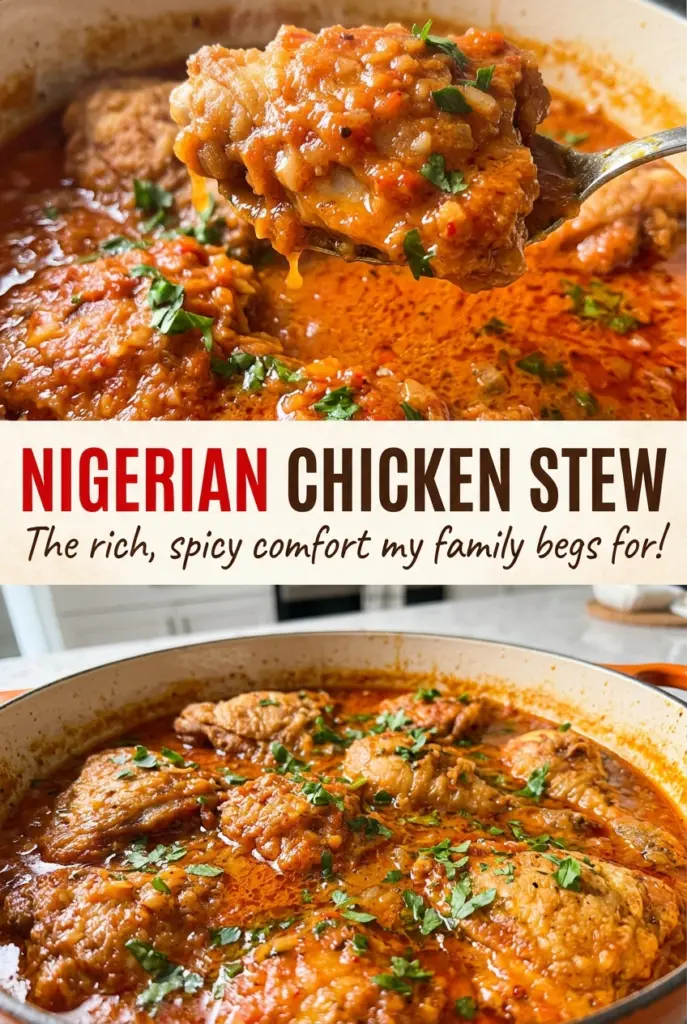
Deep red, rich, and full of slow-cooked pepper flavor, Nigerian chicken stew earns its place beside rice because it tastes layered instead of flat. The chicken stays tender under a sauce that cooks down until the oil rises to the top, the tomatoes lose their raw edge, and the peppers turn from sharp to mellow and deep. That long simmer is what gives the stew its signature color and that bold, clingy texture that coats every grain of rice.
The part that matters most is the pepper base. If you rush it, the stew tastes bright and thin instead of cooked and rounded. Blending the tomatoes with the red bell peppers, onion, and scotch bonnet gives you the right body, but frying that purée long enough is what turns it into stew instead of soup. The chicken is seasoned before it ever hits the pot, so the meat carries flavor all the way through instead of depending on the sauce to do all the work.
Below you’ll find the method that gives you that deep orange-red finish, plus a few practical notes on heat level, oil, and the best way to keep the stew from tasting raw or greasy.
The sauce cooked down exactly like you described — no watery tomato taste, just that deep peppery stew flavor. I baked the chicken first and it held up beautifully after simmering in the pot for 20 minutes.
Save this Nigerian Chicken Stew for the night you want that deep pepper sauce and golden chicken over rice.
The Trick to Deep, Not Raw-Tasting, Nigerian Chicken Stew
The biggest mistake with this stew is stopping the pepper base too soon. Tomato and bell pepper need time in the oil before they taste cooked, and that simmer is what strips out the sharp edge and brings the color into that deep red-orange range people expect. If the sauce still smells bright or acidic, it needs more time on the stove.
Another place people go wrong is crowding the pan with chicken before the stew has reduced. The chicken should go in after the sauce has already darkened and the oil has started to separate. That way the meat finishes in a concentrated sauce instead of watering it down.
- The sauce should look glossy and thicker than soup before the chicken goes in.
- Oil floating on top is a good sign here, not a problem. It means the pepper base has cooked long enough.
- If the sauce starts to stick, lower the heat and stir more often rather than adding water too early.
What Each Ingredient Is Actually Doing in This Dish
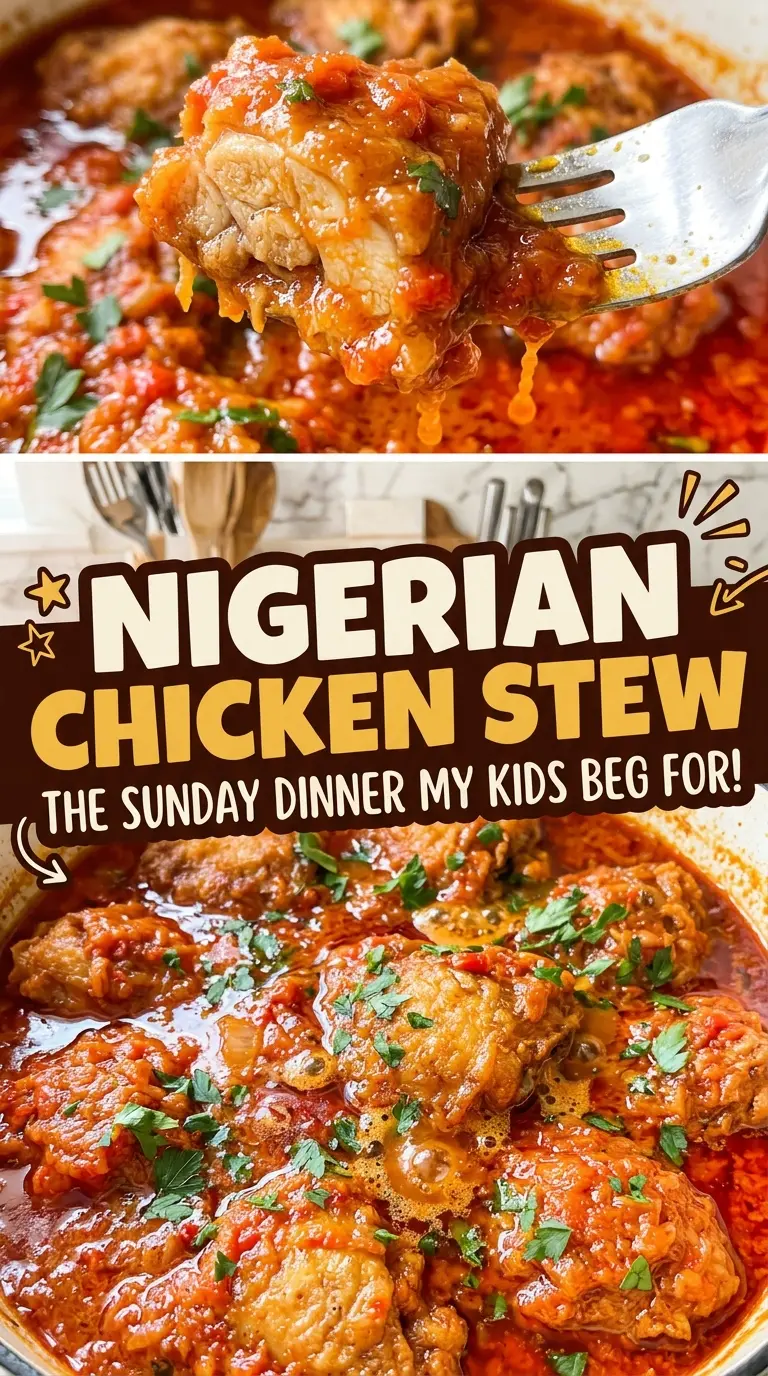
- Chicken pieces — Bone-in pieces bring more flavor to the stew and hold up better during the simmer. Thighs and drumsticks are especially good because they stay juicy after frying or baking. You can use a mix of pieces, but avoid boneless chicken if you want the stew to taste as rich as it should.
- Plum tomatoes — These give the sauce body without too much water. If your tomatoes are especially watery, the stew will take longer to reduce, so keep the pot uncovered while it cooks. Canned plum tomatoes are dependable here and often better than out-of-season fresh tomatoes.
- Red bell peppers and scotch bonnet — The bell peppers build sweetness and color, while the scotch bonnet brings the heat and the signature Nigerian pepper base. If you want less heat, use one pepper or remove the seeds, but don’t skip it entirely unless you need a very mild stew.
- Oil — This isn’t just for frying the chicken. The oil helps cook the blended pepper base down and gives the finished stew its glossy finish. Using less oil changes the texture and makes the sauce taste leaner, not richer.
- Thyme, curry powder, and bouillon — These season the chicken before it ever hits the pot, so the flavor goes deeper than surface-level salt. Curry powder in Nigerian chicken stew isn’t there to make it taste like curry; it adds warmth and color in the background.
Building the Pepper Sauce Until It Stops Tasting Flat
Seasoning the chicken first
Start by rubbing the chicken with the grated onion, thyme, curry powder, bouillon, salt, and pepper, then let it sit for 30 minutes. That short rest is enough to pull the seasonings into the meat. If you skip it, the chicken tastes like plain chicken sitting in a good sauce instead of part of the dish. Grating the onion matters because it disappears into the marinade and seasons more evenly than chopped onion would.
Frying or baking the chicken
Cook the chicken until it’s golden and mostly done, not fully finished. You want color on the outside because that gives the stew more depth once the pieces simmer in the sauce. If the chicken is pale, the final dish can taste flat. If you’re frying, don’t crowd the pan; if you’re baking, use a hot oven and turn the pieces once so they color evenly.
Cooking the pepper base down
Blend the tomatoes, bell peppers, scotch bonnet, and remaining onion until smooth, then fry that puree in the hot oil over medium-high heat. At first it will sputter and look loose. Keep cooking and stirring until it darkens, thickens, and the oil begins to float on top. That’s the point where the raw tomato taste has cooked out. If the sauce still tastes sharp, it needs more time, not more seasoning.
Finishing the stew with the chicken
Add the browned chicken and turn it through the sauce until every piece is coated. Then let it simmer gently for 15 to 20 minutes so the chicken finishes cooking and the flavor settles into the meat. Keep the heat low enough that the stew bubbles steadily without splashing. Finish with a final taste for salt, then serve it over steamed rice while the sauce is still glossy and hot.
How to Adapt This for a Milder Pot, a Bolder Pot, or a Different Diet
Milder Heat Without Losing the Pepper Flavor
Use one scotch bonnet instead of two, or remove the seeds and white ribs before blending. You’ll keep the fruity pepper flavor, but the burn drops back enough for people who don’t want a hot stew. The bell peppers still carry the color and body, so the dish doesn’t turn bland.
Oven-Baked Chicken Instead of Fried
Baking the chicken at 425°F until the skin is golden gives you less mess and still gives the stew enough savory depth. You won’t get quite the same crust as a deep fry, but you also won’t have to manage as much oil. This is the better choice when you want the stew a little lighter without changing the finished sauce.
Gluten-Free and Dairy-Free as Written
This stew is naturally gluten-free and dairy-free as long as your bouillon or stock powder is certified gluten-free. The texture comes from the pepper base and the oil, not from flour or cream, so there is nothing structural to replace. Serve it with rice, and you’ve got a meal that fits both needs without any extra changes.
Freezing Leftovers for Another Night
Portion the stew into airtight containers once it cools, then freeze it for up to 3 months. The sauce holds up well, and the flavor often tastes deeper after thawing. Reheat it gently so the oil doesn’t separate too aggressively and the chicken stays tender.
Storage and Reheating
- Refrigerator: Store for up to 4 days. The sauce thickens as it chills, and the flavor gets even deeper by day two.
- Freezer: Freezes well for up to 3 months. Cool completely first, then freeze in portions so it thaws evenly.
- Reheating: Warm it gently on the stove over low heat with a splash of water if needed. High heat can make the oil separate too fast and can dry out the chicken.
Answers to the Questions Worth Asking
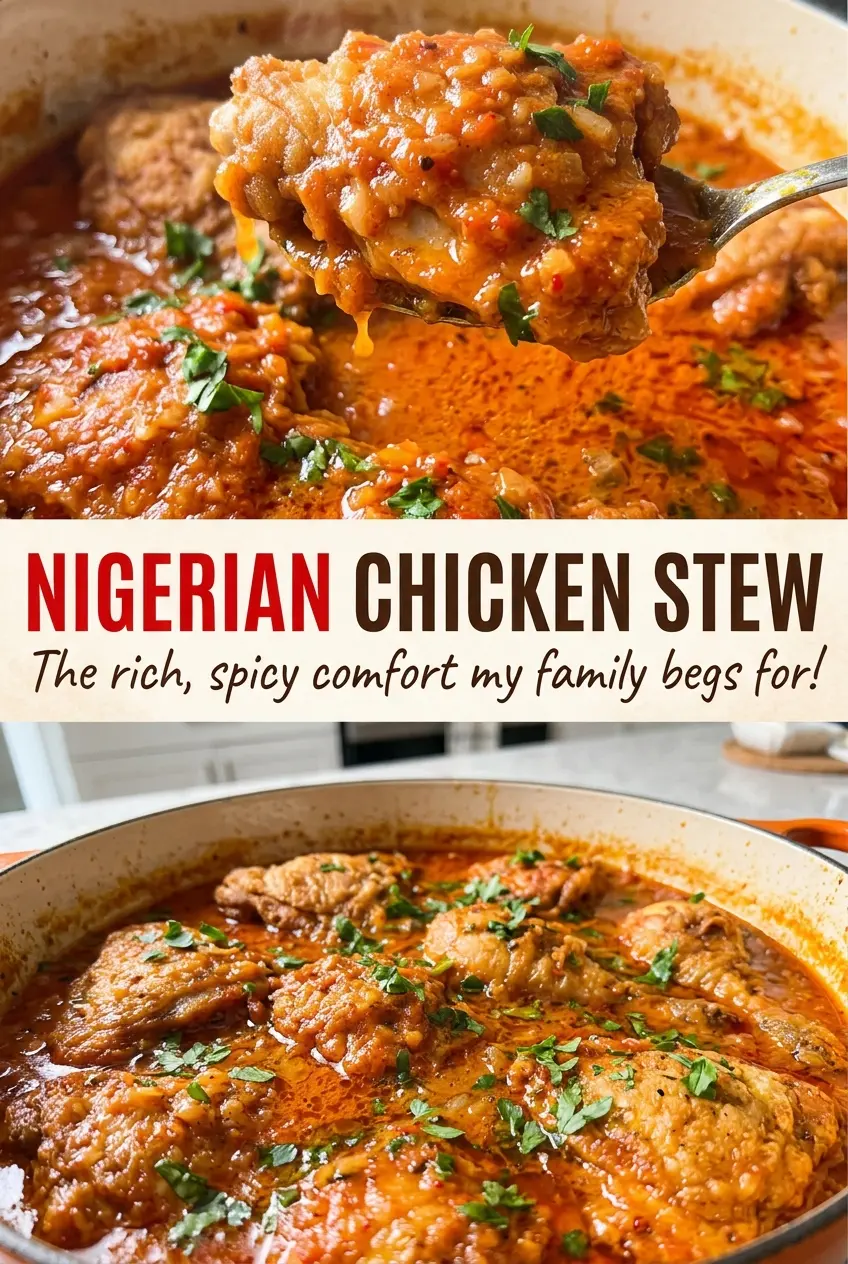
Nigerian Chicken Stew
Ingredients
Equipment
Method
- Season the chicken pieces with half the onion (grated), thyme, curry powder, bouillon, salt, and pepper, then marinate for 30 minutes with the chicken covered. The marinade should coat every piece, so you see seasoning on the surface.
- Fry the chicken or oven-bake until golden and mostly cooked through, then set it aside. Keep the color golden rather than dark to help the pieces stay tender after simmering.
- Blend the plum tomatoes, red bell peppers, scotch bonnet, remaining onion, and garlic until smooth. Blend until no pepper or onion chunks remain.
- Heat 1/2 cup oil in a large pot over medium-high heat, then carefully fry the blended pepper sauce in the oil for 30-40 minutes, stirring frequently. Look for the sauce to darken and for oil to float on top.
- Add the fried chicken to the pot and coat it in the sauce, then simmer for 15-20 minutes. The chicken should be fully cooked and the sauce should cling to the pieces.
- Season the stew to taste and serve over steamed rice. Garnish with fresh parsley and keep the sauce visibly thick with chicken pieces partially submerged.