
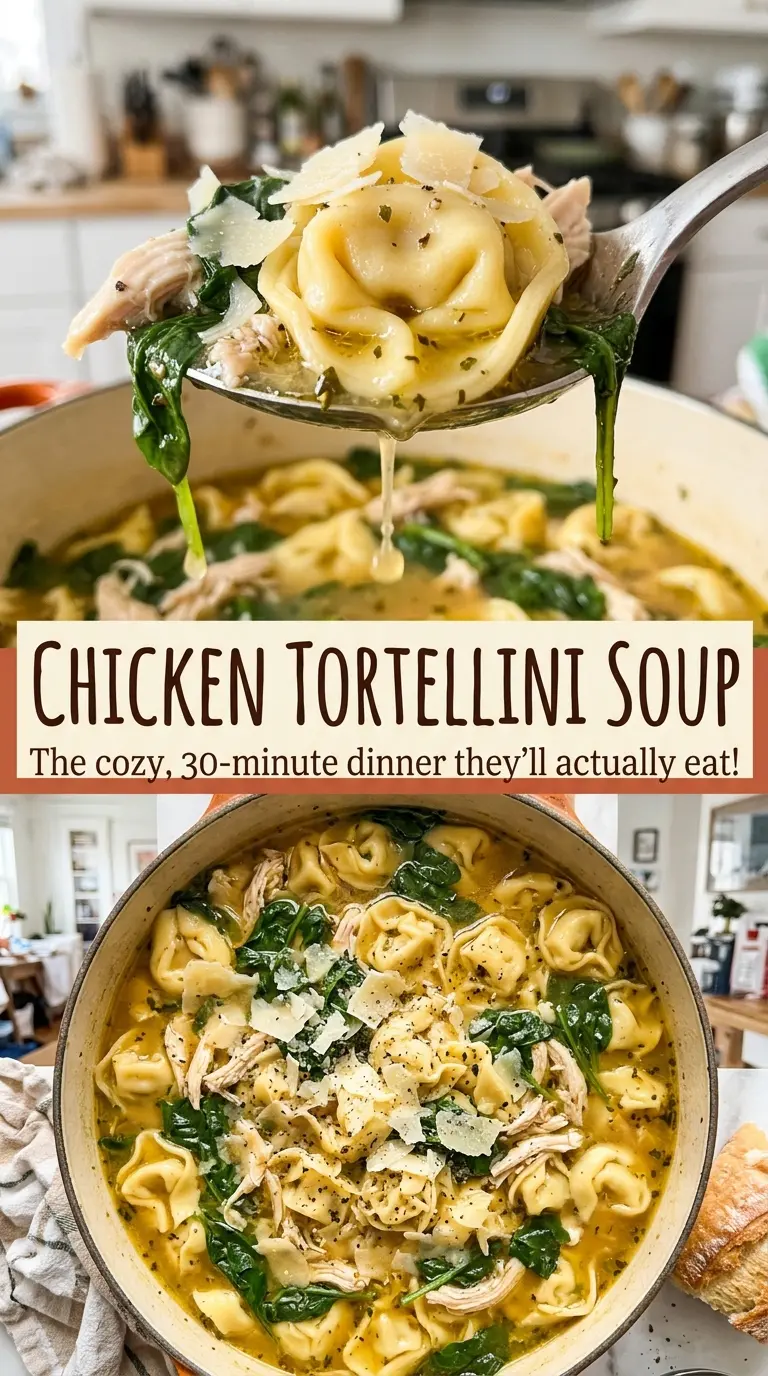
Chicken tortellini soup lands in the bowl with the kind of comfort that doesn’t need much convincing: tender cheese-filled pasta, shredded chicken, sweet carrots, and spinach floating in a savory herb broth that tastes like it simmered all afternoon even though it comes together fast. The tortellini stays plush, the chicken stays juicy, and the broth picks up enough body from the pasta to feel satisfying without turning heavy.
What makes this version work is the order. The vegetables get a head start so they soften and release flavor before the broth goes in. The tortellini cooks directly in the soup, which means it absorbs seasoning and helps thicken the broth a little, but only if you keep an eye on the timing and add the chicken and spinach at the end so both stay in good shape.
Below, I’ll show you how to keep the tortellini from going mushy, why the broth tastes deeper than the ingredient list suggests, and how to adapt the soup if you need to stretch it or make it ahead.
The tortellini held up better than I expected, and the broth picked up so much flavor from the garlic and herbs. I added the spinach at the end like the directions said, and it stayed bright instead of turning mushy.
Creamy chicken tortellini soup with tender pasta and bright spinach is the kind of bowl that disappears fast.
The Reason the Tortellini Goes in Last
The biggest mistake with tortellini soup is boiling the pasta too early or too long. Refrigerated tortellini cooks fast, and once it crosses that tender point, the cheese filling can leak and the pasta starts to swell and soften past what you want in the bowl. The broth keeps cooking for a minute or two even after you turn the heat down, so timing matters more here than in a plain vegetable soup.
That’s why the tortellini goes in after the broth is at a full boil and the vegetables have already done their work. You want the pasta to be just tender when the soup is finished, not bloated and fragile by the time it hits the table. The chicken and spinach come in even later because both only need a brief warm-through.
What Each Ingredient Is Actually Doing in This Soup
The chicken broth is the backbone, so use one you’d actually drink on its own. A low-sodium broth gives you room to season the soup properly at the end, which matters because the tortellini and parmesan both add salt. If your broth tastes flat in the pot, the finished soup will taste flat too.
- Refrigerated cheese tortellini — This is the ingredient that makes the soup feel substantial. Fresh tortellini cooks faster and tastes softer than dried, and that tenderness works here. Frozen tortellini can be used, but add a few extra minutes and watch closely so it doesn’t split.
- Chicken breast — Rotisserie chicken or leftover cooked chicken works perfectly and saves time. The important part is shredding it into bite-size pieces so it heats through quickly without drying out. If the chicken is still in large chunks, it can feel separate from the soup instead of woven into it.
- Carrots and onion — These build the sweet, savory base. Sautéing them first softens their bite and gives the broth a deeper, more rounded taste. Don’t rush this part; if the onion is still sharp, the soup tastes thin.
- Garlic, Italian seasoning, and dried basil — These are the herb layer that makes the broth taste like more than chicken stock. Garlic burns fast, so it only needs a minute after the onion and carrots have softened. The dried herbs bloom in the oil and get much more fragrant than they would if you stirred them straight into the broth.
- Spinach — Baby spinach wilts in minutes and gives the soup a fresh finish. Add it at the very end so it stays green and silky. Regular spinach works too, but the stems need a little more time and the leaves should be torn smaller.
The 15 Minutes That Build the Flavor
Softening the Vegetables First
Start with the olive oil, onion, and carrots in a large pot over medium heat. The onion should turn translucent and the carrots should lose their raw crunch, but neither should brown deeply. If the heat is too high, the onion will scorch before the carrots soften, and that gives the broth a harsh edge instead of a sweet base. This first stage sets up the whole soup, so give it the full five minutes.
Waking Up the Garlic and Herbs
Add the garlic, Italian seasoning, and dried basil once the vegetables are softened. Stir for about a minute, just until the garlic smells fragrant and the herbs smell like they’ve opened up in the oil. If the garlic sits too long in the pot before the broth goes in, it can turn bitter. This is a quick stage, but it’s where the soup gets its signature herb flavor.
Cooking the Tortellini Without Overdoing It
Pour in the broth and bring it to a boil before adding the tortellini. Keep the boil gentle once the pasta goes in, and cook only until the tortellini is tender and floating, usually 4 to 5 minutes. If the boil is too aggressive, the pasta can burst and the filling can slip out. You want the tortellini soft but still intact.
Finishing With Chicken and Spinach
Stir in the shredded chicken and spinach last. The chicken only needs to warm through, and the spinach should wilt down in 2 to 3 minutes. If you cook them much longer, the chicken can dry out and the spinach turns muddy instead of fresh. Season with salt and pepper at the end, then ladle the soup into bowls and finish with parmesan and basil.
Three Ways to Make This Soup Fit What You’ve Got
Use rotisserie chicken for the fastest version
Shredded rotisserie chicken saves you the cooking step and adds a little extra richness from the seasoned skin and dark meat bits. Stir it in at the very end so it stays juicy. This is the easiest way to turn the soup into a weeknight meal with almost no extra effort.
Make it dairy-light without losing the comfort
Skip heavy cream entirely, because this soup doesn’t need it. The tortellini gives enough body on its own, and a generous parmesan finish adds richness at serving time. If you want a softer finish, use a splash of milk or half-and-half in the bowl rather than simmering dairy into the whole pot.
Gluten-free adjustment
Use gluten-free tortellini if you can find it, and cook it by package timing rather than by guesswork. Gluten-free pasta can turn soft faster, so add it at the last possible minute and keep the soup from boiling hard after it goes in. The broth and vegetables hold up well, so the texture difference comes mostly from the pasta.
Storage and Reheating
- Refrigerator: Store in an airtight container for up to 3 days. The tortellini will keep soaking up broth, so expect the soup to thicken.
- Freezer: It’s not the best freezer soup because the tortellini can turn soft and the spinach loses its texture. If you want to freeze it, freeze the broth, chicken, and vegetables without the tortellini, then add fresh pasta when reheating.
- Reheating: Warm it gently on the stove over medium-low heat with a splash of broth or water. A hard boil will split the tortellini and make the chicken stringy, so keep it at a steady simmer just until hot.
Answers to the Questions Worth Asking

Chicken Tortellini Soup
Ingredients
Equipment
Method
- Heat the olive oil in a large pot over medium heat, then sauté the onion and carrots for 5 minutes, stirring until glossy and slightly softened.
- Add the garlic, Italian seasoning, and dried basil to the pot and cook for 1 minute, stirring constantly so the garlic smells fragrant without browning.
- Pour in the chicken broth and bring it to a boil, stirring to combine and dissolve any browned bits from the bottom of the pot.
- Add the cheese tortellini and cook for 4-5 minutes until just tender, watching for them to float and the filling to be hot.
- Stir in the shredded chicken and baby spinach, then cook for 2-3 minutes until the spinach wilts and the soup is evenly heated.
- Season with salt and pepper to taste, then serve hot with generous parmesan shavings and fresh basil on top.