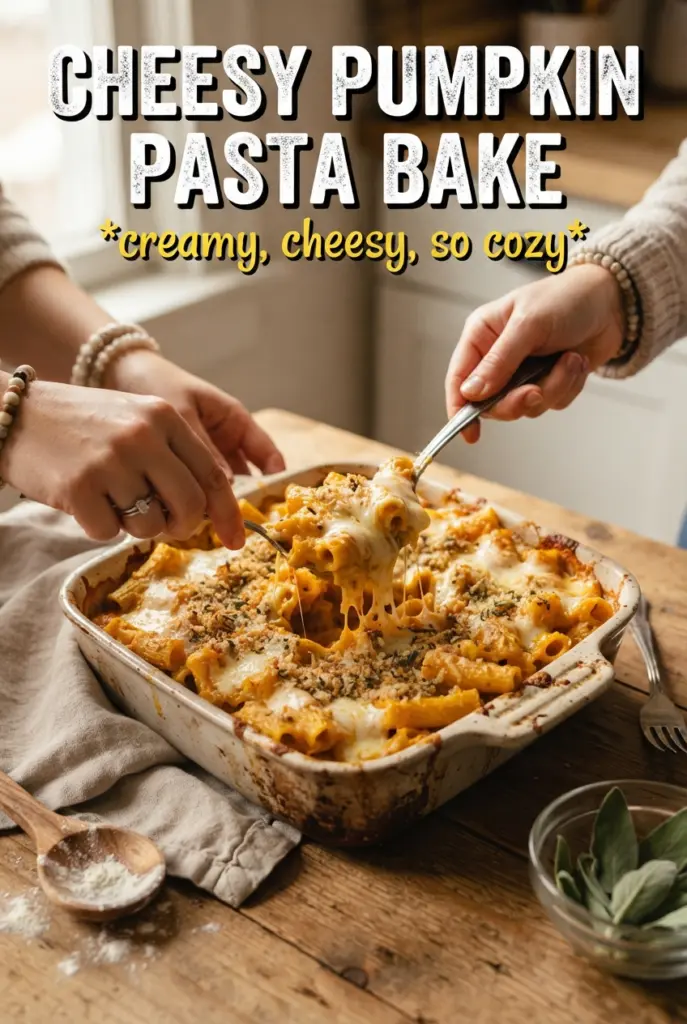
Cheesy pumpkin pasta bake lands in that sweet spot between cozy and substantial: tender rigatoni, a silky pumpkin cream sauce, browned Italian sausage, and a bubbling cap of mozzarella and parmesan that turns golden at the edges. It eats like a real dinner, not a side dish pretending to be one, and the pumpkin never tastes flat or overly sweet when it’s balanced with garlic, sage, nutmeg, and a little cayenne.
What makes this version work is restraint. The pumpkin puree isn’t asked to do everything on its own; heavy cream smooths it out, chicken broth loosens it just enough to coat the pasta, and the sausage brings the savory depth that keeps each bite interesting. Cooking the pasta two minutes shy of al dente matters too, because it finishes in the oven and soaks up the sauce instead of turning soft and heavy.
Below, I’ll walk through the little details that keep the sauce creamy, the pasta from going mushy, and the top from browning before the center is hot. There’s also a few smart swaps if you need to adjust the sausage or make it fit what’s already in your kitchen.
The sauce was creamy without being heavy, and the pumpkin flavor stayed savory instead of sweet. I also loved that the pasta came out perfectly after baking — no mushy noodles, even after reheating the next day.
Save this cheesy pumpkin pasta bake for nights when you want a creamy baked pasta with a crisp, golden top and almost no fuss.
The Reason the Pumpkin Sauce Stays Creamy Instead of Grainy
The biggest risk with pumpkin pasta is treating the puree like a ready-made sauce. It isn’t. Pumpkin needs fat and liquid to turn silky, and it needs them added in the right order. Start with the sausage drippings and onion, then stir in the pumpkin with cream and broth so the puree can loosen and emulsify instead of sitting in the pan as a thick paste.
Heat matters here too. If the sauce boils hard after the cream goes in, it can look a little split or greasy around the edges. A gentle simmer is enough to bring everything together and concentrate the flavor without turning the dairy harsh. The goal is a sauce that clings to the rigatoni and leaves a glossy trail on the spoon.
The pasta also matters more than people think. Rigatoni and ziti both hold onto the sauce, but they also need a little room to finish cooking in the oven. If you cook them all the way on the stovetop, they’ll soften too much by the time the cheese melts.
What Each Ingredient Is Actually Doing in This Dish
- Rigatoni or ziti — The tubes trap the pumpkin cream sauce inside and under the cheese. Short pasta also bakes more evenly than long noodles in a dish like this. If you only have penne, it works too, but the bite is a little less substantial.
- Italian sausage — This is what keeps the pumpkin from tasting one-note. The fennel, garlic, and spice in the sausage give the whole bake its backbone. Mild or hot both work; hot sausage brings more heat, but mild lets the nutmeg and sage come through more clearly.
- Pumpkin puree — Use pure pumpkin puree, not pumpkin pie filling. The puree gives body and a mellow sweetness that balances the cheese and sausage, but it needs seasoning to taste like dinner instead of dessert.
- Heavy cream and chicken broth — Cream smooths the sauce, while broth loosens it so it coats the pasta instead of turning stiff. Half-and-half can work in a pinch, but the sauce won’t be quite as rich and it’s easier to over-reduce.
- Mozzarella and parmesan — Mozzarella gives the stretchy top, and parmesan gives the salty, nutty finish. Don’t skip the parmesan; it’s what keeps the topping from tasting bland once the mozzarella melts.
The Part of the Bake That Actually Needs Your Attention
Brown the sausage until it really takes on color
Cook the sausage in a large oven-safe skillet over medium heat until it’s no longer pink and the edges pick up some deep browning. That browned fond is part of the sauce, so don’t rush this stage or crowd the pan so much that the meat steams. If there’s a lot of grease in the skillet, drain off the excess before you add the onion, but leave the browned bits behind.
Build the pumpkin sauce low and slow
Once the onion has softened and the garlic smells fragrant, stir in the pumpkin, cream, broth, Italian seasoning, nutmeg, and cayenne. Let it simmer gently for about five minutes until it looks smooth and slightly thickened. If it starts bubbling hard, turn the heat down; that’s how the cream can separate and the sauce starts to look oily instead of velvety.
Stop the pasta a little early
Boil the rigatoni until it’s about two minutes short of al dente, then drain it and toss it straight into the sauce. It should still have a noticeable bite, because the oven is going to finish the job. If the pasta is fully cooked before it goes in, the final dish can turn soft and the noodles can collapse under the cheese.
Bake until the center is hot and the top is bronzed
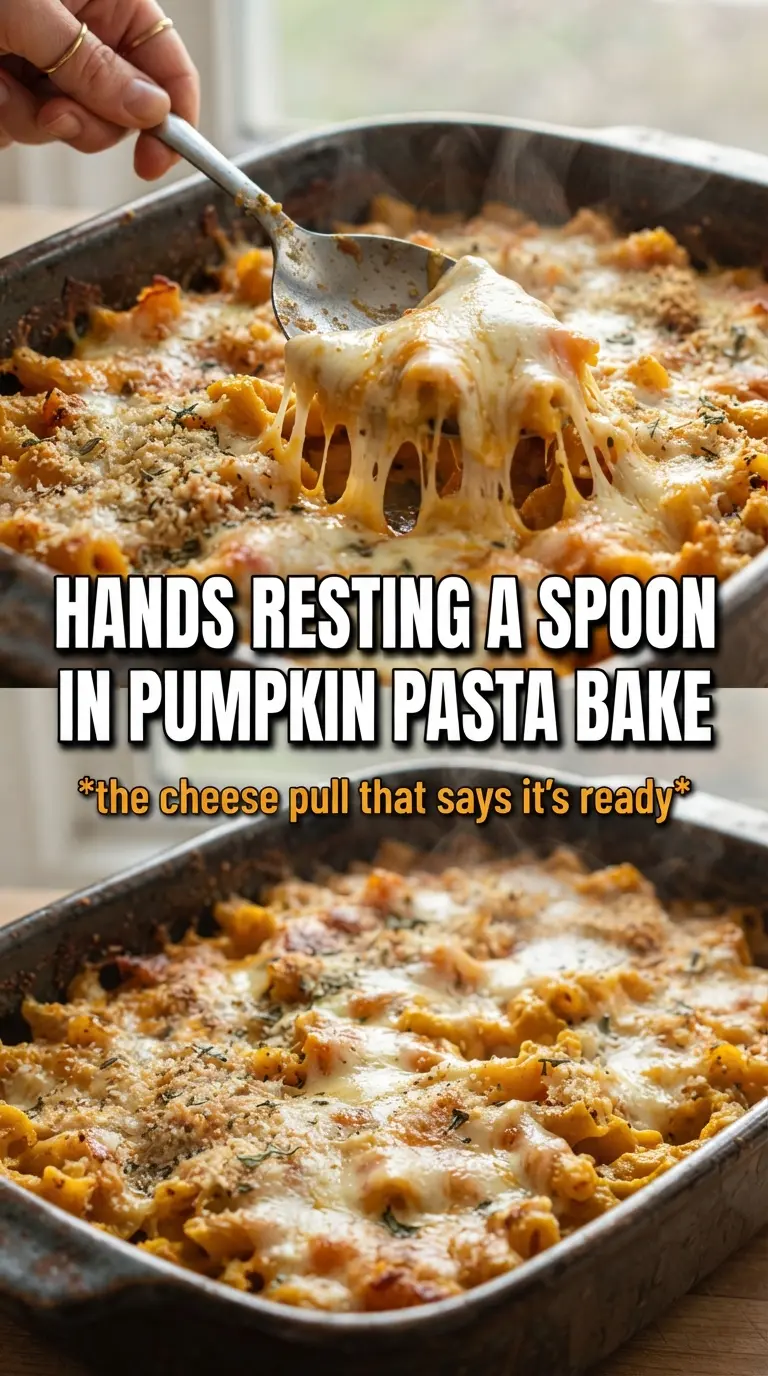
Scatter the mozzarella and parmesan evenly over the surface, then bake until the cheese is bubbling around the edges and golden in spots. You’re looking for a top that has color and a center that’s fully hot, not just melted on the surface. If the cheese browns before the middle is hot, lay a piece of foil loosely over the dish and give it more time.
How to Adapt It Without Losing What Makes It Work
Make it vegetarian without losing the savory base
Swap the Italian sausage for a plant-based sausage crumble or sautéed mushrooms. Mushrooms won’t give you the same fennel-spiced depth, but they do bring that meaty, browned texture that keeps the pasta bake from feeling too soft. If you use vegetarian sausage, season the sauce a little more aggressively with salt and a pinch more Italian seasoning.
Use dairy-free ingredients and keep the sauce creamy
A full-fat unsweetened coconut cream or a plain dairy-free cooking cream can replace the heavy cream, and a good meltable vegan mozzarella will handle the topping. The sauce will taste a little different, but the pumpkin still gives it body and the sausage still brings the savory side. Avoid thin milk alternatives here; they don’t have enough richness to coat the pasta.
Make it a little lighter without breaking the texture
Use half-and-half instead of heavy cream and reduce the cheese on top by about a quarter cup. The bake will still be creamy, but it won’t be quite as rich or as glossy once it comes out of the oven. Don’t go all the way to skim milk; the sauce loses the body that makes it cling to the pasta.
Storage and Reheating
- Refrigerator: Store leftovers in an airtight container for up to 4 days. The sauce thickens as it sits, but that’s normal for a pumpkin-and-cream bake.
- Freezer: This freezes well if you portion it tightly wrapped or packed in a freezer-safe container for up to 2 months. The texture softens a bit after thawing, but it still reheats nicely if you don’t overbake it the first time.
- Reheating: Warm individual portions in the microwave with a splash of broth or cream, or cover the baking dish and reheat in a 325°F oven until hot. The biggest mistake is blasting it uncovered, which dries out the edges before the center is heated through.
Answers to the Questions Worth Asking
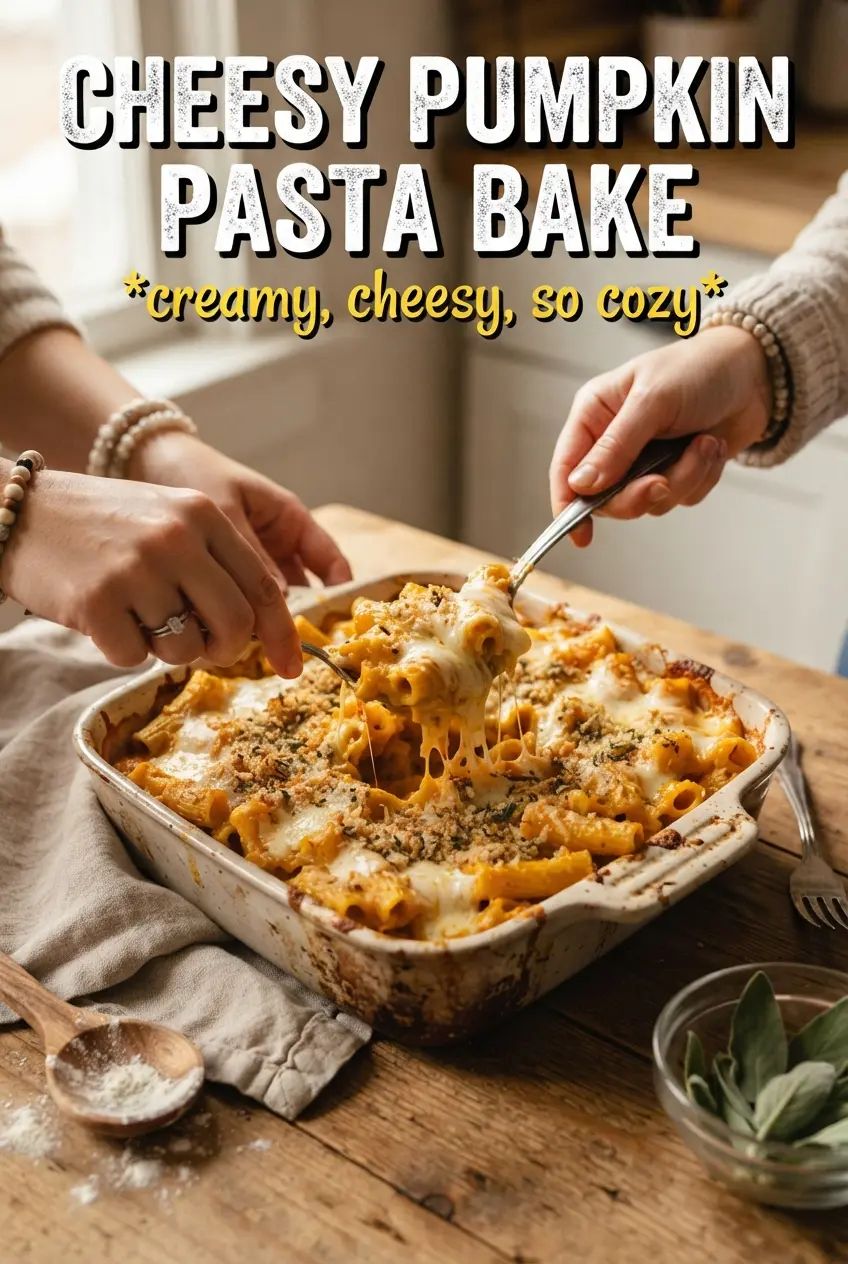
Cheesy Pumpkin Pasta Bake
Ingredients
Equipment
Method
- Preheat the oven to 375°F. Boil the rigatoni (or ziti) for 2 minutes less than al dente so it finishes cooking in the bake.
- Brown the Italian sausage in a large oven-safe skillet over medium-high heat, then drain the fat. Add the diced onion and cook for 4 minutes until softened.
- Stir in the minced garlic and cook for 1 minute until fragrant. Add the pumpkin puree, heavy cream, chicken broth, Italian seasoning, nutmeg, and cayenne.
- Simmer the sauce for 5 minutes until it thickens slightly and becomes cohesive. Season with salt and pepper to taste, then toss in the cooked pasta.
- Scatter the shredded mozzarella and parmesan over the top to form an even layer. Bake at 375°F for 25–30 minutes until bubbling throughout and golden on top.
- Remove the bake from the oven and garnish with fresh sage or basil. Let it cool briefly before serving for easier slicing.