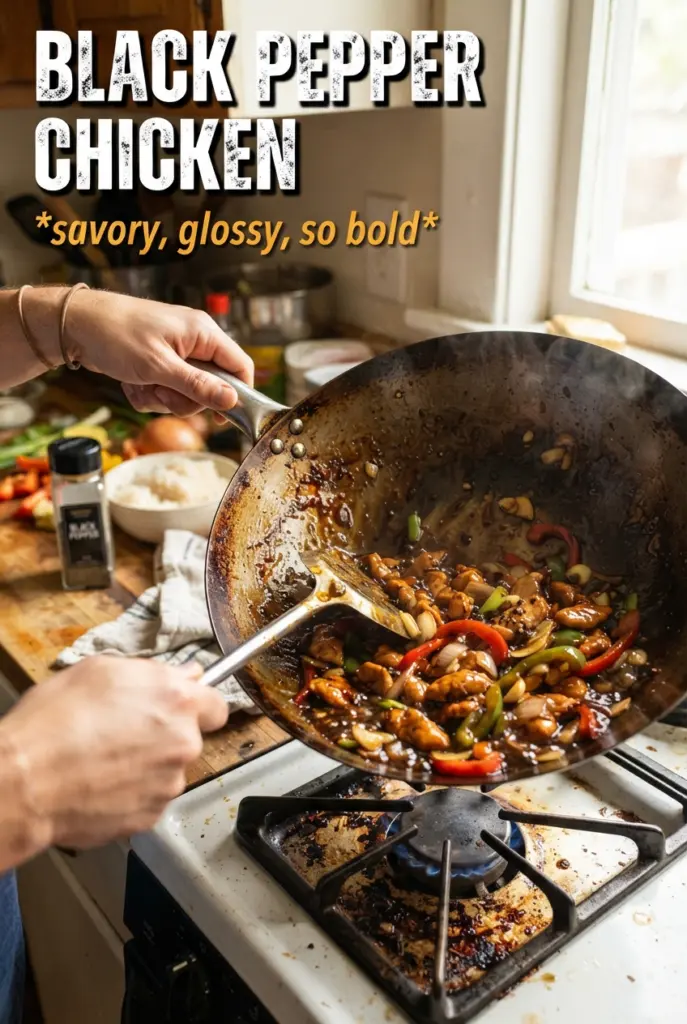
Black pepper chicken lands on the table with glossy sauce clinging to every piece of chicken, sweet onion, and crisp-tender bell pepper, and it tastes like takeout in the best possible way. The pepper doesn’t just sit on top here; it gets built into the sauce, so every bite has that warm, sharp bite without turning harsh. Served over rice, it eats like a full dinner that comes together fast enough for a weeknight but still feels deliberate.
The trick is keeping the chicken moving in a hot pan so it browns instead of steaming, then adding the sauce only after the vegetables have taken on a little color. Freshly cracked black pepper matters here because pre-ground pepper goes flat fast and won’t give you the same punch. A small amount of cornstarch helps the sauce tighten just enough to coat the chicken without turning gluey.
Below, you’ll find the timing that keeps the vegetables crisp, the easiest way to avoid a watery sauce, and a few swaps that still keep the dish in the same bold, peppery lane.
The sauce turned glossy in just a couple minutes and coated the chicken perfectly. I loved that the black pepper stayed bold without making the whole dish hot, and the peppers still had a little crunch.
Save this black pepper chicken for the nights when you want glossy takeout-style sauce, tender chicken, and plenty of cracked pepper over rice.
The Reason the Pepper Stays Bright Instead of Turning Bitter
The biggest mistake with black pepper chicken is treating the pepper like a background spice. If it goes in too early and cooks hard for too long, it can lose its sharpness and start tasting dull. Here, the pepper lives mostly in the sauce, where it blooms just enough to turn fragrant while staying bold.
High heat matters for the chicken and vegetables, but the sauce only needs a short simmer to thicken. Cornstarch does the heavy lifting, and it works fast. If you keep the pan moving and pull it as soon as the sauce turns glossy and starts clinging, you’ll get that takeout-style finish instead of a heavy, starchy coating.
What Each Ingredient Is Actually Doing in This Dish
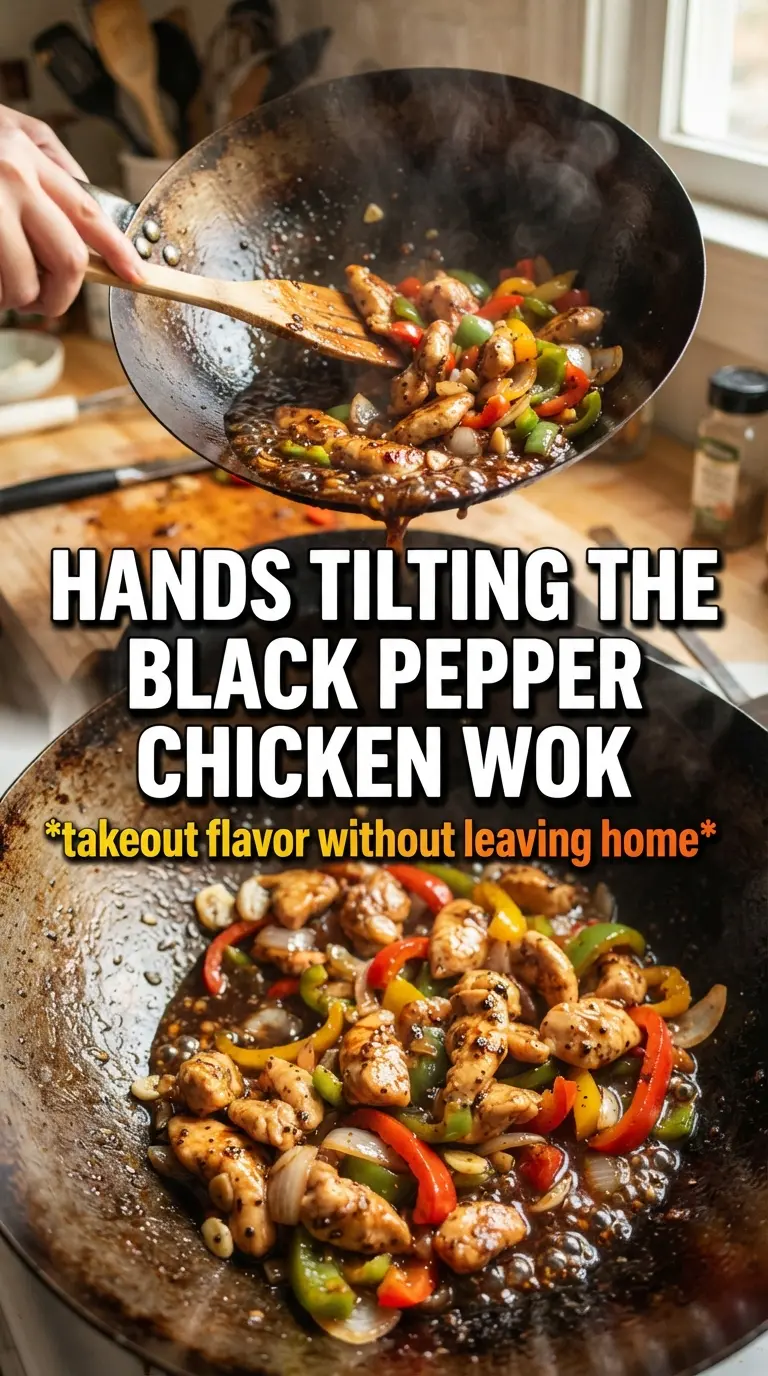
- Chicken breast — Sliced thin, it cooks quickly and stays tender if you stop as soon as the pieces lose their pink centers. Thigh meat works too if you want a little more richness, but breast gives you the cleanest takeout-style result.
- Freshly cracked black pepper — This is the headline flavor, so use a coarse grind and a generous hand. Pre-ground pepper won’t give you the same pop or aroma, and the dish will taste flatter.
- Dark soy sauce — A small amount deepens the color and gives the sauce that glossy, almost mahogany finish. If you don’t have it, use a little more regular soy sauce plus a tiny splash of molasses or extra brown sugar, but the color won’t be quite as deep.
- Oyster sauce — It adds body and a rounded savory note that keeps the sauce from tasting thin. There isn’t a perfect substitute, but hoisin can work in a pinch if you want sweetness along with depth.
- Cornstarch slurry — This is what turns the sauce from thin and salty into something that clings. Stir it again before adding it, since the cornstarch settles fast and a separated slurry won’t thicken evenly.
- Garlic and ginger — They go in late so they stay fragrant instead of burning. If you add them too early on high heat, they’ll turn bitter before the chicken even goes back in.
Getting the Chicken Browned Before the Sauce Goes In
Whisk the sauce first
Mix the soy sauce, oyster sauce, dark soy sauce, brown sugar, black pepper, and cornstarch slurry before you turn to the stove. Once the wok is hot, the cook moves fast, and you don’t want to be measuring while the chicken is waiting. The sauce should look loose and dark, with the pepper visible throughout rather than sinking to the bottom.
Sear the chicken in batches
Heat the oil until it shimmers, then add the chicken in a single layer without crowding the pan. If the pieces are piled up, they steam and turn pale instead of taking on those golden edges that give the dish more flavor. Pull the chicken when it’s just cooked through on the outside; it finishes in the sauce later.
Cook the vegetables briefly
Stir-fry the onion and bell pepper for about three minutes so they soften at the edges but still keep some snap. Garlic and ginger only need a minute, just long enough to smell sharp and fragrant. If they sit in the pan too long, they can scorch and overpower the sauce.
Finish with the sauce and extra pepper
Return the chicken to the pan, pour in the sauce, and toss everything until the coating turns glossy and thick enough to cling to the spoon. It should take only a couple minutes. If the sauce looks thin, keep it moving over the heat; if it gets too thick, a tablespoon of water loosens it right back up.
How to Adapt This for a Different Pantry or a Bigger Batch
Gluten-Free Version
Use a gluten-free soy sauce or tamari, and check that your oyster sauce is certified gluten-free. The sauce still thickens the same way, so you don’t lose the glossy finish.
Chicken Thigh Swap
Boneless chicken thighs give you a juicier, slightly richer result and are more forgiving if you leave them in the pan a minute too long. Cut them the same thin size so they cook at the same pace as the vegetables.
No Oyster Sauce on Hand
Hoisin sauce can stand in, but it brings more sweetness and a slightly thicker texture. If you use it, cut back the brown sugar a little so the sauce doesn’t turn cloying.
Storage and Reheating
- Refrigerator: Store in an airtight container for up to 4 days. The sauce thickens as it chills, and the peppers soften a little.
- Freezer: It freezes well for up to 2 months, though the peppers will lose some crunch. Freeze in portions for the easiest reheat.
- Reheating: Warm it in a skillet over medium-low heat with a splash of water to loosen the sauce. The biggest mistake is blasting it in the microwave until the chicken turns tough and the sauce dries out.
Questions I Get Asked About This Recipe
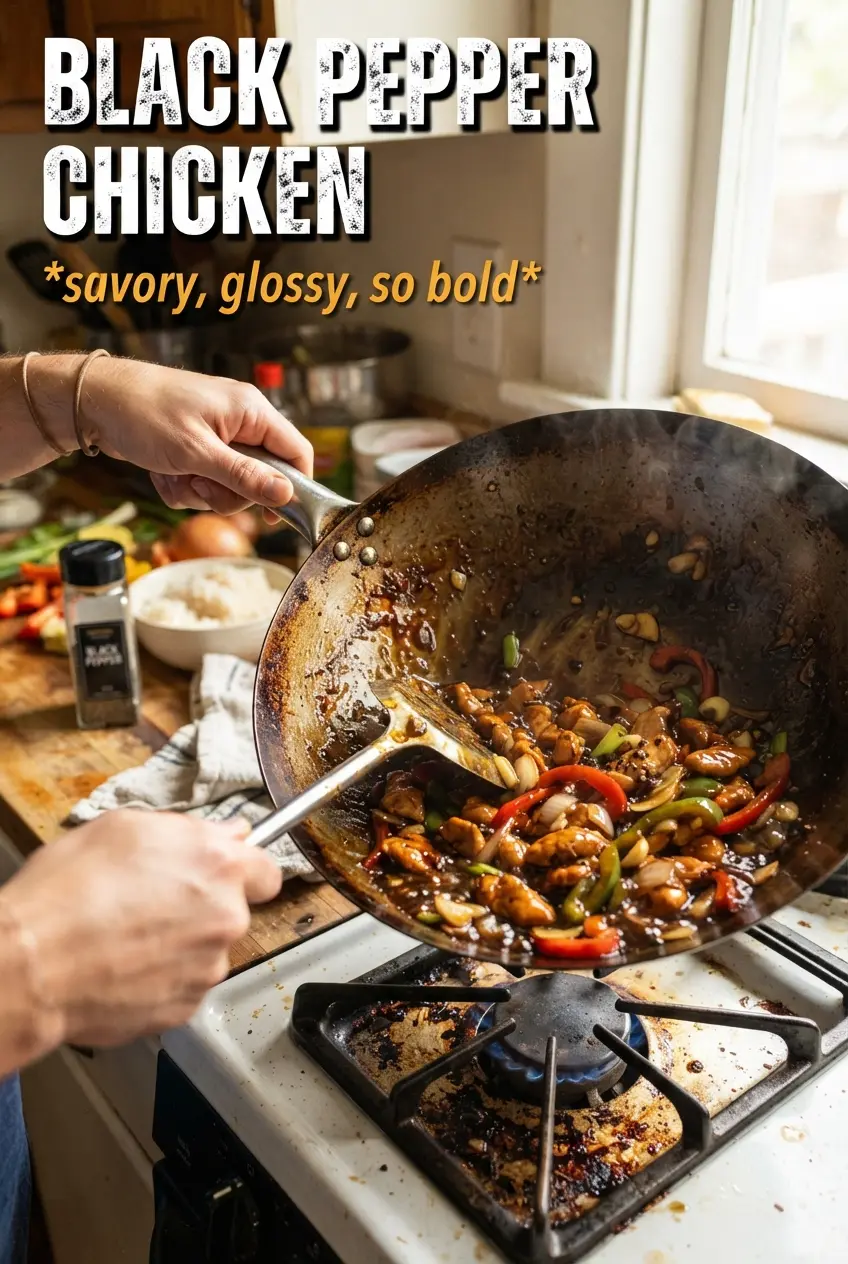
Black Pepper Chicken
Ingredients
Equipment
Method
- Whisk together soy sauce, oyster sauce, dark soy sauce, brown sugar, and freshly cracked black pepper until smooth, then set aside.
- Whisk cornstarch with water until fully dissolved to make a slurry, then set aside.
- Heat vegetable oil in a wok or large skillet over high heat until shimmering.
- Stir-fry sliced chicken in batches until golden, then remove to a plate.
- Stir-fry bell pepper and onion for 3 minutes, then add garlic and grated ginger and cook for 1 minute.
- Return the chicken to the pan and pour the sauce over, then toss to coat.
- Add the cornstarch slurry and cook for 2 to 3 minutes until the sauce thickens and coats everything, then season with extra cracked black pepper.
- Serve the black pepper chicken over steamed rice.