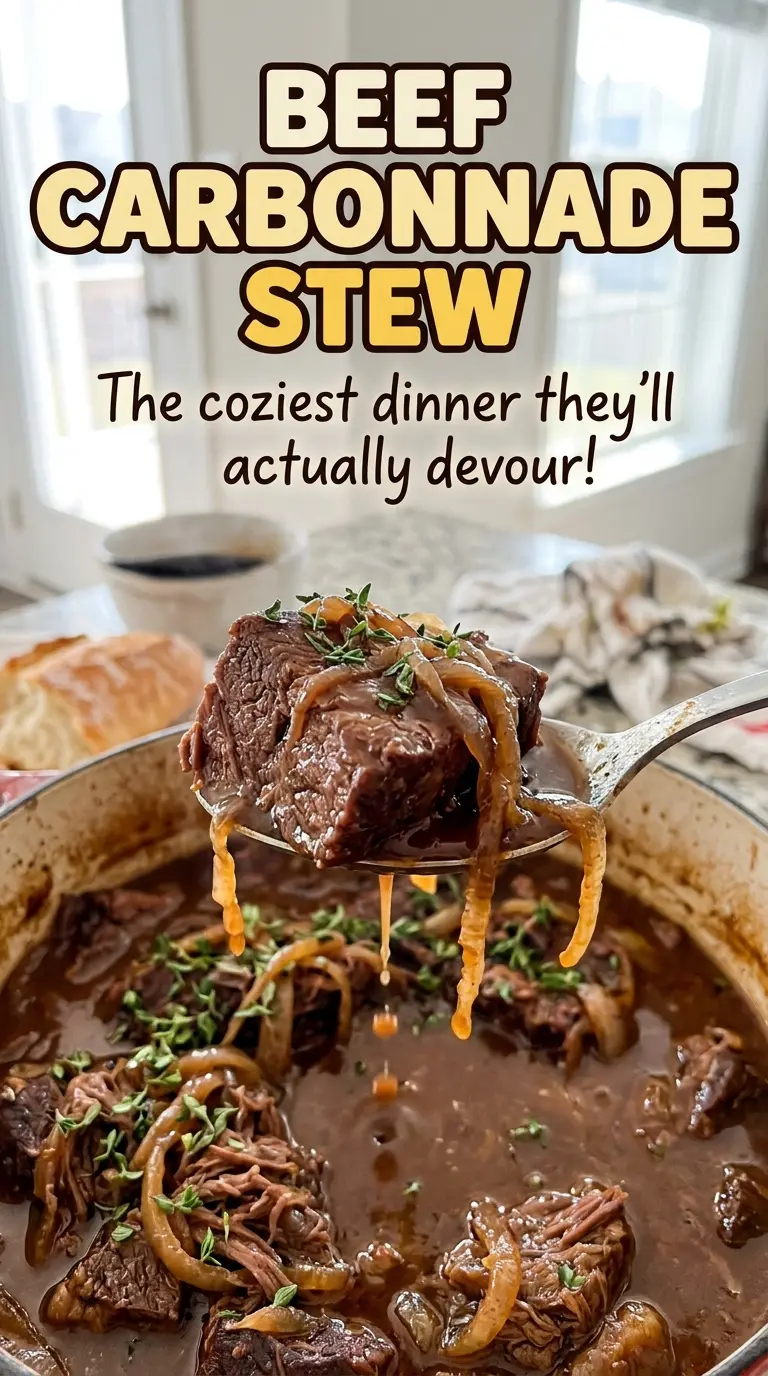
Deep mahogany beef carbonnade stew has a way of tasting like it cooked itself into something grand. The beef turns fork-tender, the onions melt into the broth, and the dark beer leaves behind a malty, slightly sweet backbone that makes each spoonful taste round and full. It is the kind of stew that feels richer than the ingredient list suggests, especially when you serve it with crusty bread for swiping through the sauce.
What makes this version work is the layering. The beef gets a hard sear first, which gives the broth depth before a single liquid goes in. The onions take their time until they are soft and golden, because rushing them leaves the stew sharp instead of mellow. Then the flour cooks briefly in the pan before the ale deglazes everything, so the final sauce thickens gently and carries all those browned bits instead of leaving them stuck to the pot.
Below, I walk through the small choices that matter here: when to stop browning the beef, how dark to cook the onions, and why the beer you choose changes the whole pot more than most people expect.
The onions cooked down into the broth so nicely, and the sauce thickened into this glossy, rich gravy after the full braise. My husband kept breaking off bread just to mop up the pot.
Save this Belgian beer-braised beef carbonnade for a slow braise with caramelized onions and crusty bread on the side.
The Braise Starts with Getting the Meat Brown, Not Just Cooked
The biggest mistake with carbonnade is treating the first stage like a formality. Pale beef gives you a pale stew. You want deep browning on the outside before the liquid goes in, because that crust carries the roasted, savory flavor that defines the whole pot. If the pan starts to crowd, the meat steams instead of searing, and the stew tastes flatter no matter how long it simmers.
The onions matter just as much. They need enough time to soften and turn golden so they dissolve into the broth instead of sitting in it as sharp slices. That long cooking time also balances the bitterness of the beer and the tang from the vinegar and mustard, which is what gives carbonnade its familiar sweet-sour edge.
What Each Ingredient Is Actually Doing in This Dish
- Beef chuck — This is the right cut because the connective tissue breaks down during the long braise and leaves you with tender, pull-apart meat. Leaner beef will dry out before the sauce has time to develop.
- Dark Belgian ale or stout — The beer is not just a liquid base; it is the flavor of the dish. Choose something dark and malty, not aggressively bitter, or the stew can turn harsh instead of rounded.
- Onions — They do most of the sweetening here once they cook down. Thin slices help them melt into the sauce faster, which keeps the final texture silky instead of chunky.
- Dijon mustard and red wine vinegar — These keep the stew from tasting heavy. The mustard also helps emulsify the broth slightly, so the sauce feels more cohesive.
- Tomato paste — A small amount deepens the color and adds body without making the stew taste tomato-forward. Cook it for a minute in the pan so it loses that raw edge.
- Flour — The flour gives the braising liquid a gentle thickness. Cooking it briefly with the garlic keeps the sauce from tasting pasty later.
How to Build the Pot So the Sauce Comes Together Naturally
Hard Searing the Beef
Season the beef well, then sear it in hot oil in batches until the outside is dark brown on several sides. The goal is not a quick tan; it is a deep crust that releases cleanly from the pot when it is ready. If the pieces look gray and wet, the heat is too low or the pan is overcrowded. Pull the meat out as soon as the browning is there, even if the centers are still raw.
Cooking the Onions All the Way Down
Add the sliced onions to the same pot and let them cook over medium heat until they are soft, sweet, and deeply golden. They should shrink dramatically and pick up the browned residue from the pan. If they start to scorch, lower the heat and add a small splash of broth only after they have already softened. Rushed onions give the stew a sharp edge that never fully cooks out.
Deglazing and Braising to Tender
Stir in the garlic, then the flour, and cook just long enough for the raw flour smell to fade. Pour in the beer and scrape every browned bit from the bottom of the pot before adding the broth, tomato paste, vinegar, brown sugar, mustard, thyme, bay leaves, and beef. Bring it to a boil, then drop it to a gentle simmer with the lid on. If it is bubbling hard, the beef tightens up instead of relaxing into tenderness.
Finishing the Stew
After about 2 hours, the beef should yield easily to a fork and the sauce should look glossy and slightly thickened. Remove the thyme and bay leaves, then taste for salt and pepper. If the broth seems thin, let it simmer uncovered for a few minutes at the end. Serve it hot with crusty bread, because the bread is part of the job here.
What to Change When You Don’t Have the Exact Beer or Need a Different Diet
Use stout instead of Belgian ale for a darker, deeper stew
A stout gives the carbonnade a darker color and a more roasted edge, while Belgian ale stays a little lighter and fruitier. Both work, but stout makes the sauce taste more bitter and cocoa-like, so use it if you want a heavier, deeper pot.
Make it gluten-free without losing the braised texture
Swap the flour for a gluten-free all-purpose blend or thicken the finished stew with a cornstarch slurry near the end. The sauce will still thicken, but cornstarch gives a cleaner, slightly glossier finish than flour does.
Use boneless short ribs for a richer result
Short ribs add more fat and a more luxurious mouthfeel, though they cost more and can make the stew a little heavier. Trim only the thickest outer fat, then cook the dish the same way and skim any excess from the surface before serving.
Storage and Reheating
- Refrigerator: Store for up to 4 days. The flavor deepens overnight, and the sauce usually thickens as it chills.
- Freezer: Freezes well for up to 3 months. Cool it completely first, then portion it into airtight containers; the onions and beef hold up nicely after thawing.
- Reheating: Warm it gently on the stovetop over low heat with a splash of broth or water if needed. High heat can make the beef seize up and can break the sauce if it has thickened a lot in the fridge.
Questions I Get Asked About This Dish

Beef Carbonnade Stew
Ingredients
Equipment
Method
- Season the beef chuck cubes with salt and pepper. Sear in vegetable oil in a Dutch oven over high heat until deeply browned, then remove to a plate.
- Return the Dutch oven to the stove and keep any browned bits in the pot for flavor. They will be used again during deglazing.
- Cook the thinly sliced onions in the Dutch oven over medium heat until very soft and golden, about 20-25 minutes. Stir occasionally so the onions caramelize evenly without burning.
- Add the minced garlic and cook for 1 minute. Whisk in the flour and cook for 1 minute to remove the raw flour taste.
- Deglaze with the dark Belgian ale or stout beer. Scrape up all browned bits from the bottom so they dissolve into the sauce.
- Add the beef broth, tomato paste, red wine vinegar, brown sugar, Dijon mustard, fresh thyme, bay leaves, and beef to the Dutch oven. Bring to a boil, stirring to combine, then reduce heat to maintain a gentle braise.
- Cover and braise for 2 hours, until the beef is very tender. If needed, add a splash of water or broth only when the pot looks dry.
- Remove the bay leaves and thyme from the stew. Taste and adjust seasoning with salt and pepper.
- Serve the beef carbonnade stew hot with crusty bread. Ladle the thick mahogany broth over the bread for maximum dipping.