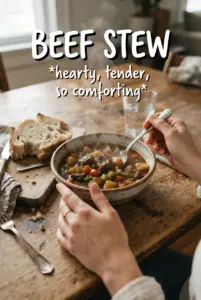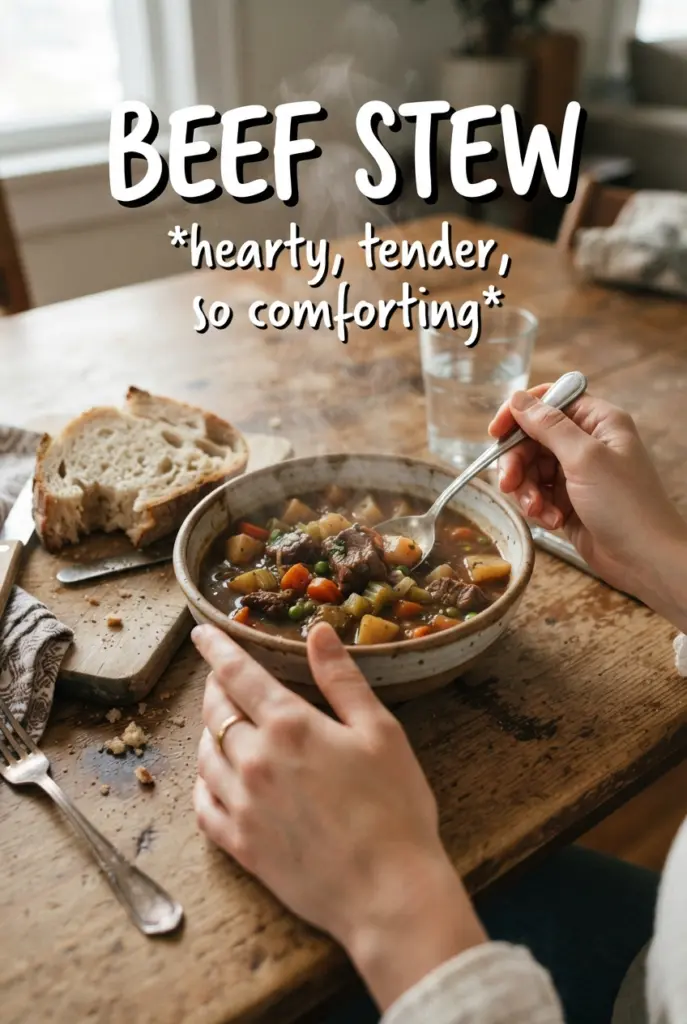
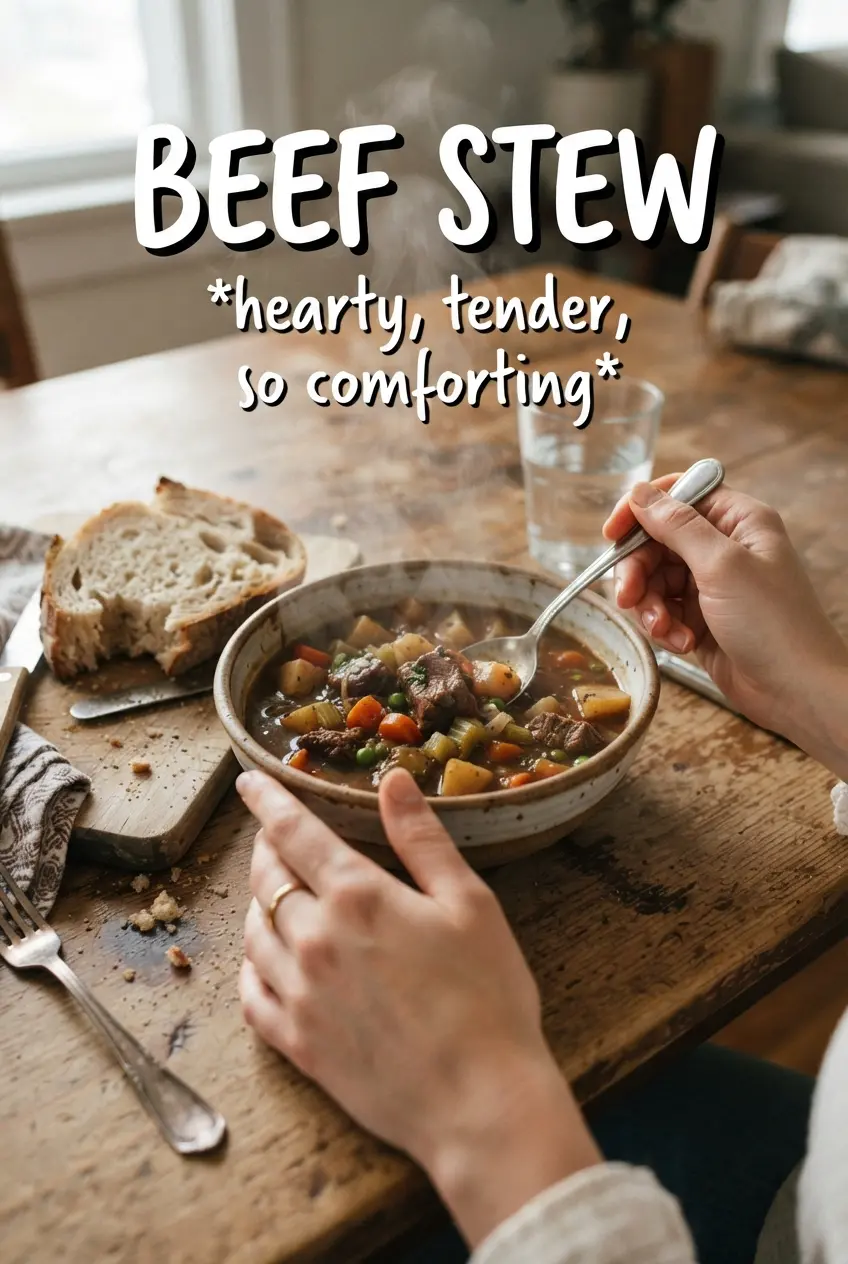
Beef stew earns its place because the broth turns deep and savory while the beef softens into spoon-tender bites that still hold their shape. The potatoes soak up all that flavor, the carrots stay sweet instead of mushy, and the peas go in at the very end so the whole pot tastes fresh, not flat. It’s the kind of dinner that fills the kitchen with the smell of browned meat, thyme, and wine long before it hits the bowl.
What makes this version work is the order. The beef gets floured and seared in batches, which builds a dark crust and gives the stew body without making the broth pasty. The wine goes in after the vegetables and tomato paste have had a minute to cook, so it picks up every browned bit from the pot instead of tasting sharp. Then the potatoes wait until the beef is already tender, which keeps them from collapsing into the sauce.
Below, I’ve laid out the part that matters most: how to get real browning, when to add each vegetable, and what to do if your stew looks thinner than you expected before it finishes. Those little details are the difference between a decent pot of beef and one you’ll want again next week.
The beef got so tender it practically fell apart with a spoon, and the broth was rich without being greasy. I loved that the potatoes held their shape and the peas stayed bright at the end.
Save this beef stew for the nights when you want a deep, savory broth, tender chuck roast, and the kind of comfort that starts with one good sear.
The sear is what gives beef stew its backbone
If the beef goes into the pot pale, the stew tastes flat no matter how long it simmers. Browning in batches is what builds the dark, meaty base and keeps the pot temperature high enough to develop real color instead of steam. Crowding the pan is the fastest way to lose that depth, so give each batch space and let the surface go deep brown before turning it.
The flour on the beef does two jobs here. It helps the meat brown, and it gives the broth a little body as the stew simmers. If you dump all the beef in at once, the meat steams and the flour turns gummy. Patience at the stove pays off later in the bowl.
What each ingredient is actually doing in the pot
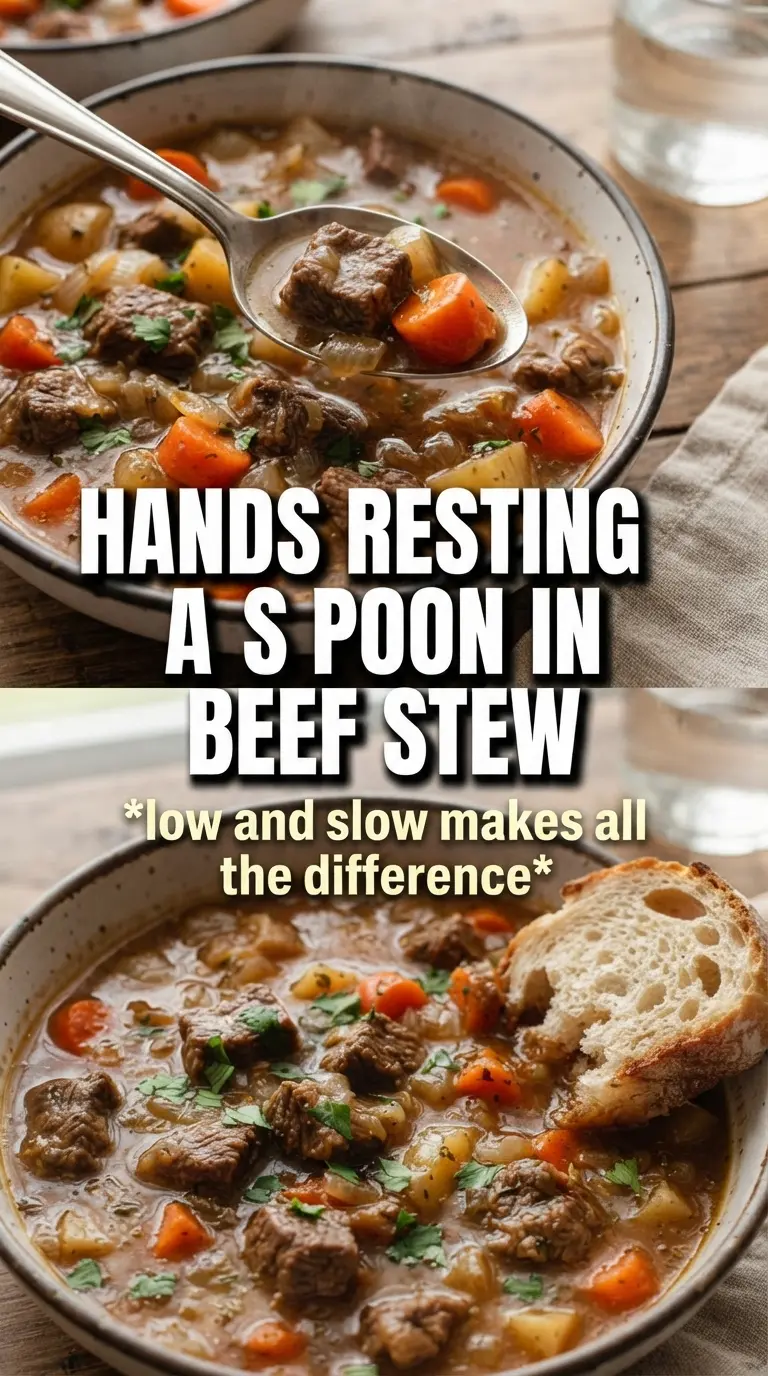
- Beef chuck — This cut has enough marbling and connective tissue to turn tender during the long simmer. Leaner beef dries out before the broth develops.
- Red wine — It adds acidity and depth, but it needs a few minutes to simmer with the vegetables and tomato paste so the sharp edge cooks off. If you skip it, replace it with more broth plus a splash of red wine vinegar at the end for brightness.
- Tomato paste and diced tomatoes — The paste brings concentrated savoriness and color, while the diced tomatoes give the stew a fuller, rounder broth. Let the paste cook for a minute or two before adding liquid so it loses the raw taste.
- Yukon gold potatoes — They hold their shape better than russets and stay creamy instead of grainy. Cut them into even cubes so they finish at the same time.
- Frozen peas — They go in last because they only need a few minutes to warm through. Add them too early and they lose their color and pop.
Build the stew in layers, not all at once
Season and Brown the Beef
Toss the beef with the flour, salt, and pepper until every piece is lightly coated, then sear it in hot olive oil in batches. You want a crust that releases from the pan before you turn it, not gray meat stuck to the bottom. If the pan looks wet, it’s too crowded; pull some pieces out and keep going. The fond left behind is the flavor base for the whole stew.
Cook the Vegetables Until They Smell Sweet
Add the onion, carrots, and celery to the same pot and cook them until the onion turns translucent and the carrots start to soften at the edges. Stir in the garlic and tomato paste and cook for about 2 minutes, just until the paste darkens a shade and smells concentrated instead of raw. If the garlic goes in too early, it can burn and turn bitter. The paste should cling to the vegetables and coat the bottom of the pot.
Deglaze and Simmer Low and Slow
Pour in the wine and scrape up every browned bit from the bottom. Then add the broth, tomatoes, Worcestershire, thyme, bay leaves, and browned beef. Bring it to a boil first, then lower the heat so the stew barely bubbles under the lid. If it boils hard, the beef tightens up instead of relaxing into tenderness.
Add the Potatoes and Finish with Fresh Peas
Wait until the beef is nearly tender before adding the potatoes. They need about 20 minutes to cook through, and adding them earlier can leave them broken down by the time the meat is ready. Stir in the peas at the end and cook just long enough to warm them through. Pull out the bay leaves, then taste and season with salt and pepper until the broth tastes complete.
Three ways to adapt this stew without losing what makes it work
Dairy-Free and Naturally Gluten-Free
This stew already fits both of those directions if you use a broth that’s certified gluten-free. The flour on the beef is what thickens the pot, so if you need to skip it, brown the meat plain and stir in a slurry of 1 tablespoon cornstarch mixed with 2 tablespoons cold water near the end instead. The broth will be a little lighter, but still rich.
No Wine in the Kitchen
Replace the wine with an equal amount of beef broth plus 1 tablespoon red wine vinegar or apple cider vinegar. You’ll lose a little of the round, slow-cooked depth that wine brings, but the vinegar helps replace the brightness that keeps the stew from tasting heavy.
Make It a Bigger-Meal Stew
Add parsnips, mushrooms, or extra carrots with the onion mixture if you want a fuller vegetable pot. Mushrooms bring more savory depth, while parsnips add sweetness. Keep the pieces cut large so they don’t disappear during the long simmer.
Storage and Reheating
- Refrigerator: Keeps well for 4 days. The flavor gets even better after a night in the fridge, and the broth thickens as it sits.
- Freezer: Freezes well for up to 3 months. Cool it completely first, then freeze in airtight containers. The potatoes soften a little after thawing, but the stew still reheats nicely.
- Reheating: Warm it slowly on the stove over medium-low heat with the lid on, stirring now and then. A hard boil can make the beef stringy and break up the potatoes.
Answers to the questions worth asking before you start
Beef Stew
Ingredients
Equipment
Method
- Toss the beef chuck with all-purpose flour to coat evenly.
- Heat olive oil in a Dutch oven over high heat and sear the beef in batches until deeply browned, about 6-8 minutes per batch, then remove to a plate.
- In the same Dutch oven, sauté onion, carrots, and celery for 5 minutes until starting to soften.
- Add garlic and tomato paste and cook for 2 minutes, stirring, until fragrant and slightly darkened.
- Pour in the red wine and deglaze, scraping up browned bits from the bottom of the pot, about 2 minutes.
- Add beef broth, diced tomatoes, Worcestershire, dried thyme, and bay leaves along with the browned beef, then stir to combine.
- Bring to a boil, then reduce heat to maintain a steady simmer; cover and simmer for 60-75 minutes until the beef is very tender.
- Add cubed Yukon gold potatoes and cook for 20 more minutes until tender.
- Add frozen peas and cook for 3 minutes until warmed through.
- Remove bay leaves, then season with salt and pepper to taste.