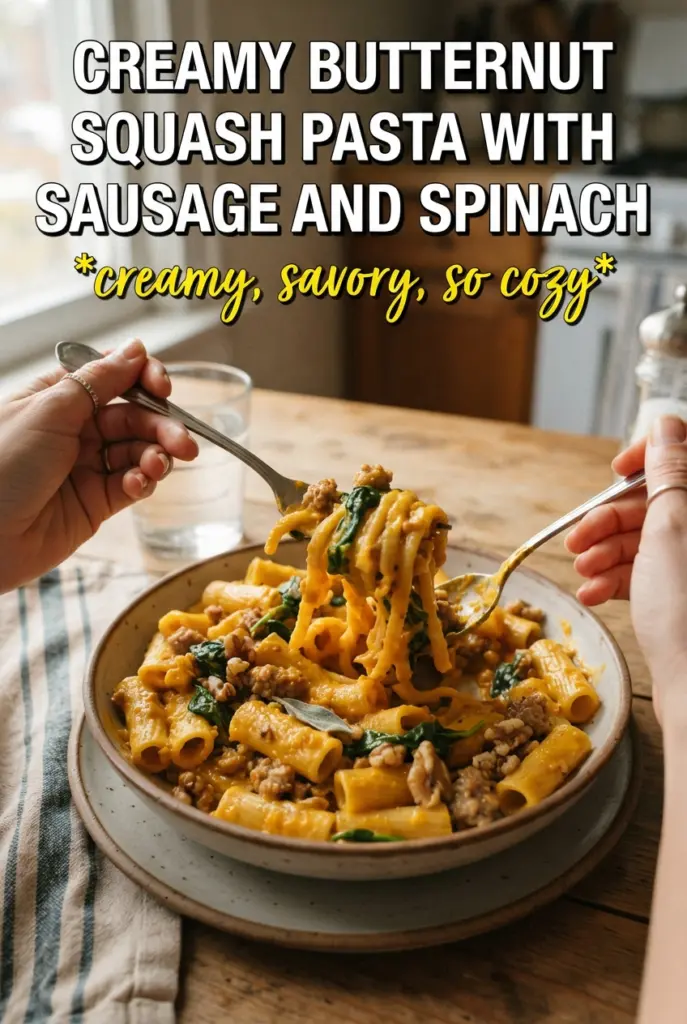
Silky butternut squash sauce clings to every ridge of the pasta, and the sausage gives it enough savory depth to keep each bite from feeling soft or one-note. When the spinach melts into the sauce and the parmesan tightens everything up, you get a bowl that tastes rich without feeling heavy.
The part that makes this version work is the balance. Butternut squash puree brings body and sweetness, but it needs salt, garlic, sausage drippings, and parmesan to turn into a real pasta sauce instead of something that eats like baby food. A little pasta water helps the sauce slide into a glossy coating that sticks to rigatoni and penne instead of pooling at the bottom of the bowl.
Below, I’ll walk you through the exact point where the sauce comes together, plus the small timing details that keep the spinach bright and the cream sauce smooth. There’s also a few swaps if you need to stretch it, lighten it up, or make it work with what’s already in your kitchen.
The sauce turned out so smooth and coated the rigatoni perfectly, and the spinach wilted right in without getting mushy. My husband went back for seconds and asked if I could make it again next week.
Love the creamy butternut squash sauce and savory sausage? Save this rigatoni for a cozy dinner that eats like comfort food but still feels balanced.
The Trick to Keeping Butternut Squash Sauce Creamy Instead of Gluey
Butternut squash puree can turn thick and pasty fast, especially once parmesan goes in. The fix is to treat it like a sauce base, not a finished puree. Once the squash and cream are in the pan, let them simmer just long enough to lose that raw canned or starchy edge, then loosen them with pasta water until the sauce looks glossy and slightly fluid. It should coat a spoon, not sit in a mound.
The other thing that keeps this dish from turning heavy is the order. Brown the sausage first, then build the sauce in the same skillet so the onion and garlic pick up a little of that flavor left behind. If the sauce ever looks grainy, the heat was too high when the parmesan went in. Pull the pan off the burner for a minute, stir, and it usually smooths right back out.
What Each Ingredient Is Actually Doing in This Dish

- Butternut squash puree — This is the body of the sauce. It gives you that velvety texture and a gentle sweetness that works with sausage instead of fighting it. If you don’t have puree, roasted butternut squash blended smooth works, but the sauce may need a splash more pasta water to loosen.
- Heavy cream — Cream rounds out the squash and helps the sauce stay smooth once the parmesan goes in. Half-and-half will work in a pinch, but the sauce will be thinner and a little more delicate.
- Italian sausage — This is the main savory anchor. The rendered fat seasons the pan, and the crumbled meat keeps the dish from leaning too sweet. Mild or hot both work; hot sausage gives the best contrast if you like a little bite.
- Parmesan — Use a finely grated parmesan that melts cleanly into the sauce. Pre-shredded cheese can stay grainy because of the anti-caking agents, so grate it yourself if you can.
- Pasta water — This is the ingredient that makes the sauce cling. The starch helps emulsify the cream and squash, so don’t skip reserving it before draining the pasta.
- Spinach — Add it at the end so it wilts into the sauce instead of collapsing into dark, stringy ribbons. Baby spinach works best because it softens fast without needing extra cooking time.
The 20 Minutes That Actually Matter
Cooking the Pasta First
Boil the pasta in well-salted water until it’s just shy of al dente, then scoop out half a cup of the cooking water before you drain it. That timing matters because the pasta finishes in the sauce, where it can absorb flavor instead of going soft in plain water. If you forget the pasta water, the sauce will still taste good, but it won’t have the same silkiness when it hits the noodles.
Building Flavor in the Skillet
Brown the sausage until it has crisp edges and real color, then set it aside while you cook the onion in the same pan. Don’t wipe the skillet clean. Those browned bits are carrying the flavor. When the onion turns soft and the garlic smells fragrant, stir in the Italian seasoning and keep it moving so the garlic doesn’t scorch. Burnt garlic will make the whole pan taste bitter.
Turning Squash into Sauce
Add the butternut squash puree and cream, then stir in the nutmeg and red pepper flakes. Let it simmer until the sauce looks unified and slightly thickened, not bubbling hard around the edges. That slow simmer keeps the dairy smooth. Once the parmesan goes in, stir until it disappears into the sauce before you add the pasta. This is the point where rushing usually causes graininess.
Finishing the Bowl
Toss in the pasta and reserved water, then add the spinach and stir until it just wilts. Return the sausage to the pan last so it stays meaty instead of overcooked. Taste at the end and season with salt and pepper only after everything is combined. The parmesan and sausage both bring salt, so the finished dish usually needs less than you expect.
How to Adapt This for Different Needs Without Losing the Point
Make it dairy-free
Use unsweetened oat cream or a plain, unsweetened coconut cream alternative in place of the heavy cream, then swap the parmesan for a dairy-free parmesan-style topping. The sauce won’t be quite as rich, but the squash still gives you a creamy finish if you keep the heat low and loosen it with pasta water as needed.
Make it gluten-free
Use your favorite gluten-free rigatoni or penne and cook it just to al dente. Gluten-free pasta can break down fast once it sits in sauce, so toss and serve it right away while the sauce is still glossy and loose.
Swap the sausage for a lighter version
Ground turkey or chicken sausage works well if you want a leaner bowl. Add a little extra olive oil to the skillet so the onion still has something to cook in, and season a touch more aggressively because leaner sausage doesn’t bring as much built-in richness.
Turn it into a meatless pasta
Leave out the sausage and add sautéed mushrooms or white beans for more substance. You’ll lose some of the smoky savoriness, so use a little extra parmesan and a pinch more red pepper flakes to keep the sauce from tasting flat.
Storage and Reheating
- Refrigerator: Store in an airtight container for up to 4 days. The sauce will thicken as it sits.
- Freezer: Freeze for up to 2 months, but the cream sauce may separate a little on thawing. It still works best if you freeze it in portions and reheat gently.
- Reheating: Warm it in a skillet over low heat with a splash of water or milk, stirring until the sauce loosens again. The biggest mistake is blasting it in the microwave, which can make the sauce tighten up and the pasta go dry.
Questions I Get Asked About This Recipe
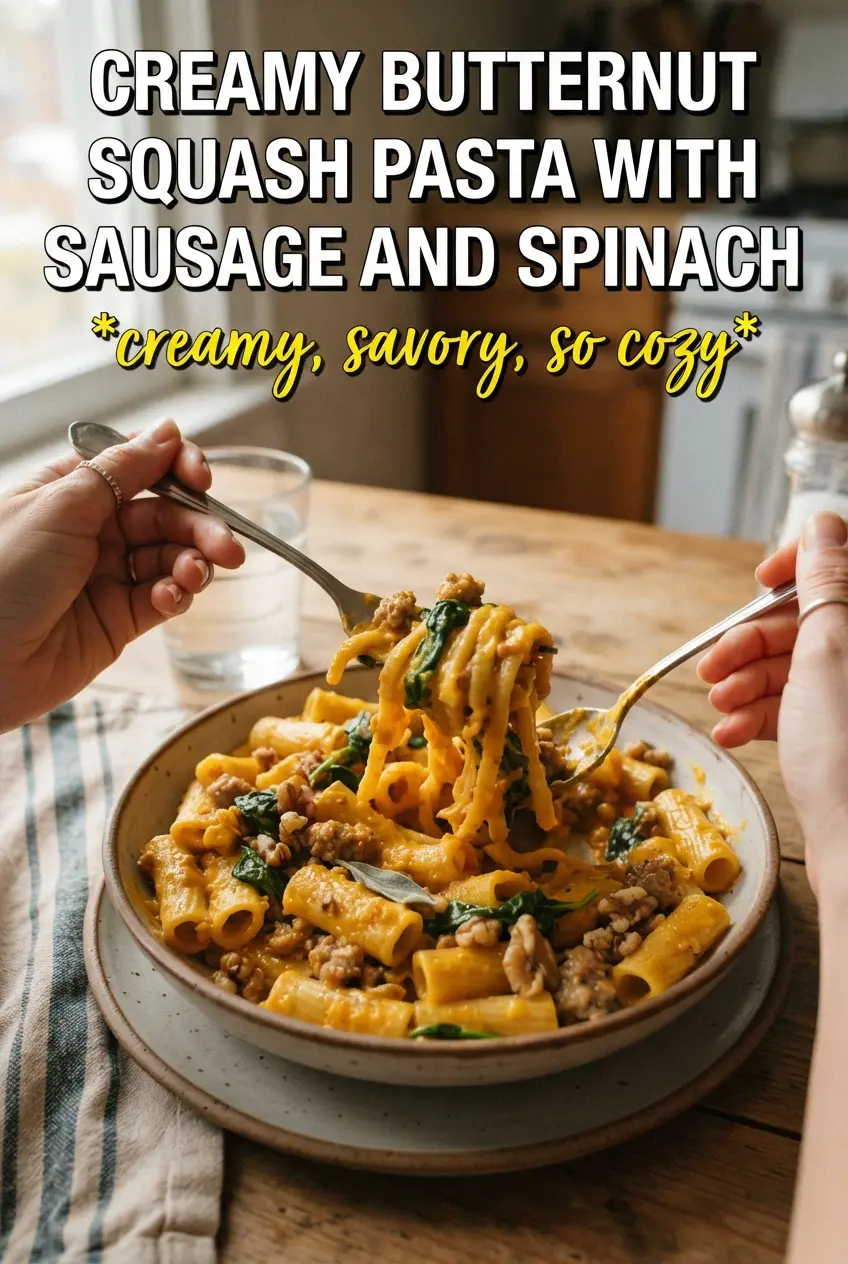
Creamy Butternut Squash Pasta With Sausage And Spinach
Ingredients
Equipment
Method
- Bring a large pot of salted water to a boil and cook the rigatoni or penne until al dente, stirring occasionally. Before draining, reserve 1/2 cup pasta cooking water so the sauce can emulsify later.
- Heat a large skillet over medium-high heat and brown the Italian sausage until cooked through and crumbled, about 8 to 10 minutes. Drain off excess fat and set the sausage aside while you build the sauce.
- In the same skillet, sauté the onion for 4 minutes until softened and starting to turn translucent. Stir in the garlic and Italian seasoning, then cook for 2 minutes until fragrant.
- Add the butternut squash puree and heavy cream, stirring to combine, and simmer for 5 minutes until gently thickened. Add nutmeg and red pepper flakes, then stir in the parmesan and cook just until the sauce turns smooth and glossy.
- Toss the cooked pasta into the sauce with the reserved pasta cooking water until the sauce coats the pasta evenly. Add the baby spinach and toss 1 to 2 minutes until wilted and bright green.
- Return the browned sausage to the pan and season with salt and pepper to taste. Stir until everything is heated through and the sauce clings to the pasta.