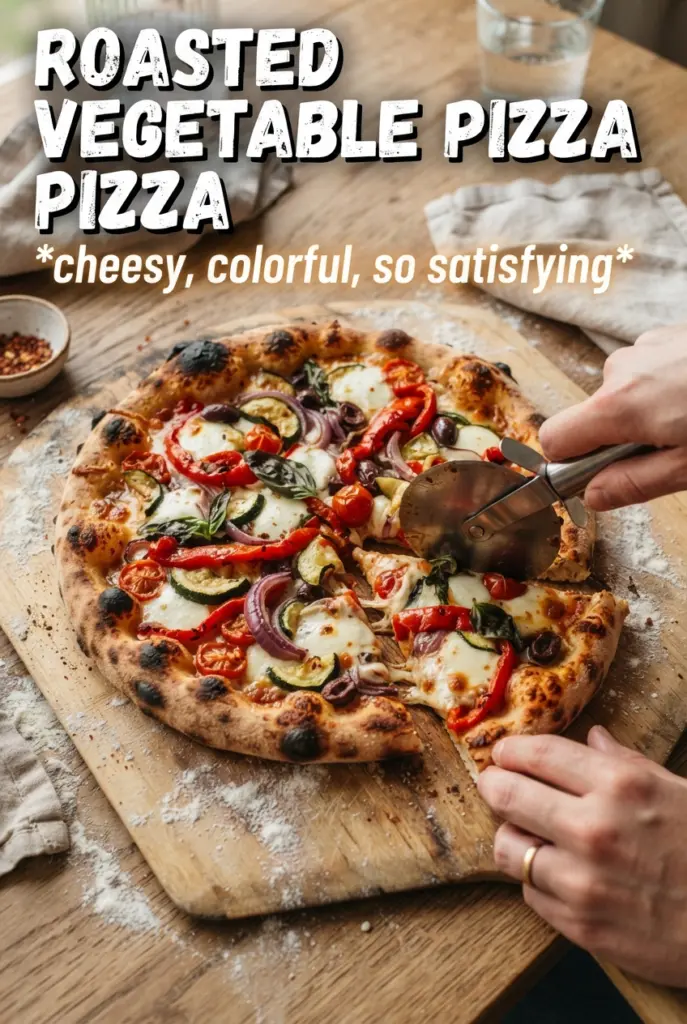
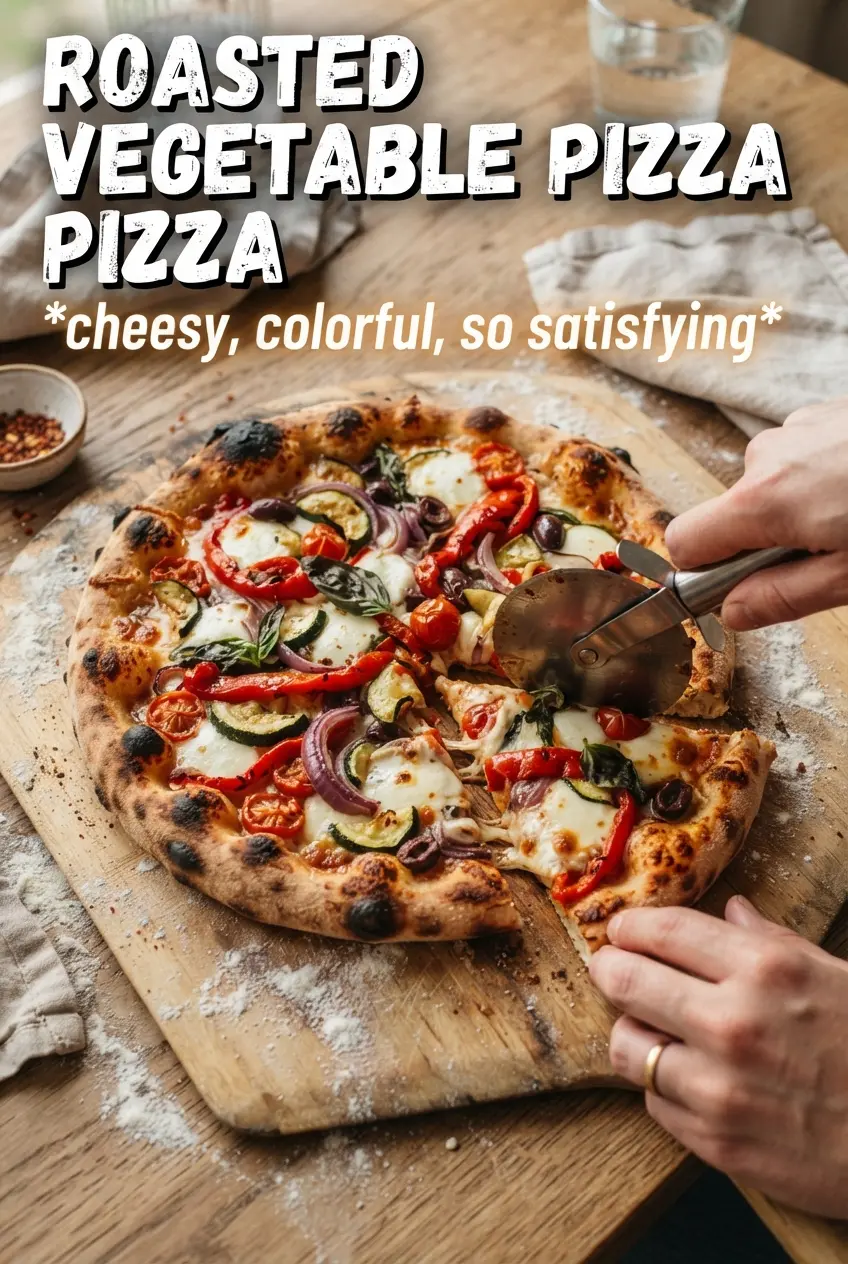
Roasted vegetable pizza gets its best flavor before it ever hits the oven. The vegetables soften, shrink, and caramelize first, so the finished pizza doesn’t taste watery or flat. You get a crisp crust, browned edges on the zucchini and peppers, sweet tomatoes, and cheese that bubbles around everything instead of sliding off in a puddle.
The key is roasting the vegetables separately instead of piling them raw onto the dough. That one extra step keeps the crust from turning soggy and gives the toppings enough concentration to stand up to the sauce and cheese. A little mozzarella handles the melt, parmesan adds salt and depth, and the balsamic glaze at the end ties the whole thing together with just enough brightness.
Below, I’ll walk through the part that matters most: how to roast the vegetables so they actually brown, not steam. I’ve also included a few swaps if you want to change the cheese or use whatever vegetables you have in the fridge.
The vegetables roasted up sweet and tender, and the crust stayed crisp all the way through. I’ve had veggie pizzas turn watery before, but this one baked up perfectly and the balsamic drizzle at the end made it taste like a restaurant pie.
Roasted Vegetable Pizza with crisp edges, melty mozzarella, and balsamic drizzle is worth saving for your next meatless pizza night.
The Reason the Crust Stays Crisp Under All Those Vegetables
The usual problem with vegetable pizza is moisture. Raw zucchini, peppers, and tomatoes all give off liquid in the oven, and that liquid has nowhere to go once it hits the dough. Roasting the vegetables first drives off that extra moisture and concentrates their flavor, which is why the finished pizza tastes savory instead of watery.
The other mistake is overloading the dough. Even after roasting, the vegetables need room to breathe on the pizza. Spread them in a single layer, keep the sauce thin, and don’t bury everything under cheese. You want the crust to bake through cleanly while the toppings stay distinct.
What Each Ingredient Is Doing in This Pizza

- Pizza dough — Use homemade or store-bought, but let it come to room temperature before stretching. Cold dough fights you and snaps back, which makes it harder to get a thin even crust.
- Zucchini — This is the first vegetable that can turn soggy if you crowd it. Slice it a little thicker than paper-thin so it roasts into tender pieces instead of collapsing.
- Red bell pepper and red onion — These two bring sweetness once they caramelize. The onion should be sliced into rings so it softens evenly and doesn’t disappear into the pan.
- Cherry tomatoes — Halved tomatoes roast into juicy bursts, but they still need space on the tray. If they’re packed too tightly, they steam and lose the concentrated flavor that makes them worth using.
- Mozzarella and parmesan — Mozzarella gives you the melt, and parmesan gives you the salty edge that keeps the pizza from tasting one-note. Pre-shredded mozzarella works, but a low-moisture block you shred yourself melts a little cleaner.
- Balsamic glaze — This is the finishing move. It cuts through the richness of the cheese and gives the pizza that sweet-tart finish that makes every bite taste complete.
Roasting First, Baking Second: The Two-Part Method That Makes This Work
Roasting the vegetables until they lose their excess water
Toss the zucchini, bell pepper, onion, and tomatoes with olive oil, salt, and pepper, then spread them out on a baking sheet with space between the pieces. If they’re piled up, they steam instead of caramelize. Roast them at 450°F until the edges look browned and the tomatoes have collapsed a little; that’s the point where their flavor gets concentrated enough for pizza.
Building the pizza without weighing down the crust
Roll the dough onto parchment so you can move it easily and brush it lightly with olive oil. Spread a thin layer of sauce, not a heavy blanket, then add the roasted vegetables in an even layer. Too much sauce or too many toppings will keep the center from baking through, and you’ll end up with a soft middle instead of a sturdy slice.
Baking until the cheese bubbles and the bottom colors
Bake the pizza until the cheese is melted and bubbling and the crust is deeply golden on the edges. If the top looks done before the bottom does, the dough probably needed a hotter start or a thinner layer of toppings. Let the pizza sit for a couple of minutes after baking so the cheese settles and the slices hold together.
Finishing with basil and balsamic
Add fresh basil after the pizza comes out of the oven so it stays bright. Drizzle the balsamic glaze over the top right before serving. If you add it too early, the flavor fades into the cheese instead of sitting on top where it belongs.
How to Adapt This for Different Cravings and Diets
Make it dairy-free without losing the roasted flavor
Use a good melt-style dairy-free mozzarella and skip the parmesan, then add a little extra salt and a touch more balsamic at the end. The texture won’t be exactly the same, but the roasted vegetables still carry the pizza and keep it satisfying.
Add more protein without changing the whole pizza
A handful of cooked crumbled sausage, shredded rotisserie chicken, or thin slices of prosciutto can go on top after the vegetables. Keep the amount modest so the roasted vegetables stay the focus instead of getting buried.
Swap the vegetables based on what’s in the fridge
Eggplant, mushrooms, or broccoli all work well as long as you roast them until they’ve released their moisture and picked up some color. Just keep watery vegetables in the same category: roast first, then top the pizza.
Use a gluten-free crust that can handle the toppings
Choose a gluten-free pizza dough that bakes firm enough to hold weight, and par-bake it if the package directions call for it. That extra head start helps the crust stay crisp under the roasted vegetables instead of going soft in the center.
Storage and Reheating
- Refrigerator: Store leftovers in an airtight container for up to 3 days. The crust softens a little, but the flavor holds up well.
- Freezer: Freeze slices wrapped tightly and then sealed in a freezer bag for up to 2 months. Reheat from frozen if needed, but the texture is best when thawed first.
- Reheating: Warm slices in a 400°F oven or a dry skillet until the cheese melts and the bottom crisps back up. The biggest mistake is microwaving, which makes the crust limp and the vegetables rubbery.
Answers to the Questions Worth Asking
Roasted Vegetable Pizza
Ingredients
Equipment
Method
- Preheat oven to 450F, then toss zucchini, red bell pepper, red onion rings, and cherry tomatoes with 2 tablespoons olive oil, salt, and pepper until evenly coated.
- Spread the vegetables on a baking sheet and roast for 15-18 minutes, stirring once, until caramelized and lightly browned at the edges.
- Roll out pizza dough on a parchment-lined sheet and brush with the remaining olive oil to help the crust brown.
- Spread pizza sauce or marinara over the dough, then top with the roasted vegetables and scatter shredded mozzarella and parmesan evenly.
- Sprinkle Italian seasoning over the pizza, then bake at 450F for 12-15 minutes until the crust is golden and the cheese is bubbly.
- Top immediately with fresh basil and drizzle with balsamic glaze for a sweet-tang finish.