
Gyoza soup turns a package of dumplings into a bowl that feels complete: tender wrappers, a savory dashi-ginger style broth, and just enough vegetables to keep every spoonful interesting. The dumplings stay soft and satisfying instead of turning chewy, and the broth picks up flavor fast from garlic, ginger, soy sauce, and mirin.
The trick is building the broth first, then letting the mushrooms and dumplings cook gently in it so nothing turns tough or waterlogged. Bok choy goes in at the end because it only needs a couple of minutes to soften, and sesame oil finishes the whole bowl with a nutty edge that tastes deeper than the short ingredient list suggests. If you’ve ever had soup that tasted thin, this version fixes that with a few smart additions and a final drizzle of chili oil.
The dumplings stayed tender and the broth had such a good ginger-sesame flavor. I liked that the bok choy stayed bright and the mushrooms soaked up the broth instead of getting mushy.
Save this gyoza soup for a fast bowl with ginger broth, tender dumplings, and barely-cooked bok choy.
The Broth Has to Taste Right Before the Dumplings Go In
The biggest mistake with gyoza soup is treating the broth like a background detail. It isn’t. If the broth tastes flat before the dumplings are added, it will still taste flat at the table, just with more starch floating around in it. The garlic, ginger, soy sauce, mirin, and rice vinegar need a few minutes together so the broth loses its raw edge and starts tasting rounded and savory.
Another common problem is boiling the dumplings hard. That can split the wrappers and make the filling dry out before the center is warm. Keep the broth at a steady simmer so the dumplings cook through gently, and use the package timing as a guide rather than a command if your gyoza are larger or thicker than average.
What Each Ingredient Is Actually Doing in This Bowl
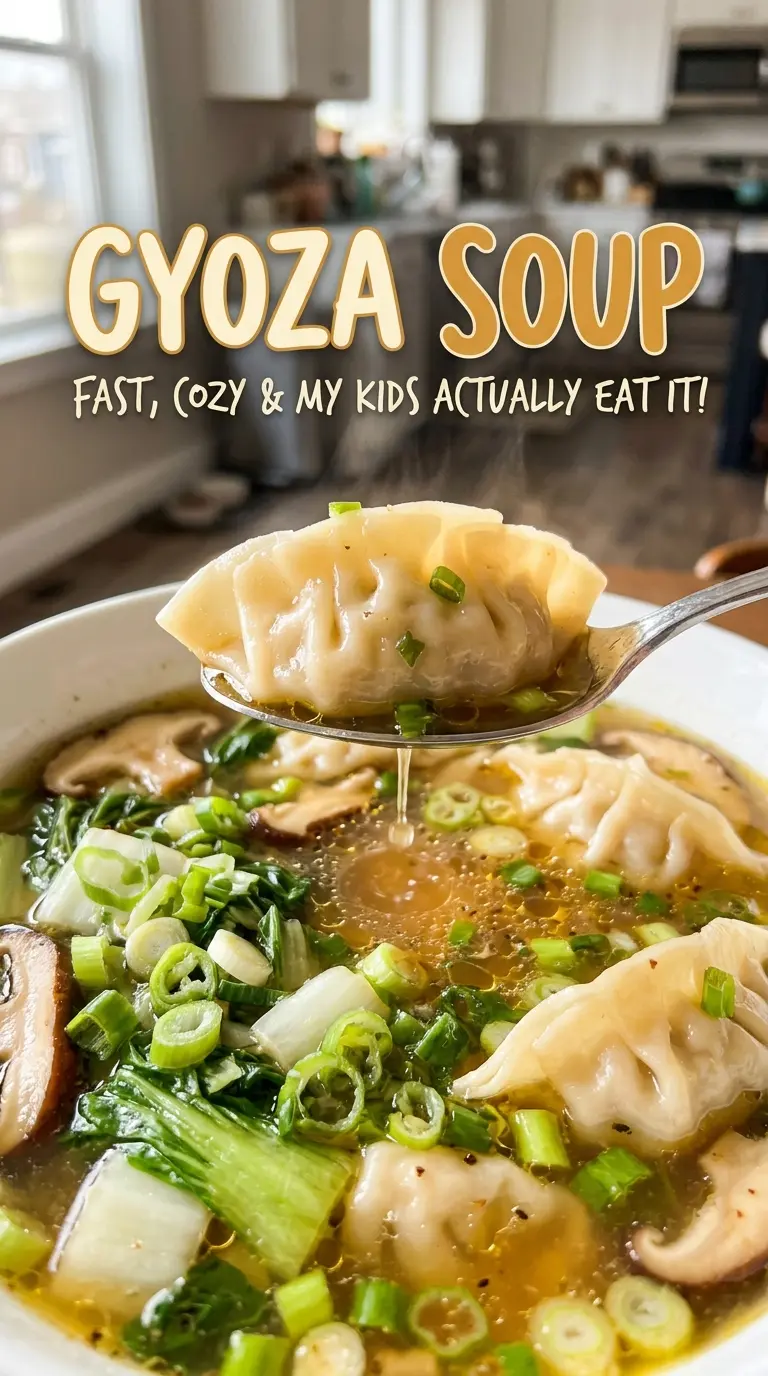
- Frozen or fresh gyoza — Frozen dumplings work beautifully here because they hold their shape and cook straight in the broth. Fresh ones are a little more delicate, so lower the heat and handle them gently. If your dumplings are large, add an extra minute or two and check one for a hot center.
- Bok choy — This gives the soup a clean, leafy finish and softens fast without turning swampy. Baby bok choy is ideal, but regular bok choy works if you slice the stalks thinner so they cook at the same pace as the leaves.
- Shiitake mushrooms — They bring a deeper, woodsy flavor that regular button mushrooms won’t quite match. If shiitakes are hard to find, cremini will work, but slice them a little thicker so they don’t disappear into the broth.
- Mirin and rice vinegar — Mirin adds gentle sweetness and shine, while rice vinegar keeps the broth from tasting one-note. That little bit of acid matters because it wakes up the soy sauce and makes the whole bowl taste brighter.
- Sesame oil and chili oil — Sesame oil goes in at the end so its aroma stays intact. Chili oil is for the bowl, not the pot, so everyone can control the heat and the broth stays balanced.
The 20 Minutes That Actually Matter
Building the Broth
Start with the broth, garlic, ginger, soy sauce, mirin, and rice vinegar in a large pot and bring it to a gentle simmer. You want steam rising and small bubbles around the edge, not a hard boil. If the garlic and ginger go in when the pot is still cold, their flavor has time to spread instead of tasting sharp in one bite.
Letting the Mushrooms Soften
Add the shiitakes and give them 3 to 4 minutes. They should look darker and a little more tender, but still hold their shape. If they sit in the broth too long, they can lose their bite and start tasting diluted instead of meaty.
Cooking the Gyoza Gently
Drop the dumplings straight into the simmering broth and cook them according to the package timing, usually 5 to 7 minutes. Stir once or twice with a gentle hand so they don’t stick to the bottom, but don’t keep agitating them or the wrappers can tear. When they’re done, they’ll feel plump and floaty rather than heavy and tight.
Finishing with Greens and Oil
Add the bok choy for the last 2 to 3 minutes so it stays bright and just wilted. Turn off the heat, then stir in the sesame oil and taste for salt. That final oil hits the surface and carries aroma straight to the bowl, which is why it belongs at the end instead of earlier in the pot.
Three Ways to Adapt Gyoza Soup Without Losing the Point
Make it vegetarian without a bland broth
Swap the chicken broth for a good vegetable broth, then add an extra splash of soy sauce and a little more ginger to keep the soup savory. Vegetable broth can taste thin on its own, so taste before serving and don’t be shy with the sesame oil at the end. Use vegetable gyoza if you want the whole bowl to stay meatless.
Use gluten-free dumplings and tamari
Choose gluten-free dumplings if you can find them, then replace the soy sauce with tamari. The broth will still taste balanced, but tamari is slightly rounder and less sharp than regular soy sauce, so you may want a tiny extra squeeze of rice vinegar to keep the finish bright.
Turn it into a heartier meal
Add a handful of napa cabbage, a few baby spinach leaves, or a soft-boiled egg on top for a bigger bowl without changing the flavor. If you want more protein, use pork or chicken gyoza and keep the broth as-is. The soup stays light, but it eats like dinner instead of a starter.
Storage and Reheating
- Refrigerator: Store leftovers for up to 2 days. The dumplings soften as they sit, but the soup still tastes good.
- Freezer: I don’t recommend freezing the finished soup. Dumpling wrappers turn soft and grainy once thawed.
- Reheating: Warm it gently on the stove over low heat until just steaming. A hard boil can split the dumplings and overcook the bok choy, so keep the heat low and stir carefully.
Answers to the Questions Worth Asking

Gyoza Soup
Ingredients
Equipment
Method
- Bring the chicken broth to a simmer in a large pot, then stir in the minced garlic, grated ginger, soy sauce, mirin, and rice vinegar.
- Simmer for 5 minutes to meld the flavors, keeping the broth at a steady simmer (gentle bubbles, not a hard boil).
- Add the sliced shiitake mushrooms to the simmering broth and cook for 3–4 minutes until tender.
- Add the gyoza dumplings directly to the simmering broth and cook according to package directions (usually 5–7 minutes) until cooked through.
- Add the chopped bok choy and cook for 2–3 minutes until wilted and bright green.
- Stir in the sesame oil, then taste and season with salt until the broth is balanced.
- Serve hot, topped with sliced green onions, sesame seeds, and a drizzle of chili oil.