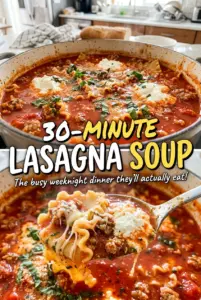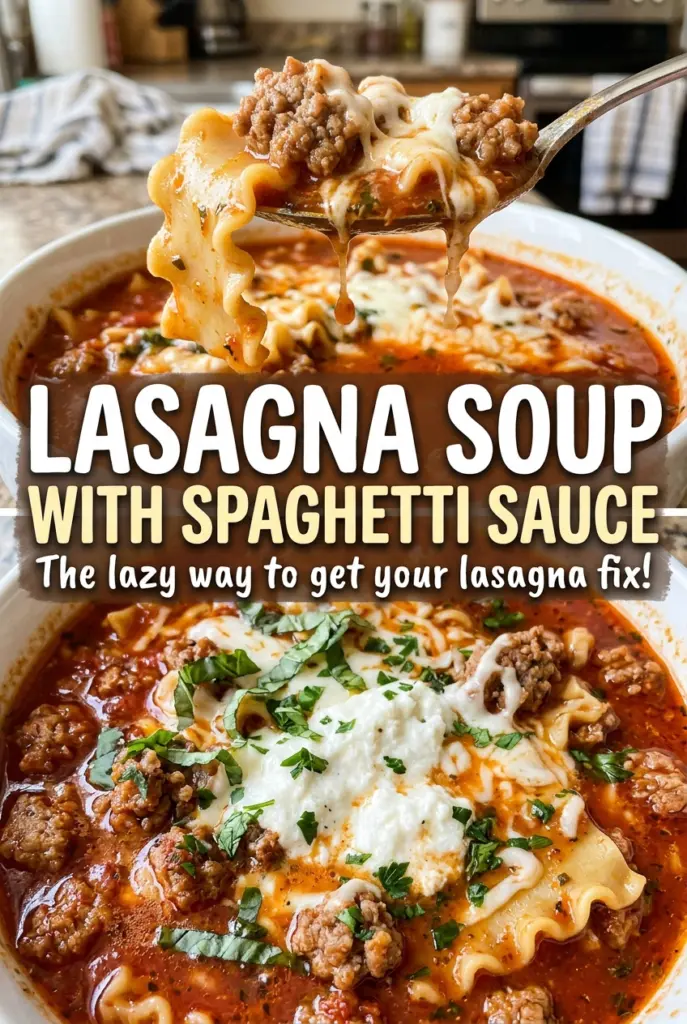
Lasagna soup with spaghetti sauce gives you all the comfort of baked lasagna without the layering, baking, or waiting. The broth turns rich and tomato-forward, the sausage adds enough backbone to keep it from tasting flat, and the broken noodles soak up every bit of that savory sauce. The best part is the cheese dollop on top. It melts into the bowl in soft, creamy streaks, which is exactly what you want when a soup is trying to taste like lasagna.
The shortcut here is the jarred spaghetti sauce, but it only works because the rest of the pot is built with purpose. Browning the meat first gives the broth depth, and the onion and garlic keep the sauce from tasting one-note. A can of diced tomatoes adds texture, while the broth loosens everything into a spoonable soup instead of a thick pasta sauce. Broken lasagna noodles finish the job and give you those familiar ruffled edges in every bite.
Below, I’ll walk through the small choices that keep this soup hearty instead of mushy, plus the best way to handle the noodles so they don’t disappear into the pot. The cheese topping matters here too, and I’ll explain why it works better than stirring everything in at once.
The broth had so much more body than I expected from a jar of spaghetti sauce, and the noodles stayed pleasantly chewy instead of turning to mush. The ricotta-mozzarella topping made it taste like actual lasagna in a bowl.
Like this lasagna soup? Save it to Pinterest for the nights when you want that baked-lasagna feeling in a fast, spoonable dinner.
The Trick to Keeping Lasagna Soup Brothy, Not Starchy
The biggest mistake with lasagna soup is treating it like pasta in sauce. Once the noodles go in, the pot starts thickening fast, and if you simmer them too long the broth turns heavy and the noodles swell past the point of comfort. The fix is simple: add the noodles only after the liquid is already seasoned and simmering, then stop cooking when they’re tender with a little bite left in the center.
Jarred spaghetti sauce is doing the heavy lifting here, but it needs help from the browned meat and a little extra acid and herb flavor from the diced tomatoes, basil, and Italian seasoning. That combination keeps the soup from tasting like warmed-up pasta sauce. If your jarred sauce is on the sweet side, the broth and tomatoes pull it back into balance. If it tastes a little flat, the parmesan in the topping fixes that at the end without muddying the pot.
What Each Ingredient Is Actually Doing in This Dish
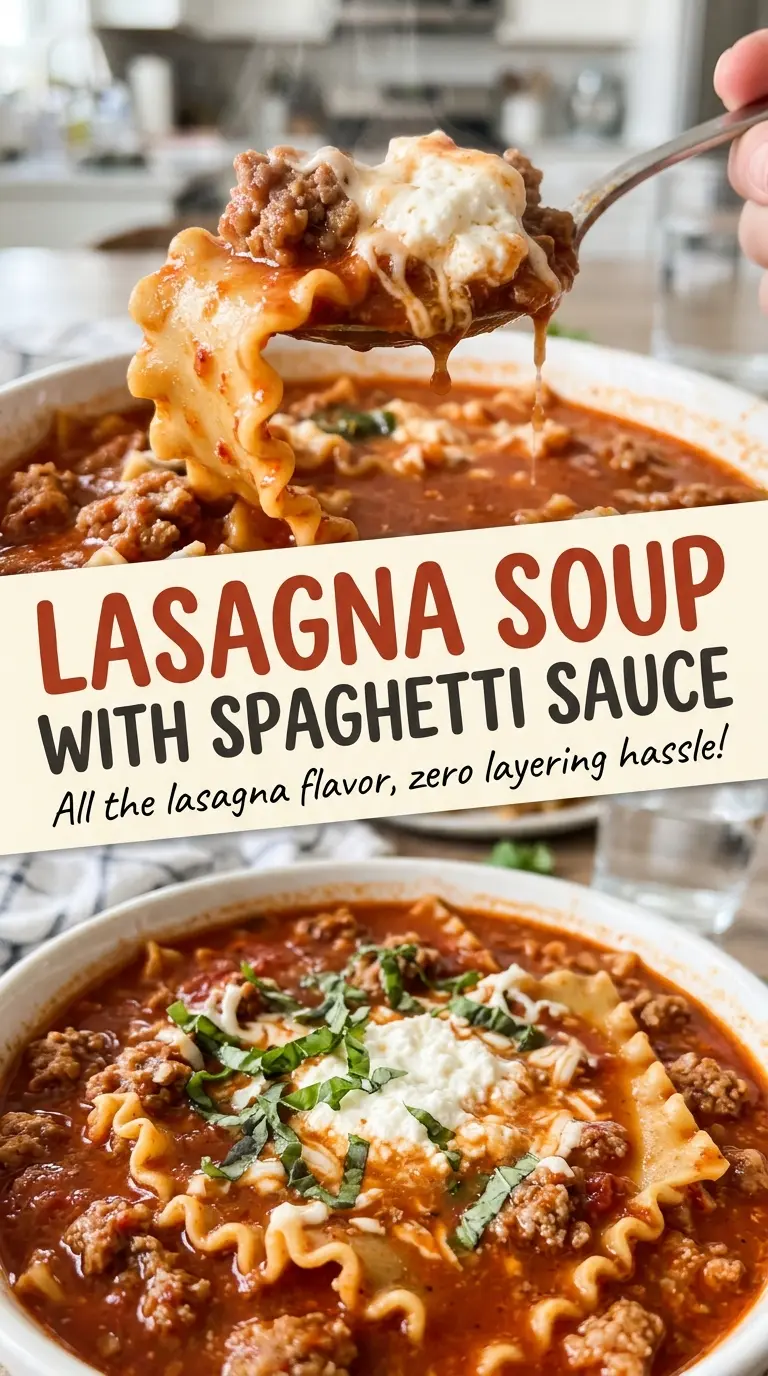
- Italian sausage or ground beef — Sausage gives the soup built-in seasoning and a little fennel warmth, while ground beef makes it taste closer to classic red-sauce lasagna. If you use beef, add a little more Italian seasoning and taste carefully at the end, because it won’t bring as much flavor on its own.
- Spaghetti sauce — This is the shortcut, so choose one you’d actually enjoy eating on pasta. A thicker sauce makes the soup richer; a thinner sauce makes it lighter. Either works, but if your jar is very sweet, the extra tomatoes and broth will keep it from tasting candy-like.
- Diced tomatoes — These add brightness and a little texture so the soup doesn’t turn into a smooth tomato base. Don’t drain them. The juice helps loosen the pot and keeps the broth from feeling too dense.
- Broken lasagna noodles — They give you the actual lasagna feel, but they need to be added near the end or they’ll overcook and break down. If you want leftovers that stay neat, cook the noodles separately and add them to each bowl before ladling in the soup.
- Ricotta, mozzarella, and parmesan — This cheese topping is what makes the bowl taste like lasagna instead of tomato soup with pasta. Ricotta gives the creamy body, mozzarella gives the pull, and parmesan sharpens everything. Stir them together right before serving so they stay fluffy instead of turning gluey.
Building the Bowl in the Right Order
Browning the Meat First
Start with a hot pot and cook the sausage or beef until it’s deeply browned, not just gray. That browned fond on the bottom is part of the soup’s flavor, so don’t rush to the next step the second the meat loses its pink color. If there’s a lot of fat in the pot, drain most of it off, but leave a thin film behind so the onion cooks into it instead of sticking.
Softening the Onion and Garlic
Once the meat is out of the way, the onion should go in and cook until it turns translucent and takes on a little gold around the edges. Garlic only needs about a minute; any longer and it starts to taste sharp instead of round. If the pot looks dry at this stage, add a splash of broth and scrape up the browned bits before they scorch.
Letting the Sauce and Broth Become One
Pour in the spaghetti sauce, diced tomatoes, broth, and seasonings, then bring the pot to a boil before reducing it to a steady simmer. That initial boil wakes everything up, but the real work happens when the flavors settle together over low heat. Taste the broth before adding the noodles. If it needs more salt or pepper now, it’ll taste better in the final bowl than if you wait until the end.
Cooking the Noodles at the End
Add the broken lasagna noodles and stir them a few times while they soften so they don’t clump at the bottom. They should be tender in 10 to 12 minutes, but start checking early because noodle size changes everything. The soup is ready when the pasta is cooked through but still has some structure. If you let it go until the noodles are completely floppy, the broth turns thick and the whole pot loses its lift.
Finishing With the Cheese Dollop
Mix the ricotta, mozzarella, parmesan, and basil in a bowl just before serving. Spoon it on top of each bowl instead of stirring it into the pot. That keeps the cheese creamy and gives you those classic lasagna layers in the first few bites. As it sits on the hot soup, it softens into the broth without disappearing.
Three Ways to Make It Work for Your Pantry
Use ground turkey for a lighter bowl
Ground turkey works well here if you want a lighter version, but it needs help. Add an extra pinch of Italian seasoning and taste the broth at the end, because turkey won’t season the soup the way sausage does. You’ll get a cleaner, leaner bowl with a little less richness.
Make it dairy-free without losing the creamy finish
Skip the ricotta-mozzarella topping and use a dairy-free ricotta alternative, or top each bowl with a spoonful of cashew cream and chopped basil. You’ll lose the classic stretchy cheese pull, but the soup still finishes with a rich, creamy contrast against the tomato broth.
Make the noodles separately for better leftovers
If you know you’ll have leftovers, boil the noodles in a separate pot and add them to each bowl when serving. That keeps them from soaking up all the broth overnight. It’s the best move if you want the soup to taste fresh on day two instead of thick and tired.
Add extra vegetables for a fuller meal
A handful of chopped spinach, zucchini, or mushrooms can go in with the onion or during the final simmer. Spinach disappears almost immediately, mushrooms deepen the broth, and zucchini softens into the soup for extra body. Keep the add-ins modest so the pot still tastes like lasagna, not vegetable stew.
Storage and Reheating
- Refrigerator: Store in an airtight container for up to 4 days. The noodles will keep absorbing broth, so expect a thicker soup on day two.
- Freezer: The base freezes well for up to 3 months, but the noodles soften a lot after thawing. For the best result, freeze the soup without noodles and cook fresh pasta when you reheat it.
- Reheating: Warm it gently on the stovetop over medium-low heat with a splash of broth or water. Hard boiling is the mistake here — it breaks the texture of the noodles and can make the soup taste overcooked.
Answers to the Questions Worth Asking
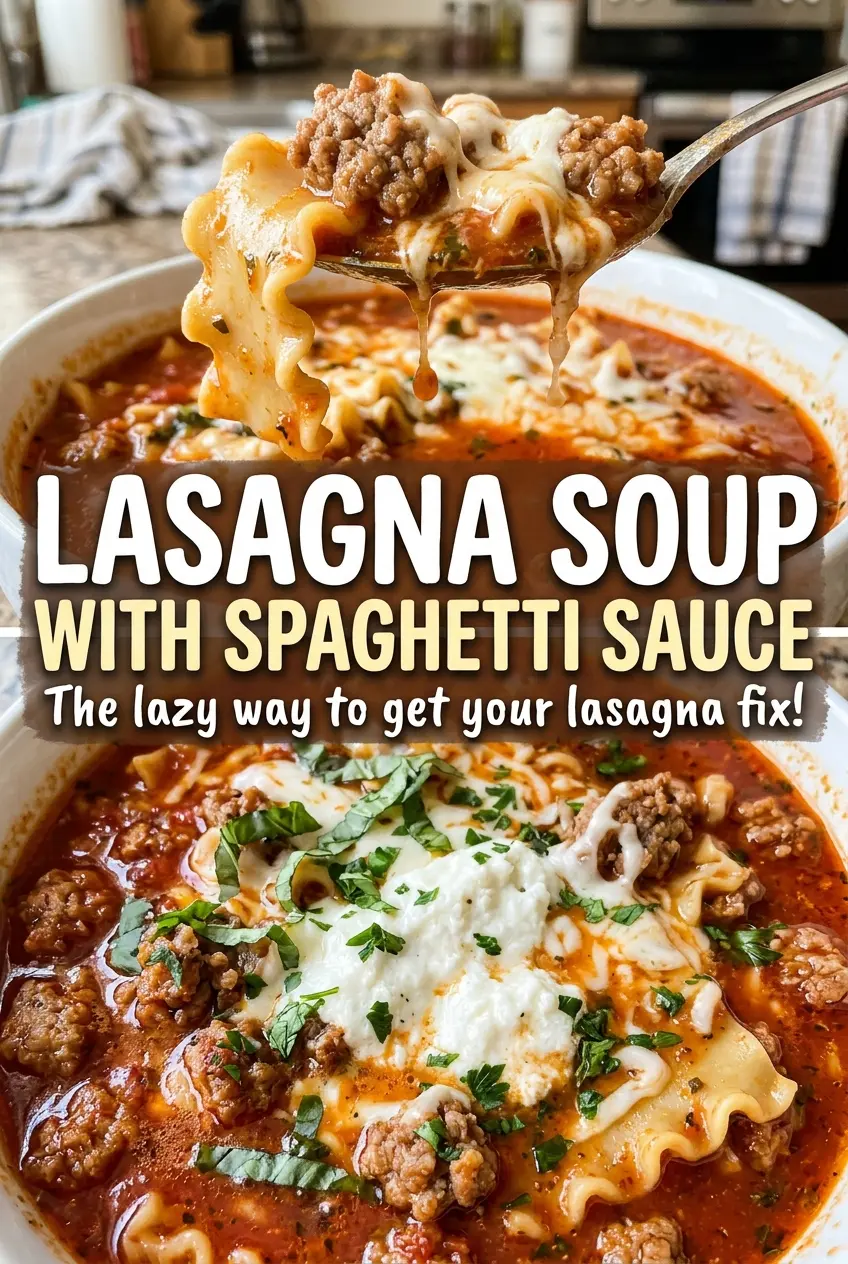
Lasagna Soup With Spaghetti Sauce
Ingredients
Equipment
Method
- Brown the Italian sausage or ground beef in a large pot over medium-high heat until cooked through, then drain off the excess fat.
- Sauté the diced onion for 3 minutes, then add the minced garlic and cook for 1 minute.
- Pour in the spaghetti sauce, diced tomatoes, and beef or chicken broth, then stir in Italian seasoning, dried basil, and red pepper flakes.
- Bring the soup to a boil over medium-high heat, then add the broken lasagna noodles.
- Simmer for 10-12 minutes, stirring occasionally, until the noodles are tender.
- Season with salt and pepper to taste.
- Mix the ricotta, shredded mozzarella, parmesan, and fresh basil until well combined to form a thick dollop.
- Ladle the soup into bowls and top each serving with a generous spoonful of the cheese dollop.