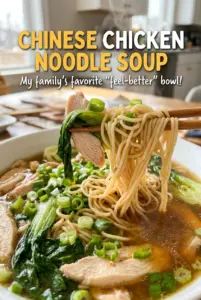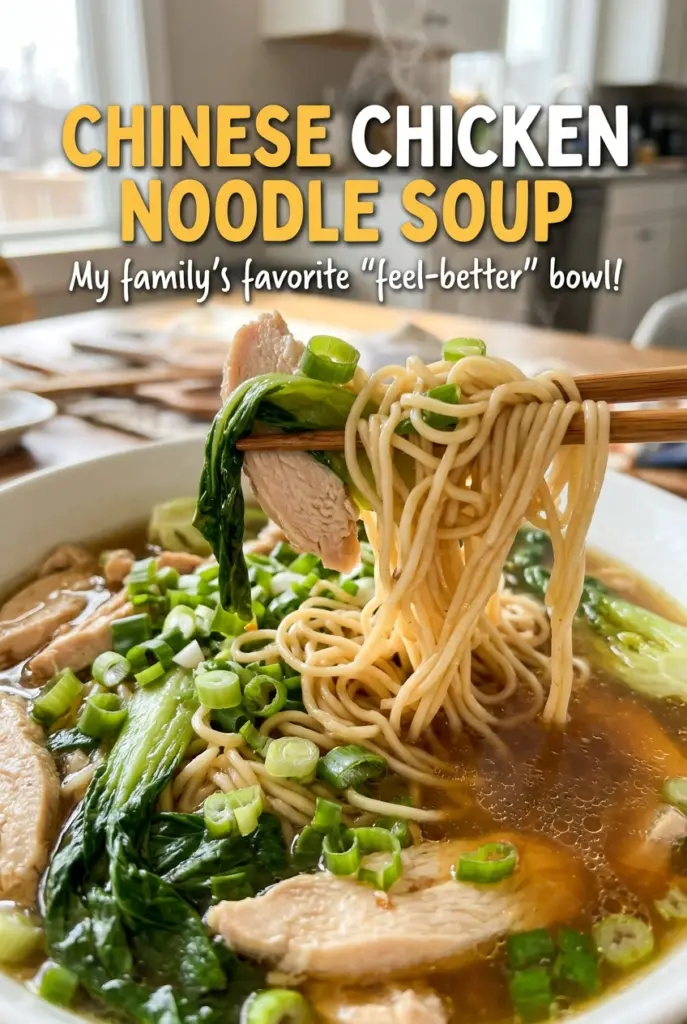
Clear amber broth, tender chicken, and slippery noodles make Chinese chicken noodle soup the kind of meal that settles in fast and disappears even faster. The broth stays light but still tastes deep, thanks to ginger, garlic, soy sauce, and a small splash of rice vinegar that keeps it from tasting flat. It’s the kind of bowl that feels clean and comforting at the same time, with bok choy and shiitakes adding just enough freshness and earthiness to keep every spoonful interesting.
What makes this version work is the order. The broth gets seasoned before the chicken goes in, which lets the aromatics bloom instead of tasting boiled. The noodles are cooked separately so they stay springy instead of turning gummy in the pot, and the bok choy goes in at the end so it stays bright and tender. A little white pepper and sesame oil at the finish give the soup that unmistakable Chinese-American takeout-style aroma without making the broth heavy.
Below, I’ve included the small details that matter most here, including how to keep the noodles from soaking up too much broth and how to adjust the seasoning so the soup tastes balanced right before serving.
The broth came out clear and flavorful, and the noodles stayed springy because I cooked them separately like you said. My husband kept going back for more, and the white pepper at the end gave it that restaurant taste.
Pin this Chinese chicken noodle soup for the nights when you want a clear, fragrant broth with springy noodles and tender chicken.
The Broth Stays Clear When You Don’t Boil It Hard
The biggest mistake in chicken noodle soup is treating the pot like it needs a rolling boil. It doesn’t. A hard boil clouds the broth, tightens the chicken, and can make the ginger and garlic taste sharp instead of rounded. A gentle simmer keeps the broth clear and gives the aromatics time to infuse without turning harsh.
Cooking the noodles separately matters for the same reason. Thin Chinese wheat noodles and rice noodles both keep cooking after they’re drained, and if they sit in the soup too long, they steal broth and turn soft. I like to divide them into bowls first, then ladle the hot soup over the top so the texture stays where it should be.
What Each Ingredient Is Actually Doing in This Bowl
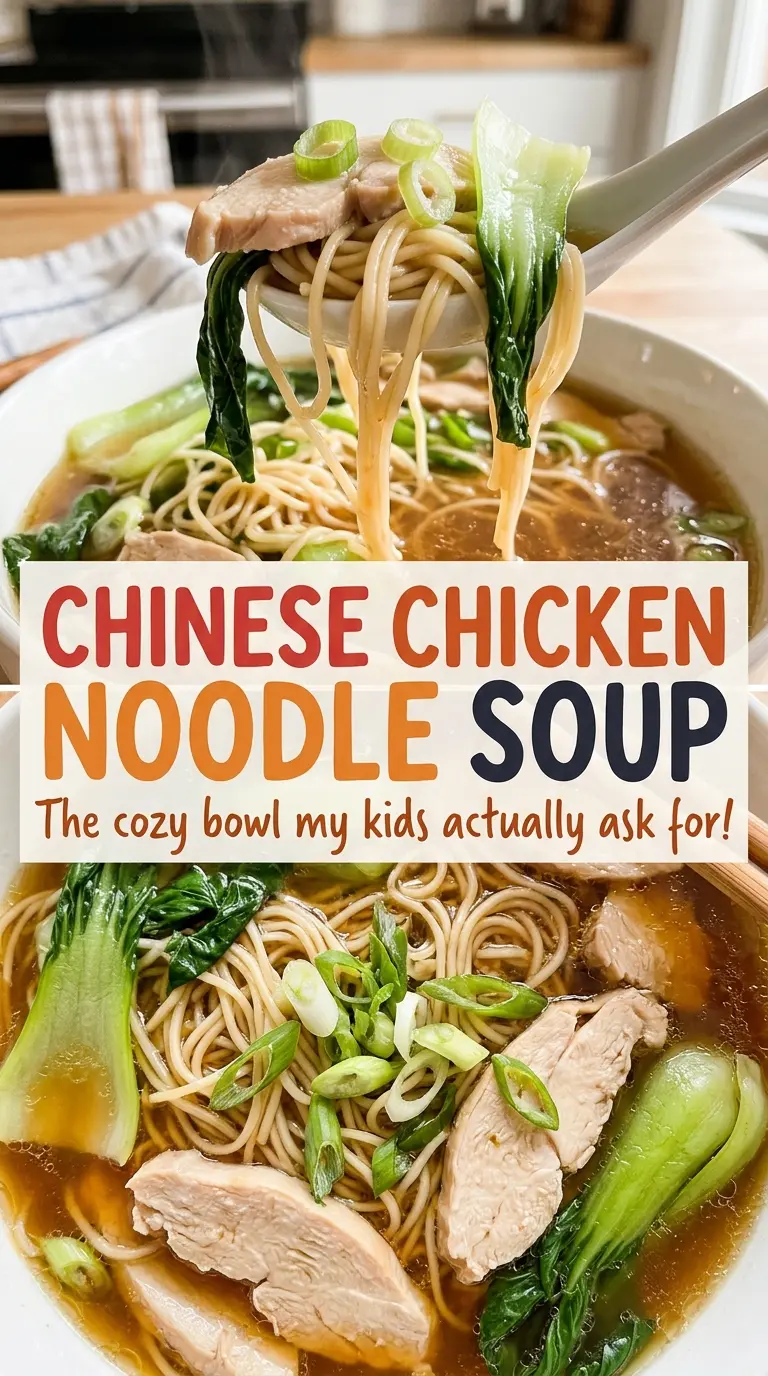
- Chicken breast — Thin slices cook fast and stay tender in the simmering broth. If you use thick chunks, they take longer and the soup starts to feel heavy. Slicing against the grain keeps the chicken softer in the bowl.
- Thin Chinese wheat noodles or rice noodles — These give the soup its body without overpowering the broth. Wheat noodles bring more chew, while rice noodles stay lighter and more delicate. Cook them separately so they don’t cloud the soup or go mushy.
- Shiitake mushrooms — They add the savory depth this soup needs. Fresh shiitakes give a cleaner finish, but dried shiitakes, rehydrated and sliced, will push the broth even deeper. If you skip them, the soup tastes thinner.
- Bok choy — This goes in last because it should wilt, not collapse. The stems stay crisp-tender if you only give them a few minutes. Napa cabbage works in a pinch, but bok choy keeps that signature texture.
- Sesame oil, white pepper, and rice vinegar — This trio is the finishing layer. Sesame oil adds aroma, white pepper brings that classic Chinese restaurant heat, and rice vinegar lifts the broth so it doesn’t taste flat. Don’t swap in black pepper if you want the same result; it changes the whole finish.
Building the Bowl Without Overcooking Anything
Start With the Aromatics
Bring the broth to a gentle simmer, then add the garlic and ginger and let them cook for about 5 minutes. You want the broth fragrant, not aggressively bubbling, because high heat pushes the garlic into a bitter edge. If the garlic starts browning, the pot is too hot and the flavor will go flat instead of clean.
Season the Broth Before the Chicken Goes In
Stir in the soy sauce, sesame oil, and rice vinegar before adding the chicken. This gives the broth a chance to taste balanced while it’s still building, and it helps you adjust the salt level early. If it tastes slightly underseasoned at this stage, that’s fine — the chicken and mushrooms will deepen it as they cook.
Cook the Chicken and Mushrooms Together
Add the sliced chicken and shiitakes and let them simmer for 10 to 12 minutes. Thin slices of chicken should turn opaque and just-cooked through without shrinking into dry strips. If the chicken looks tough, it’s usually from a boil that’s too hot, not from the timing alone.
Finish With Greens and Noodles at Service
Cook the noodles separately, drain them, and divide them into bowls. Add the bok choy to the broth for the last 3 minutes so the leaves wilt and the stems stay bright. Ladle the soup over the noodles, then finish with white pepper, salt if needed, green onions, cilantro, and a small drizzle of chili oil.
Three Ways to Adjust This Soup Without Losing Its Character
Make it gluten-free with rice noodles and tamari
Swap the wheat noodles for rice noodles and use tamari instead of soy sauce. The broth stays just as fragrant, but the texture gets a little lighter and the noodles soften faster, so keep an eye on them. This is the cleanest way to keep the soup gluten-free without changing the overall flavor.
Use chicken thighs for a richer, more forgiving soup
Boneless chicken thighs can stand up to a little extra simmering and stay juicier than breast meat. The broth will taste slightly richer, and the soup becomes a bit more forgiving if you get distracted for a minute. Cut the thighs thinly so they still cook quickly.
Add more vegetables without muddying the broth
Snow peas, baby spinach, or thin carrot matchsticks all work well here, but add them at the very end. Anything that cooks too long will turn the broth dull and the vegetables soft in a way that feels heavy. Keep the additions light and quick so the soup stays bright.
Storage and Reheating
- Refrigerator: Store the broth, chicken, and vegetables for up to 4 days. Keep the noodles separate if possible so they don’t soak up all the liquid.
- Freezer: The broth, chicken, and mushrooms freeze well for up to 2 months, but noodles and bok choy turn soft after thawing. Freeze the soup base on its own and cook fresh noodles when you’re ready to serve.
- Reheating: Warm the broth gently on the stove until hot, then add fresh or stored noodles at the end. Don’t boil it hard or the chicken gets stringy and the greens lose their texture.
Questions I Get Asked About This Recipe
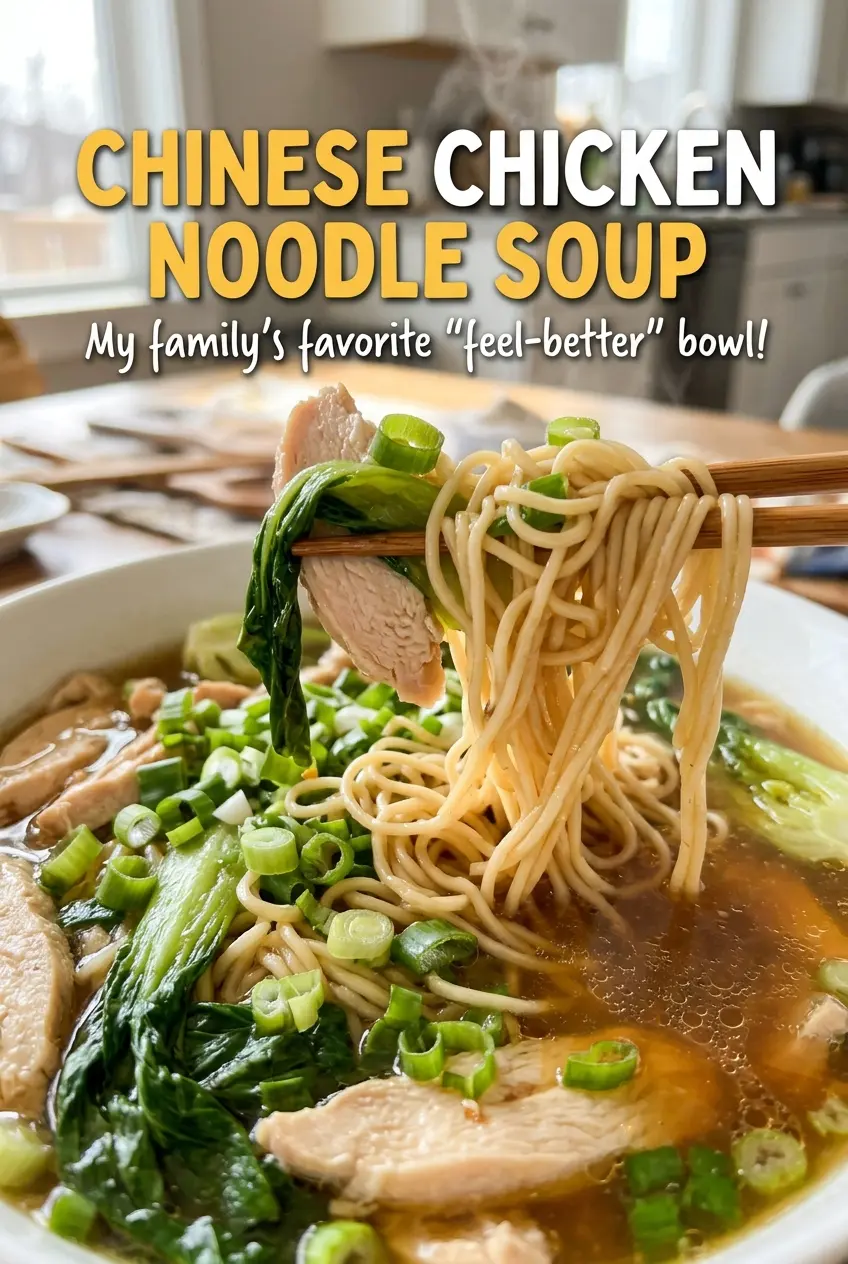
Chinese Chicken Noodle Soup
Ingredients
Equipment
Method
- Bring the chicken broth to a simmer in a large pot over medium-high heat. Add the minced garlic and grated ginger, then simmer for 5 minutes.
- Stir in the soy sauce, sesame oil, and rice vinegar. Adjust to taste for balance.
- Add the thinly sliced chicken and sliced shiitake mushrooms to the broth. Maintain a gentle simmer and cook for 10-12 minutes, until the chicken is cooked through.
- Cook the thin Chinese wheat noodles or rice noodles separately according to the package directions. Drain and divide into bowls before ladling soup over them.
- Add the chopped bok choy to the broth. Simmer for 3 minutes until wilted.
- Ladle the hot soup over the noodles in each bowl. Season with white pepper and salt to taste.
- Garnish each bowl with sliced green onions, cilantro, and a drizzle of chili oil.