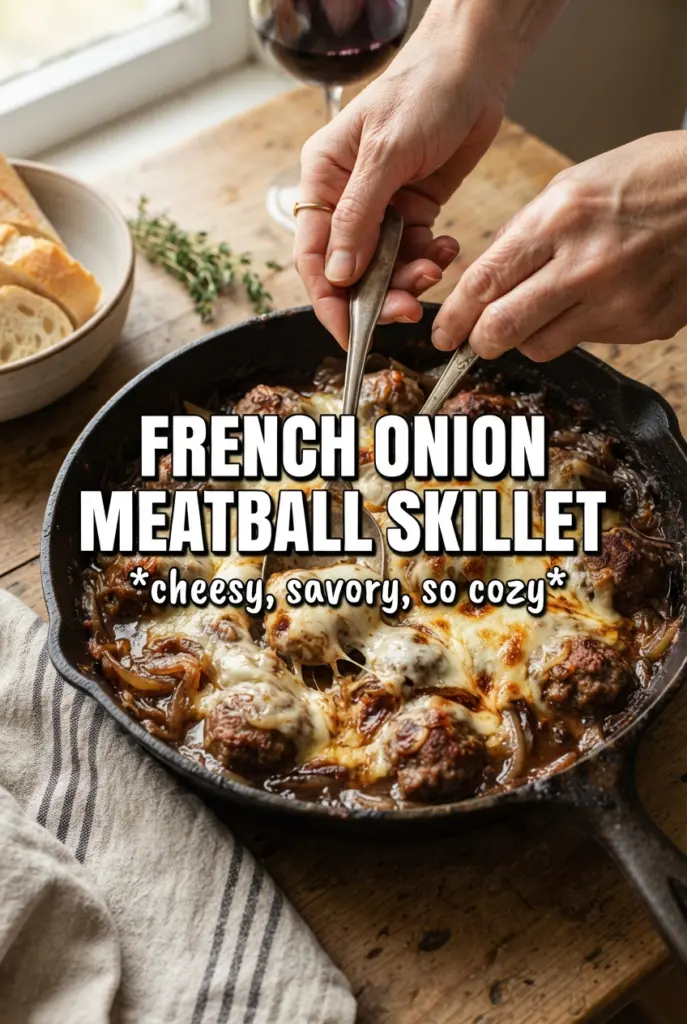
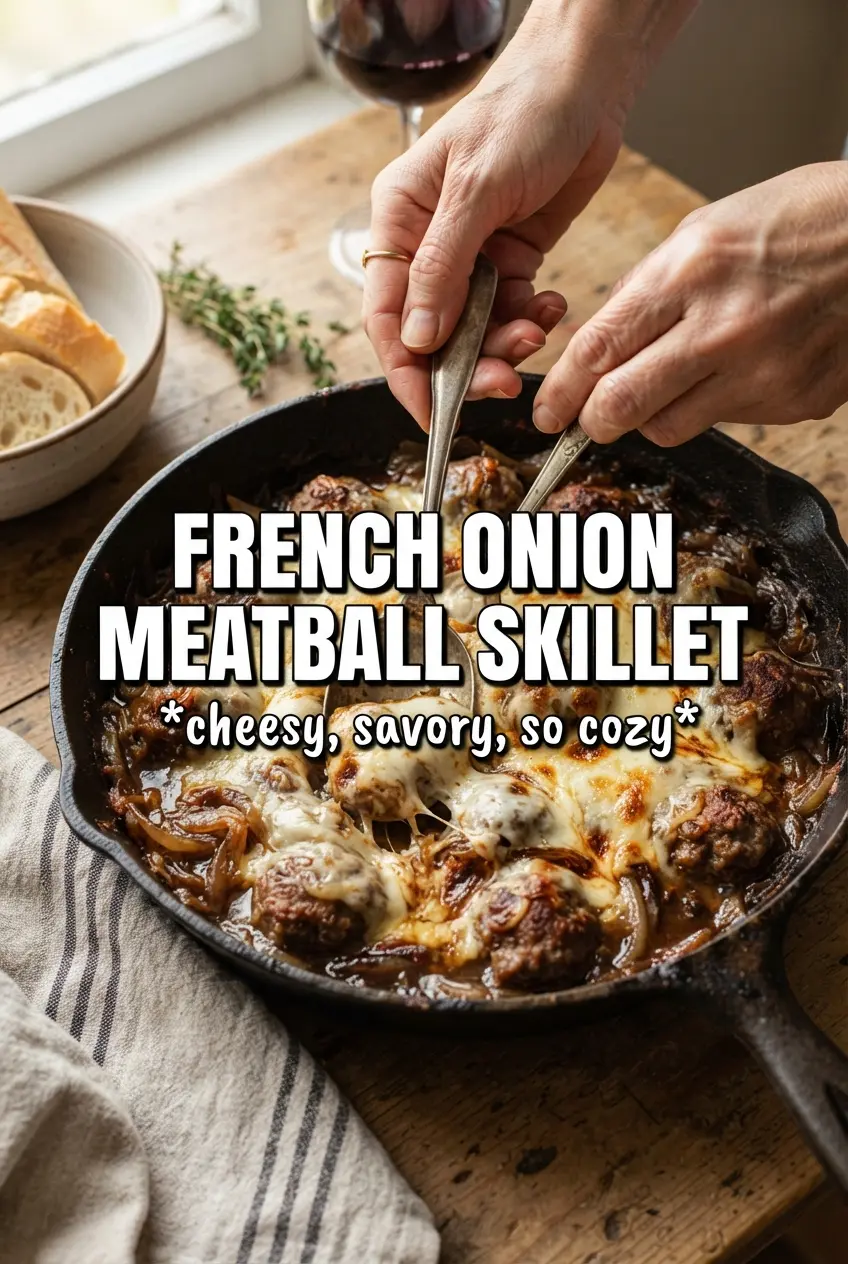
Deeply caramelized onions turn this French onion meatball skillet into the kind of dinner that tastes slow and thoughtful, even though it comes together in one pan. The broth gets savory and a little glossy, the meatballs stay juicy, and the Gruyere melts into a bronzed cap that pulls everything together. It’s the kind of skillet meal that lands on the table with real presence.
The key is patience with the onions. You’re not just softening them; you’re cooking off their water and letting their natural sugars build that dark, sweet base that makes the whole dish taste like French onion soup with a much heartier finish. Browning the meatballs first gives the skillet fond, which deepens the sauce, and a splash of white wine lifts all those browned bits without making the dish taste sharp.
Below, you’ll find the timing that matters most, the small cues that tell you the onions are ready, and a few easy swaps if you need to adjust the cheese or wine. The broiler finish is short, but it’s what gives you that bubbling, savory top everyone goes after first.
The onions cooked down into this rich, sweet base and the sauce tightened up beautifully around the meatballs. I loved that the Gruyere browned under the broiler without getting greasy.
Love the bubbling Gruyere and caramelized onion sauce? Save this French Onion Meatball Skillet for a cozy one-pan dinner that feels special without extra cleanup.
The Reason the Onions Need the Full 30 Minutes
If the onions only turn soft and pale, this dish tastes like meatballs in broth. Once they’re deeply caramelized, the skillet changes completely. The onions bring sweetness, body, and that dark French onion depth that makes the sauce cling to the meatballs instead of sliding right off them.
The biggest mistake here is rushing the onions over medium heat because the pan looks dry. Keep the heat at medium-low and let them go. They’ll first release a lot of water, then reduce, then finally start to brown in the butter that’s left in the pan. That slow transformation is what gives the finished dish its restaurant-style savoriness.
- The onions need thin, even slices so they cook at the same pace. Thick chunks stay firm while the rest breaks down.
- The butter does more than add flavor. It helps the onions soften without scorching and carries the browned bits into the sauce later.
- The wine isn’t just for deglazing. It lifts the fond from the pan and adds a sharp edge that keeps the sauce from tasting flat.
What Each Ingredient Is Doing in This Skillet
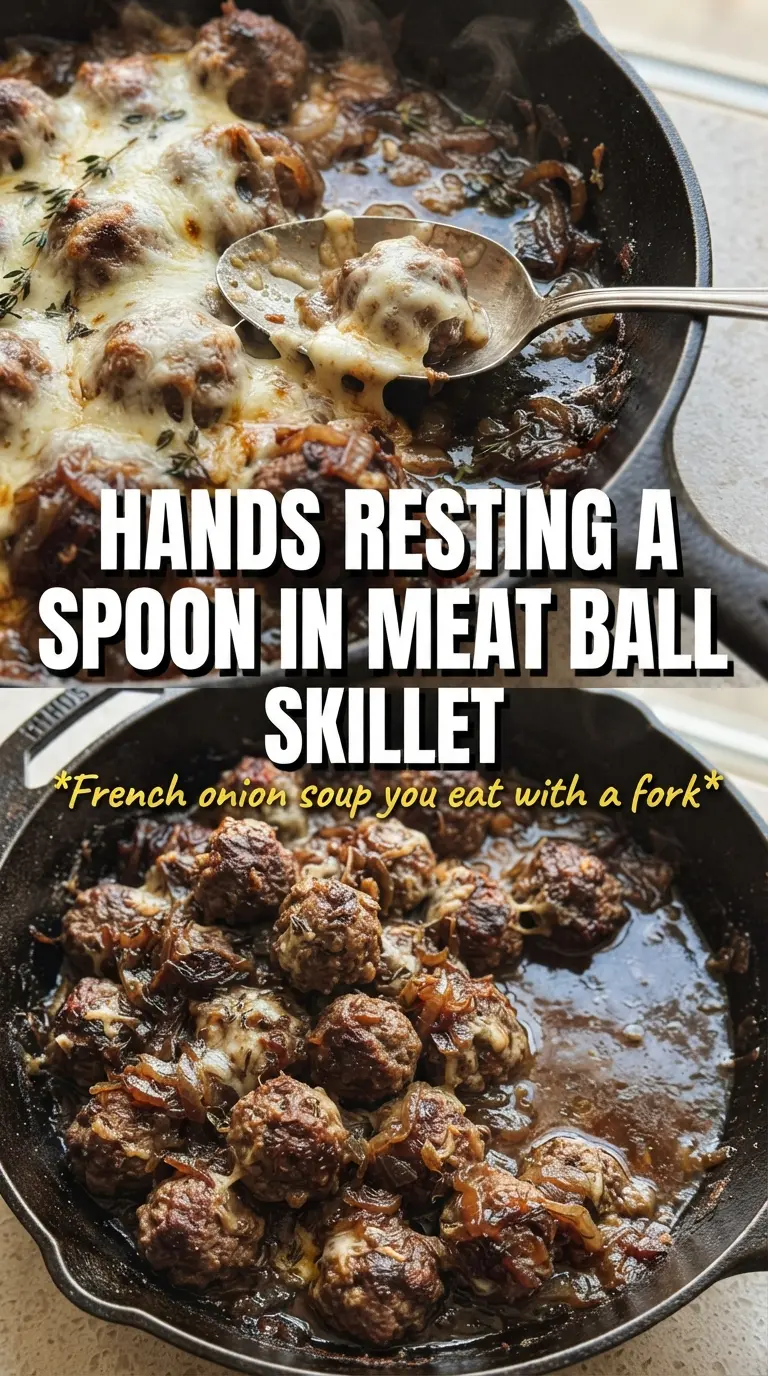
- Ground beef — A moderately fatty blend gives you tender meatballs that stay juicy after the simmer. Too lean and they’ll tighten up in the broth.
- Breadcrumbs and egg — This is the binder that keeps the meatballs from crumbling when they simmer. If you need a gluten-free version, use gluten-free breadcrumbs in the same amount.
- Worcestershire — You use it twice because it quietly adds depth to both the meatballs and the onion sauce. It brings salt, tang, and savoriness that’s hard to replace with plain salt alone.
- Dry white wine — A dry Sauvignon Blanc or Pinot Grigio works well here. You want something crisp enough to cut the richness, not sweet cooking wine.
- Gruyere — This is the cheese that makes the top taste like French onion soup instead of just melted cheese on meatballs. If you swap it, pick another good melting cheese with a nutty edge, like Emmental or Swiss.
- Fresh thyme — Fresh thyme tastes cleaner and woodier than dried in this dish. If you only have dried, use 1 teaspoon and add it with the wine so it has time to hydrate.
How to Build the Skillet Without Breaking the Sauce
Mix the Meatballs Just Until Combined
Stir the meatball mixture until the breadcrumbs disappear and everything looks evenly moistened, then stop. Overmixing makes the meatballs dense and springy instead of tender. Roll them into even sizes so they brown at the same rate and finish cooking together in the sauce.
Brown First, Then Let the Onions Take Over
Get a deep brown crust on the meatballs in the skillet, then pull them out before they cook through. That browned surface is flavor, and the same pan gives you the base for the onions. If the skillet looks crowded, brown the meatballs in batches so they actually sear instead of steam.
Cook the Onions Until They Turn Dark and Jammy
This is the part that takes time. Keep the heat at medium-low and stir often enough to keep the onions from sticking, but not so often that they never brown. When they turn soft, collapsed, and deep golden brown with a little sweetness at the edges, you’re there.
Finish Under the Broiler
Once the meatballs simmer in the onion broth, scatter the Gruyere over the top and broil just until it melts, bubbles, and picks up a few browned spots. Stay close. The line between bronzed and burnt is short with cheese, and the pan will keep cooking even after you pull it out.
Three Ways to Make This Work for Your Kitchen
Gluten-Free Meatballs
Swap the breadcrumbs for certified gluten-free breadcrumbs in the same amount. The texture stays light and cohesive, and you won’t lose the structure that keeps the meatballs intact during simmering.
Dairy-Free Skillet Finish
Use olive oil in place of the butter and skip the Gruyere, or top with a dairy-free melting cheese if you have one you trust. You’ll lose some of the classic French onion richness, but the onion broth and Worcestershire still give the dish plenty of depth.
Make It With Turkey or Chicken
Ground turkey or chicken works if you want a lighter skillet, but add a little extra butter when browning because leaner meat doesn’t leave as much flavor in the pan. The result is a bit milder, so don’t skimp on the thyme and cheese.
Skip the Wine
Replace the wine with an equal amount of beef broth plus a small splash of apple cider vinegar or lemon juice. You still get the brightness you need to balance the onions, without losing the savory body of the sauce.
Storage and Reheating
- Refrigerator: Store leftovers for up to 4 days. The onions will thicken a bit as they sit, which actually helps the sauce cling.
- Freezer: This freezes well for up to 2 months. Cool it completely, then freeze in an airtight container; the cheese is best added fresh after reheating if you want the top to stay stretchy.
- Reheating: Reheat gently on the stovetop over low heat or covered in a 325°F oven until hot through. High heat can make the meatballs tough and split the sauce before it loosens back up.
Questions I Get Asked About This Recipe
French Onion Meatball Skillet
Ingredients
Equipment
Method
- In a large bowl, mix ground beef, breadcrumbs, egg, Worcestershire, garlic powder, salt, and pepper until just combined. Roll into evenly sized meatballs.
- Heat butter in an oven-safe cast iron skillet over medium-high heat, then brown the meatballs in the hot butter. Cook until golden on the outside, about 8-10 minutes, then remove to a plate.
- Add sliced onions to the same skillet and cook over medium-low heat, stirring occasionally, until deeply caramelized. Continue for 30-35 minutes.
- Stir in minced garlic and fresh thyme and cook for 1 minute to bloom their aroma.
- Pour in dry white wine and deglaze the pan, scraping up browned bits from the bottom. Simmer briefly, about 2 minutes.
- Add beef broth and Worcestershire, then stir to combine and bring the mixture to a gentle simmer.
- Nestle the browned meatballs into the caramelized onion sauce so they are partially submerged. Simmer for 10 minutes, letting the sauce coat the meatballs.
- Scatter Gruyere over everything in an even layer. Broil 3-5 minutes until golden and bubbly, watching closely to avoid scorching.