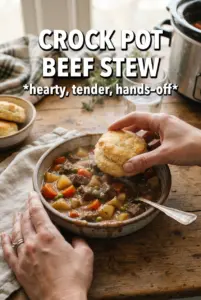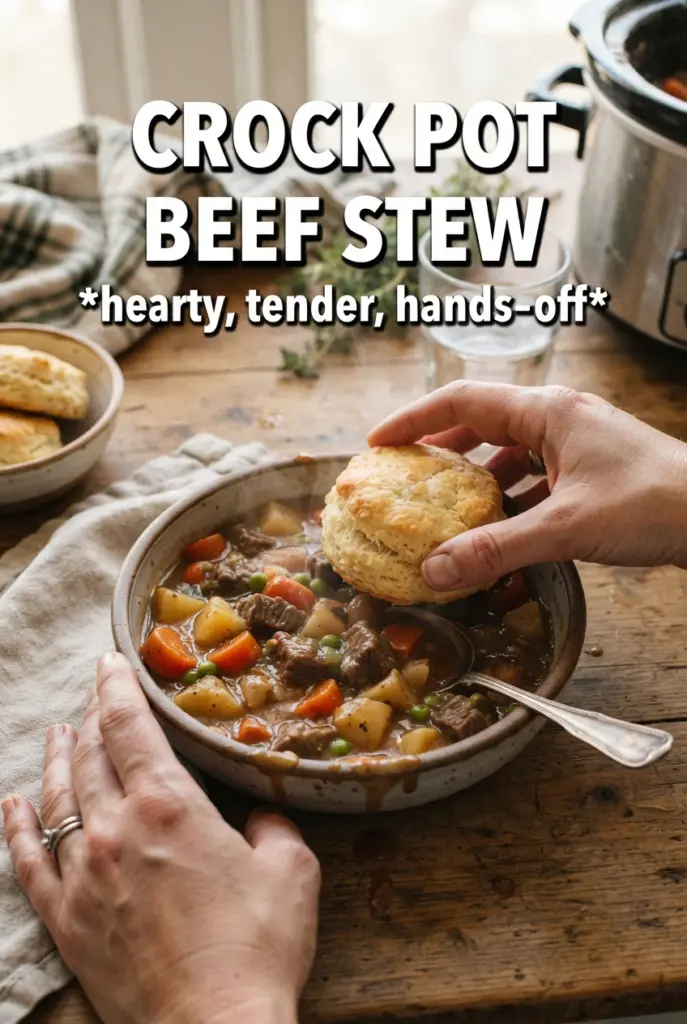
Deep, mahogany broth. Beef that falls apart at the touch of a spoon. Tender potatoes, carrots, and celery that hold their shape instead of dissolving into mush. This crock pot beef stew earns a permanent place in the rotation because it tastes like it simmered all day on the stove, but the slow cooker does the work while you get on with everything else.
The trick is building enough flavor up front so the long cook doesn’t taste flat. Tomato paste, Worcestershire, red wine, and a full hit of thyme and rosemary give the broth backbone, while the beef chuck breaks down slowly into that rich, stew-like texture you want. I also like starting with the vegetables on the bottom so they get bathed in the liquid from the beginning and soften without turning stringy.
Below you’ll find the timing that gives the beef that fall-apart texture, the one step that thickens the broth without making it gluey, and a few smart swaps for nights when you need to work with what’s in the pantry.
The broth thickened up beautifully at the end and the beef was fork-tender without falling apart into shreds. I also loved that the potatoes held their shape instead of getting mushy.
Love the deep broth and fall-apart beef in this crock pot stew? Save it to Pinterest for the nights when you want a hearty dinner that cooks itself.
The Secret to Beef That Turns Tender, Not Dry
The biggest mistake with slow-cooker stew is treating the beef like it needs a hot sear to work. It doesn’t. Chuck needs time, steady heat, and enough liquid to break down its connective tissue. If the heat is too high for too long, the outer edges can tighten before the center has finished relaxing, which gives you beef that tastes cooked but not luxurious.
Another common failure is lifting the lid too often. Every time you do that, you dump heat and extend the cook. This stew is at its best when the slow cooker stays closed until the beef gives easily when pierced and the potatoes are tender all the way through.
- Beef chuck — This is the cut that gives stew its body. It has enough marbling and connective tissue to become spoon-tender after a long cook. Lean stew meat can work in a pinch, but it won’t give you the same rich texture.
- Tomato paste — A couple tablespoons deepen the broth and give it that slow-cooked color. It also helps the liquid taste less thin and more like it’s been simmering all afternoon.
- Red wine — This adds acidity and complexity, which keeps the stew from tasting heavy. If you skip it, use extra broth plus a splash of red wine vinegar at the end for brightness.
- Worcestershire sauce — This is one of the easiest ways to build savory depth without adding more salt. It rounds out the broth in a way broth alone can’t.
- Baby potatoes — Halved baby potatoes hold up better than large diced potatoes and give you cleaner texture in the finished stew. If you use russets, they’ll break down more and thicken the broth a bit more.
Layering the Slow Cooker So the Stew Tastes Braised, Not Boiled

Season the beef well before it goes into the pot. That salt does more than flavor the meat; it seasons the broth as everything cooks together. Put the potatoes, carrots, celery, and onion in first, then nestle the beef on top so it stays exposed to the heat and doesn’t sink into a pile that can turn dense.
The liquid should come up around the ingredients, not bury them in a soup-like bath. Crock pots trap moisture, so you don’t need a ton of broth to get a rich result. The canned tomatoes, tomato paste, and Worcestershire all do important work here, and the broth just needs to carry them.
Stir in the cornstarch slurry only at the end, after the beef is already tender. If you add it too early, the stew can thicken before the meat has finished cooking and you’ll end up with a pasty broth instead of a glossy one.
The Low-and-Slow Steps That Matter Most
Building the Base
Scatter the vegetables across the bottom of the Crockpot, then place the beef over them. Add the garlic, broth, wine, tomatoes, tomato paste, Worcestershire, thyme, rosemary, and bay leaves. The order matters less than the fact that everything gets into the pot before cooking starts, because this stew develops flavor from time, not from constant stirring. If your tomato paste clumps, whisk it into the broth before pouring it in.
Cooking Until the Beef Gives Up Easily
Cook on Low for 8 to 10 hours, or on High for 4 to 5 hours if you’re in a hurry. Low heat gives the best texture, though, because chuck breaks down more evenly and the vegetables stay intact. The stew is ready when the beef falls apart with a fork and the potatoes are soft all the way through, not chalky in the center.
Thickening Without Muddying the Broth
Remove the bay leaves, then stir together the cornstarch and water until smooth. Pour it in and switch the slow cooker to High for 20 to 30 minutes. The broth should turn glossy and lightly cling to a spoon. If it still looks thin, give it a few more minutes instead of adding more slurry right away, because cornstarch takes a moment to activate fully.
Final Seasoning
Taste at the end and add salt and pepper as needed. This last step matters because the broth reduces a little and the tomatoes and Worcestershire concentrate as the stew cooks. If the flavor feels flat, it usually needs salt before it needs anything else. A final grind of black pepper wakes up the whole bowl.
Three Practical Ways to Work This Stew Around Your Pantry
No Wine Needed
Use extra beef broth in place of the red wine. The stew will still be rich, but it loses a little of the sharp backbone wine brings. If you want that brightness back, add a small splash of red wine vinegar after cooking, not during the long simmer.
Gluten-Free and Naturally Thickened
This stew is already gluten-free as written if your Worcestershire sauce is certified gluten-free. Keep the cornstarch slurry exactly as written; it gives you the same glossy finish without flour. The texture stays clean and the broth thickens without tasting bready.
Root Vegetable Swap
If you don’t have baby potatoes, use chunks of Yukon Gold or a mix of potatoes and parsnips. Yukon Golds stay creamy without falling apart completely, while parsnips add a little sweetness that works well with the beef and rosemary. Just keep the pieces large so they survive the long cook.
Make It Dairy-Free Without Changing Anything
This stew is naturally dairy-free, which is one reason it works so well for a crowd. The richness comes from the beef, tomatoes, wine, and long cooking time, not from cream or butter. That means you can keep the recipe exactly as written and still get a deep, comforting bowl.
Storage and Reheating
- Refrigerator: Store in an airtight container for up to 4 days. The broth thickens a little as it chills, which is normal.
- Freezer: Freezes well for up to 3 months. Cool completely first, then freeze in portions so the potatoes don’t turn fragile from repeated thawing.
- Reheating: Warm gently on the stovetop over medium-low or in the microwave in short bursts. Add a splash of broth if the stew has tightened up too much, and don’t boil it hard or the beef can dry out.
Answers to the Questions Worth Asking
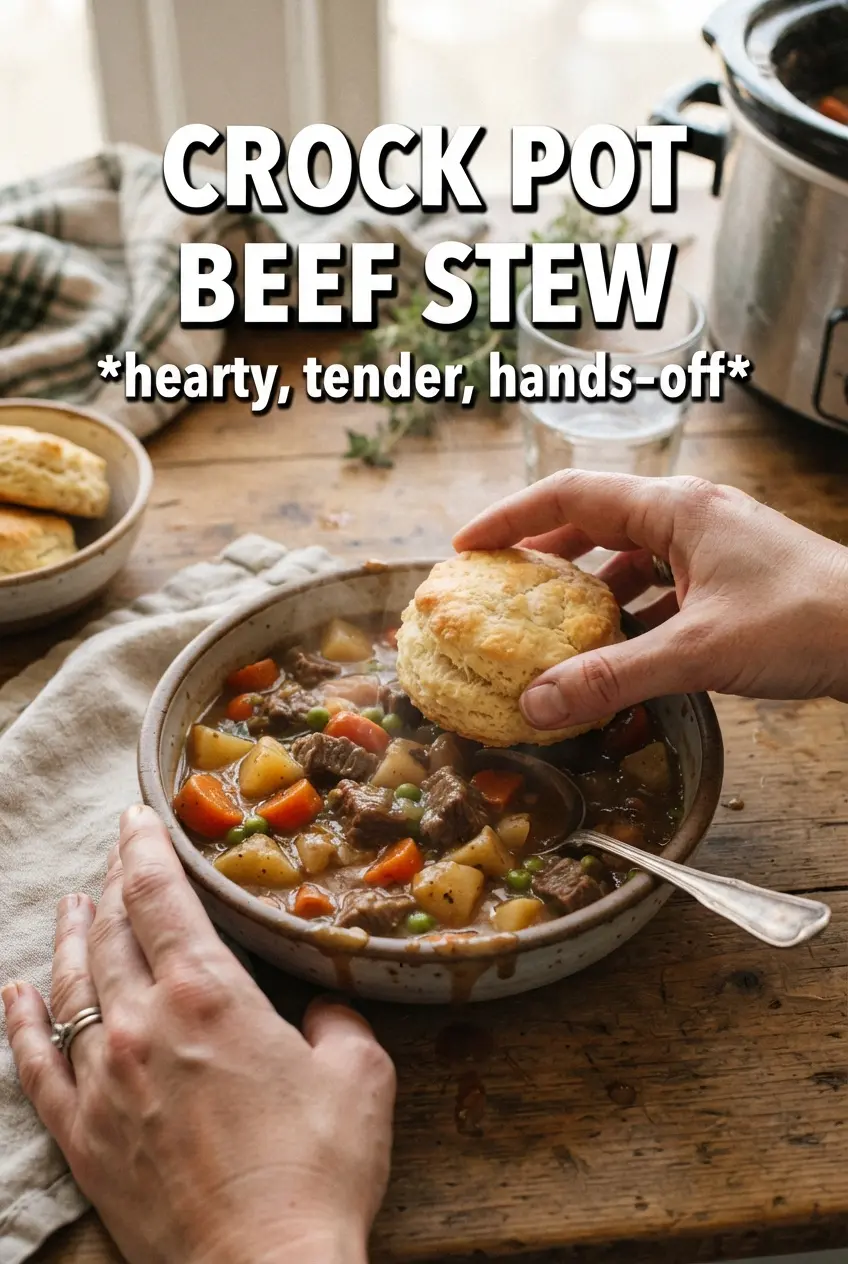
Crock Pot Beef Stew
Ingredients
Equipment
Method
- Season the beef generously with salt and pepper, coating all sides evenly for better flavor. Visual cue: the cubes should look speckled all over with black pepper and salt grains.
- Add baby potatoes, carrots, celery, and onion to the bottom of the Crockpot. Nestle the seasoned beef on top so it stays in contact with the vegetables.
- Add garlic, beef broth, red wine or extra broth, diced tomatoes, tomato paste, Worcestershire sauce, dried thyme, dried rosemary, and bay leaves. Spread ingredients so bay leaves are distributed through the liquid.
- Cook on Low for 8-10 hours until the beef is fall-apart tender. Visual cue: the meat should shred easily with a fork when you press a chunk.
- If using High, cook for 4-5 hours until the beef is fall-apart tender. Visual cue: the stew will look thicker around the beef and the beef fibers will separate easily.
- Remove bay leaves and stir to redistribute the vegetables and beef. Visual cue: bay leaves should be clearly visible and removed before thickening.
- Stir in the cornstarch slurry, then cook on High for 20-30 minutes until the broth thickens. Temperature and time cue: keep it on High exactly 20-30 minutes, stirring once or twice so the starch doesn’t clump.
- Season with salt and pepper to taste. Visual cue: taste the broth and adjust so the flavor pops without tasting flat.