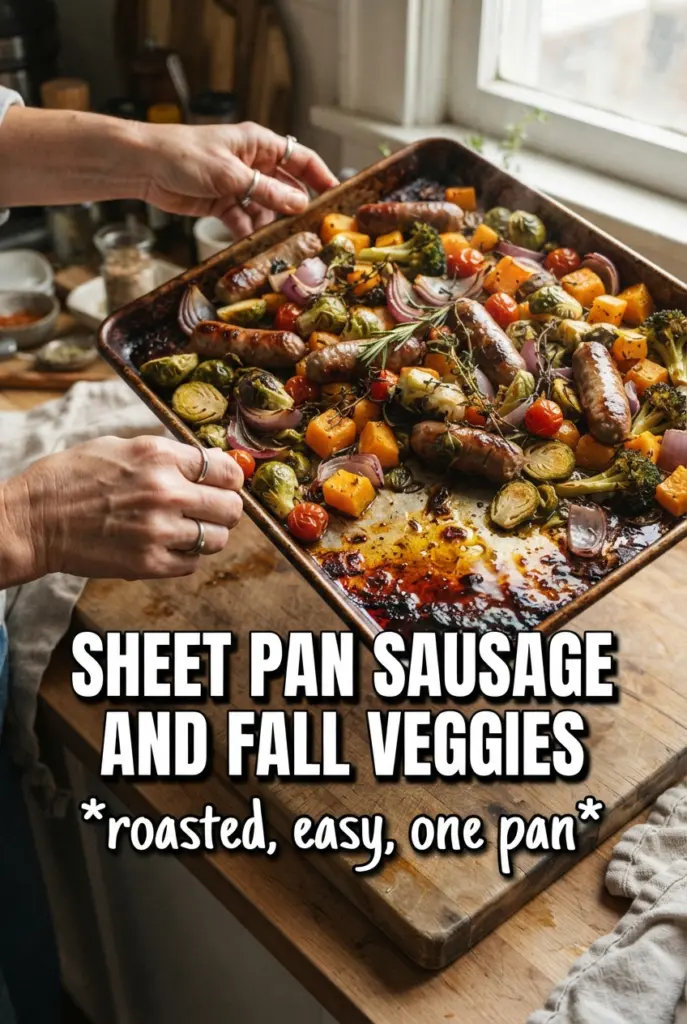
Caramelized sausage, tender squash, and crisp-edged Brussels sprouts all on one pan is the kind of dinner that earns its keep fast. The best part is the contrast: sweet apple and maple against savory sausage, with roasted red onion and bell pepper picking up the balsamic glaze as everything cooks down into a sticky, browned tangle.
This version works because the glaze is built to roast, not just sit on top. Dijon and balsamic give it enough bite to keep the maple from turning the pan cloying, and the rosemary brings a woodsy note that belongs with squash and Brussels sprouts. I also like slicing the sausage into rounds so every bite gets more browned surface area and the vegetables can roast around it instead of steaming under whole links.
Below, I’m walking through the one detail that matters most for getting that deep caramelization, plus the swaps that still keep the pan balanced when you need to work with what’s in the fridge.
The glaze coated everything evenly and the sausage got those browned edges I always miss when I make sheet pan dinners. The apple pieces held up without turning mushy, and the whole pan was gone in one night.
Pin this sheet pan sausage and fall veggies for a one-pan dinner with caramelized sausage, maple-balsamic glaze, and roasted squash.
The Trick to Getting the Vegetables Roasted, Not Soggy
The biggest mistake with sheet pan dinners like this is crowding the pan. When the sausage, squash, Brussels sprouts, and onions are piled up, they trap steam and the edges stay pale instead of browning. Spread everything into a true single layer, and use a large rimmed baking sheet so the heat can reach each piece.
Another thing that matters here is the order of the ingredients. The sausage goes in with the vegetables from the start because the rendered fat helps season the pan, but the apple needs to be cut thick enough that it softens without disappearing. Thin apple slices turn jammy fast; thicker slices hold their shape and give you actual bursts of sweetness.
If your vegetables look cooked but not caramelized at the end, the pan probably needs a little more time under the broiler. Two or three minutes is enough. Walk away for longer than that and the balsamic glaze can go from browned to bitter in a blink.
What Each Ingredient Is Doing in This Dish
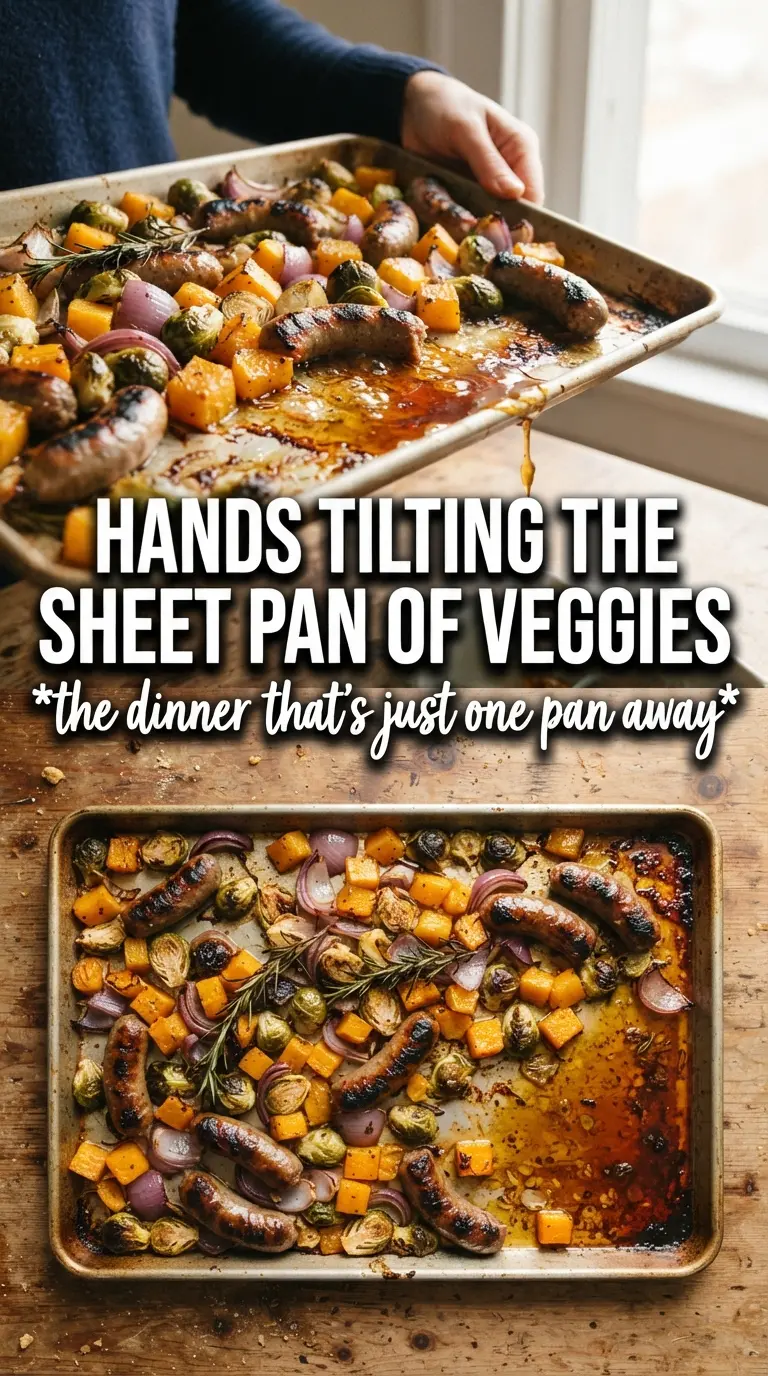
- Italian sausage — Sliced into rounds, it browns on both sides and seasons the whole pan as it roasts. Hot or mild both work; use what you like best. If you only have links with casings, leave them on and slice them straight from the package so the rounds hold together.
- Butternut squash — This is the anchor that soaks up the glaze and turns soft inside with browned edges outside. Cut it into even cubes so it cooks at the same pace as the Brussels sprouts. Pre-cut squash from the store is a good shortcut here.
- Brussels sprouts — Halving them gives you flat sides that can actually caramelize on the pan. Leave the outer leaves that fall off in the bowl; they’ll crisp up and add little crunchy bits.
- Apple — It cuts through the savory sausage and balsamic with fresh sweetness. A firm apple like Honeycrisp or Gala holds up best. Softer varieties can work, but they’ll collapse more by the time the pan is done.
- Dijon, balsamic, and maple syrup — These three build the glaze. Dijon keeps it sharp, balsamic adds acidity, and maple rounds everything out without making the pan taste like dessert. If you skip the mustard, the glaze tastes flatter and the sausage reads heavier.
- Rosemary and garlic — Rosemary brings the woodsy note that ties the squash and sausage together, while garlic perfumes the whole pan as it roasts. Fresh rosemary is best, but dried can work in a pinch if you use less.
How to Build the Pan So Nothing Stays Pale
Start With a Hot Oven
Preheat the oven to 425F and let it fully come up to temperature before the pan goes in. High heat is what gives you the browned edges on the squash and Brussels sprouts instead of soft, pale vegetables. Line the pan with parchment for easier cleanup, but still expect the bottom of the vegetables to color.
Whisk the Glaze Until It Looks Emulsified
Whisk the olive oil, balsamic vinegar, maple syrup, Dijon, garlic, rosemary, Italian seasoning, salt, and pepper until the mixture looks glossy and blended. If the mustard is streaky, the glaze won’t coat evenly and you’ll get pockets that are too sharp or too sweet. This doesn’t need to be thick, just combined enough to cling to the sausage and vegetables.
Roast in One Even Layer
Spread everything out without stacking pieces on top of each other. Tossing the glaze with the ingredients before roasting helps, but the real browning happens only where the food touches the hot pan. Stir once halfway through so the sides that were facing up get a chance to hit the heat.
Finish With a Short Broil
Broil for 2 to 3 minutes at the end if you want deeper color and extra caramelized edges. Watch it closely because the maple in the glaze can darken quickly. The pan is ready when the sausage has browned spots, the squash is tender, and the Brussels sprouts have crisped on the edges.
Three Ways to Adapt the Pan for What You Have
Dairy-Free and Naturally Gluten-Free as Written
This recipe already skips dairy and doesn’t need flour to work, so there’s nothing special to change for those needs. Just check the sausage label, since some brands use fillers or additives you may want to avoid. The rest of the ingredients give you the same roasted finish without extra fuss.
Swap the Sausage for Chicken Sausage or Kielbasa
Chicken sausage cooks a little leaner and won’t render quite as much fat, so the pan will taste a touch lighter. Kielbasa gives you a smokier, saltier result. Either one works, but if you use a fully cooked sausage, keep an eye on browning since it only needs enough time to heat through and color.
Use Sweet Potatoes Instead of Butternut Squash
Sweet potatoes bring a softer, sweeter finish and roast on the same timeline if you cut them into similar-sized chunks. They won’t have quite the same silky texture as squash, but they still brown well and hold up next to the sausage. If your sweet potato pieces are too large, they’ll lag behind the rest of the pan.
Storage and Reheating
- Refrigerator: Store in an airtight container for up to 4 days. The vegetables soften a little as they sit, but the flavor stays good.
- Freezer: It freezes better than a creamy dish, though the squash and apple will soften more after thawing. Freeze in portions for up to 2 months.
- Reheating: Reheat on a sheet pan in a 375F oven until hot, about 10 to 15 minutes. The microwave works in a pinch, but it softens the browned edges and makes the vegetables steam.
Questions I Get Asked About This Recipe
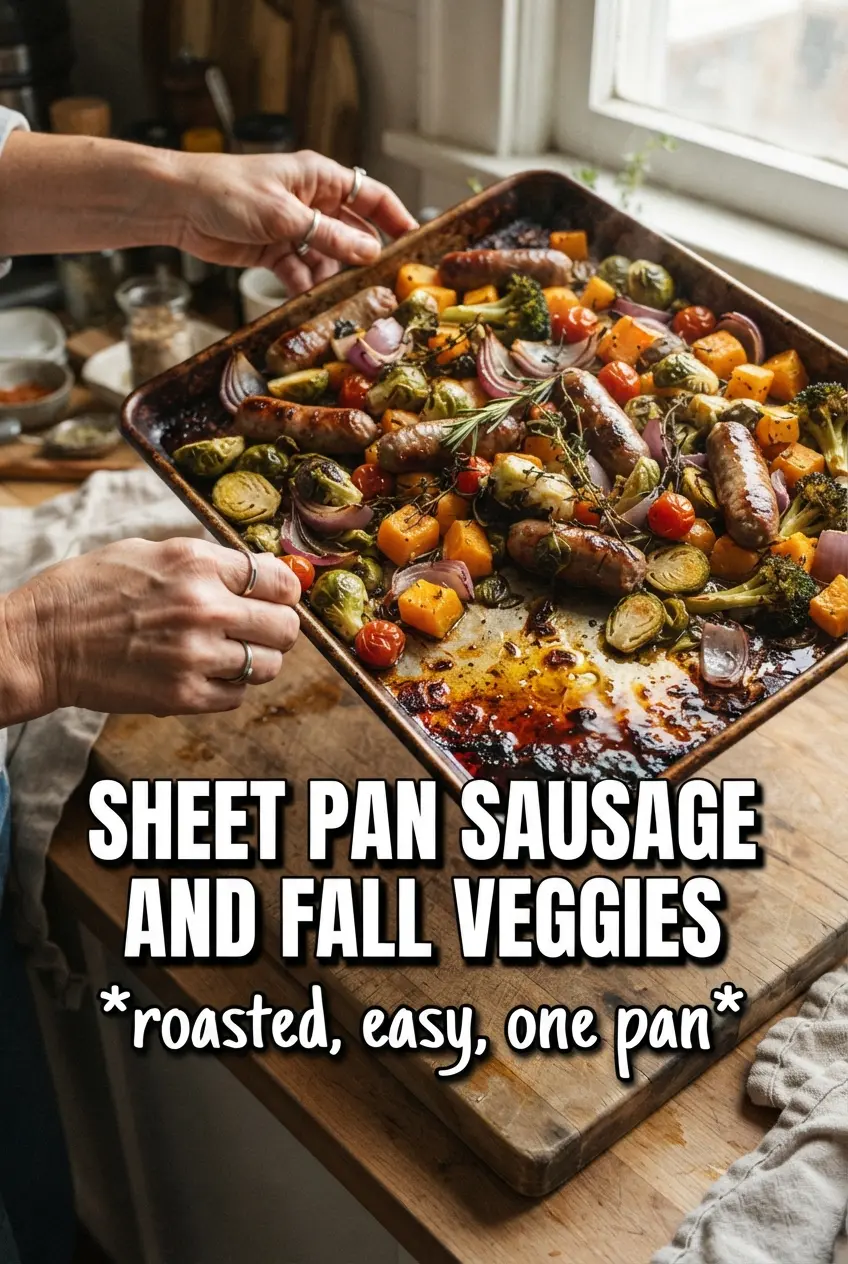
Sheet Pan Sausage And Fall Veggies
Ingredients
Equipment
Method
- Preheat oven to 425F and line a large rimmed baking sheet with parchment.
- Whisk olive oil, balsamic vinegar, maple syrup, Dijon mustard, minced garlic, fresh rosemary, Italian seasoning, and salt and pepper to taste until smooth and combined.
- Arrange sliced Italian sausage rounds, butternut squash, halved Brussels sprouts, red onion wedges, bell pepper chunks, and sliced apple in an even layer on the lined baking sheet.
- Drizzle the glaze over everything and toss until the sausage and vegetables look evenly coated.
- Roast at 425F for 30-35 minutes, stirring once halfway, until vegetables are caramelized and the sausage is cooked through.
- Broil for 2-3 minutes to encourage extra caramelization, watching closely so edges turn golden-brown.